
Why That Noise from Your Commercial HVAC Making Noise in Newburgh IN Shouldn’t Be Ignored
If your commercial HVAC making noise in Newburgh IN is disrupting your business, it’s time to listen closely. Those sounds are often warning signs of problems that can lead to equipment failure, high energy bills, and uncomfortable conditions for employees and customers.
A noisy HVAC system isn’t just an annoyance; it’s a threat to your bottom line. Studies on workplace acoustics show that excessive noise can significantly reduce employee productivity (see the overview on noise and health). Ignoring these sounds can also increase energy costs by 20-30% and lead to a complete system failure when you need it most.
This guide will help you diagnose the noise, know when it’s an emergency, and understand your next steps.
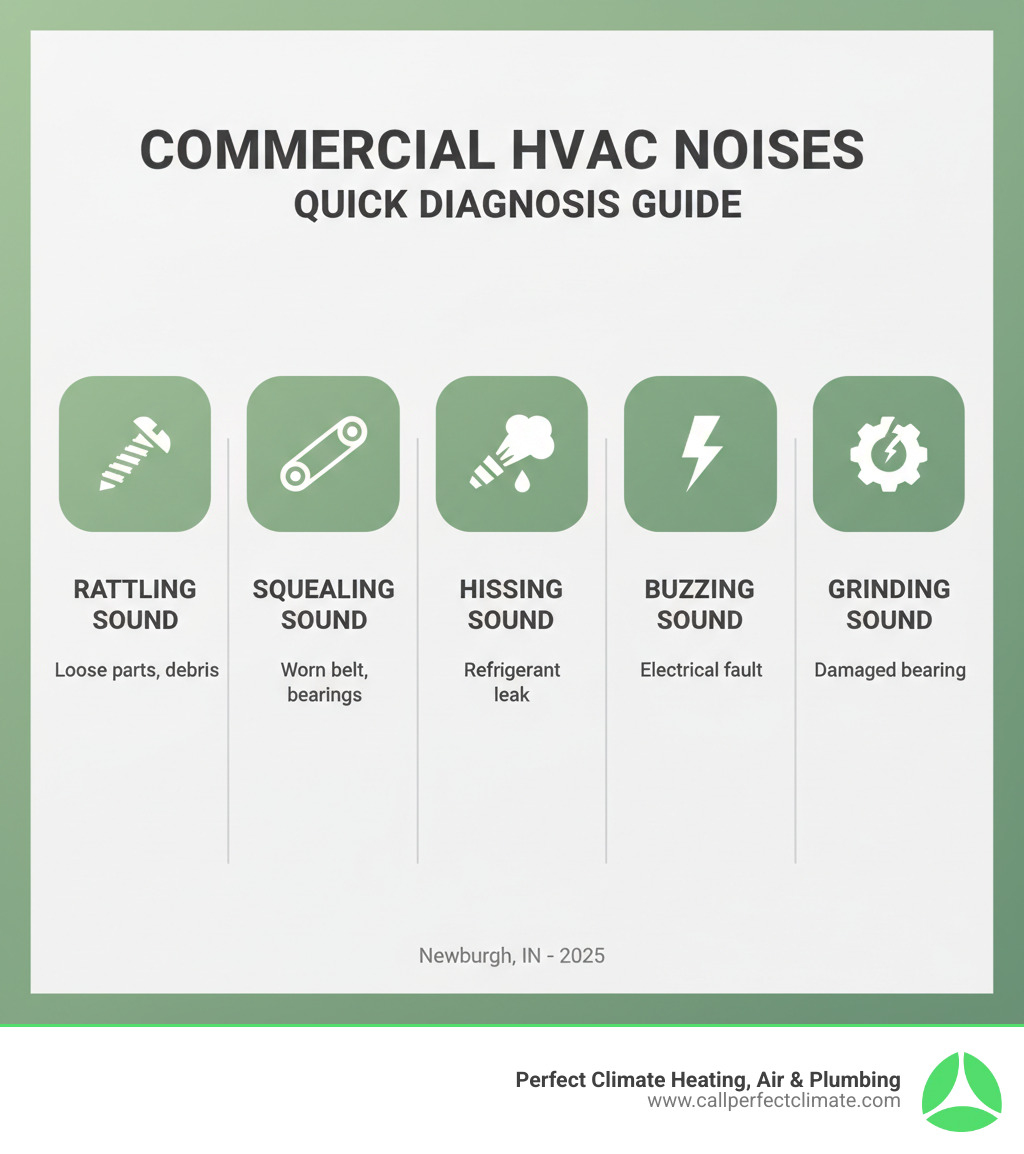
Quick Diagnosis Guide:
- Rattling/Banging Loose parts, debris, or blower assembly issues
- Squealing/Screeching Worn motor bearings or failing belt
- Hissing/Whistling Refrigerant leak or air duct leaks
- Buzzing/Humming Electrical issues or loose components
- Grinding Worn bearings or failing motor (shut down immediately)
Immediate Action: If you hear severe grinding or banging, shut down your system and call a professional right away.
Decoding the Sounds: A Diagnostic Guide for Newburgh Businesses
When your commercial HVAC making noise in Newburgh IN starts acting up, the first step is to distinguish normal operational sounds from problem noises. A healthy system will have a gentle hum and soft clicks at startup, but new, loud, or persistent sounds signal trouble. Our guide on strange HVAC noises can help you understand what different sounds might mean.
| Normal HVAC Sounds | Problematic Noises |
|---|---|
| Gentle hum of airflow | Loud, persistent humming or buzzing |
| Soft click at startup/shutdown | Continuous clicking or tapping |
| Quiet whoosh of air from vents | Hissing, whistling, or gurgling |
| Slight vibration from compressor | Rattling, banging, clanking, or thumping |
| Squealing, screeching, or grinding |
Rattling, Banging, or Clanking
These mechanical sounds almost always mean something physical has gone wrong inside your unit. Common causes include:
- Loose parts: Over time, vibration can loosen screws and access panels, causing them to rattle.
- Debris in the unit: Leaves, twigs, or other foreign objects can get hit by fan blades.
- Blower assembly issues: A misaligned or broken fan blade will bang against its casing. An imbalanced blower wheel can create a thumping sound.
- Failing compressor: As the compressor wears out, its internal parts can create rattling or clanking sounds just before complete failure.
Learning to recognize HVAC repair signs early can prevent a minor rattle from becoming a major breakdown.
Squealing, Screeching, or Grinding
These unpleasant noises indicate that moving parts are wearing out or need lubrication. The primary culprits are:
- Worn motor bearings: Bearings allow parts to spin smoothly. When they wear down from a lack of lubrication, the metal-on-metal friction creates a grinding sound.
- Failing belts: Many commercial systems use belts to connect motors to fans. An old, frayed, or misaligned belt will produce a loud squeal.
- Blower motor malfunction: As a motor begins to fail, it may screech or grind as it struggles to operate.
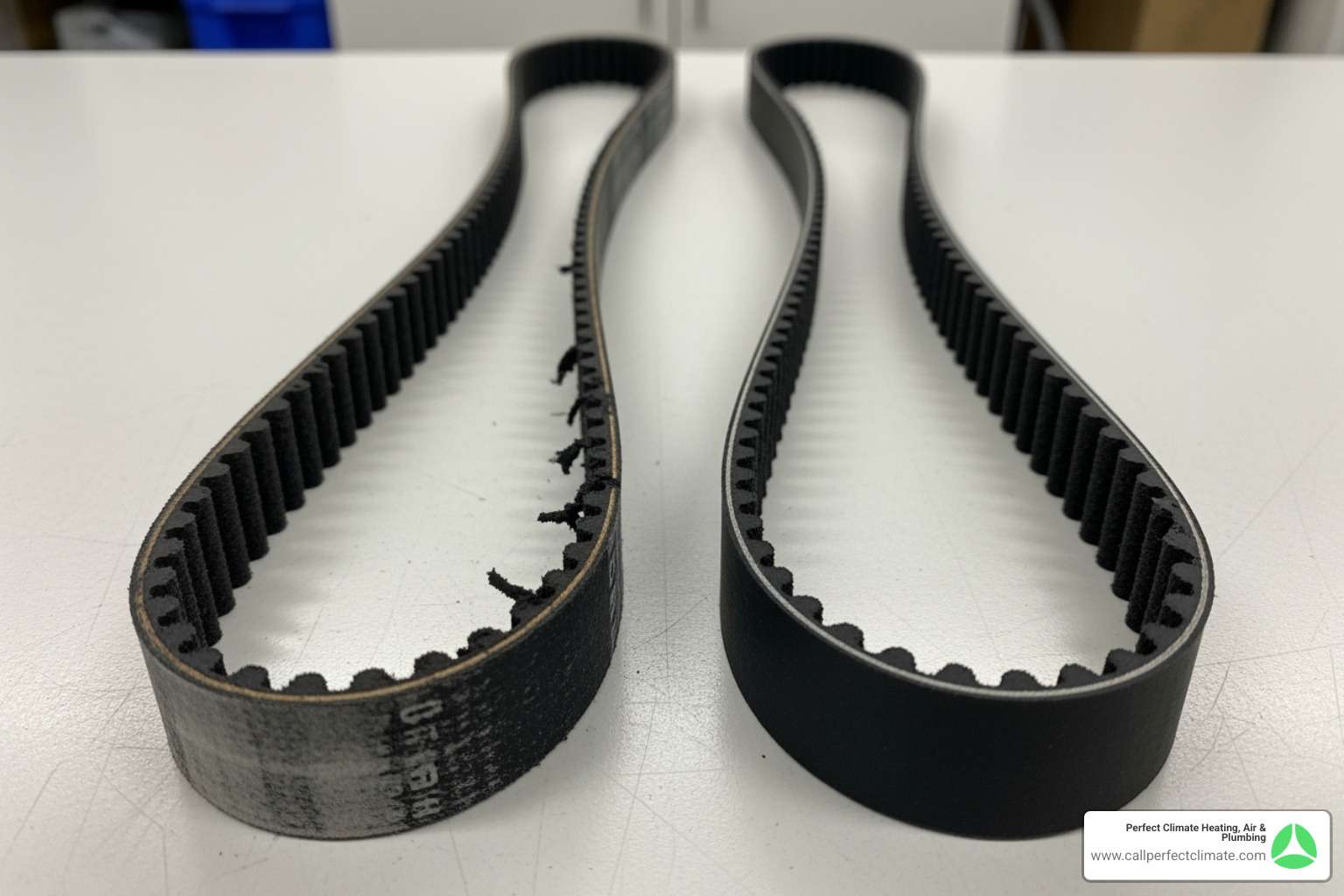
Addressing a worn belt or dry bearings is a relatively simple fix, but ignoring them can lead to replacing the entire motor.
Hissing, Whistling, or Bubbling
These sounds usually point to problems with airflow or refrigerant. While they may seem less urgent, they can indicate serious issues:
- Refrigerant leak: A distinct hissing or bubbling sound is a classic sign of a refrigerant leak. This is a hazardous issue that harms your system and the environment.
- Air leaks in ductwork: Whistling or hissing can be caused by conditioned air escaping through cracks in your ducts, wasting energy and reducing comfort.
- High compressor pressure: A persistent hiss from the outdoor unit when it’s off can signal a pressure buildup that needs professional assessment.
- Clogged air filter: A severely clogged filter can restrict airflow so much that air whistles as it’s pulled through small gaps.
For more information, see our insights on common issues in commercial split systems.
Buzzing or Humming
A loud, persistent buzzing or humming from your commercial HVAC making noise in Newburgh IN often points to electrical or vibration issues.
- Electrical issues: This is the most concerning cause. Faulty wiring, loose connections, or failing electrical components like contactors can create a buzz and pose a fire hazard.
- Failing motor: A motor struggling to start or run due to a bad capacitor or internal wear will often produce a loud hum.
- Loose parts: Sometimes, the vibration of loose components can create a distinct buzzing sound rather than a rattle.
- Vibration transmission: The sound may not come from a faulty part but from normal operational vibrations traveling through the building’s structure or ductwork.
Why is Your Commercial HVAC Making Noise in Newburgh, IN? The Risks of Ignoring It
When your commercial HVAC making noise in Newburgh IN starts acting up, it’s tempting to ignore it. However, delaying action allows small problems to become expensive failures. Here are the risks of putting off repairs:
- Higher Energy Bills: A malfunctioning system works harder, increasing energy costs by 20-30%.
- Costlier Emergency Repairs: A minor fix like a belt replacement can become a major motor replacement if ignored. Our HVAC emergency service is available, but proactive repairs are always more affordable.
- Reduced Equipment Lifespan: Constant strain wears out components faster, shortening the life of your significant investment.
- Business Downtime: An unexpected breakdown during peak season can force you to close, leading to lost revenue and frustrated customers.
- Negative Impact on Productivity: HVAC noise can reduce employee focus. An uncomfortable environment further hurts productivity.
- Catastrophic Failure: Grinding or buzzing can signal severe issues that could destroy the system or even pose a fire hazard.
- Product Loss: For businesses with refrigeration, a failing compressor can lead to spoiled inventory and significant financial loss.
Immediate Steps for a Noisy Commercial HVAC
When you notice a new noise, take these steps:
- Don’t ignore it: Acknowledge the sound as a warning sign.
- Locate the source: Pinpoint if the noise is from the rooftop unit, indoor handler, or vents.
- Check for simple issues: Safely look for debris around outdoor units and check for clogged air filters.
- Shut down if severe: For loud grinding, banging, or electrical buzzing, turn the system off at the thermostat and breaker to prevent further damage.
- Document the noise: Note the type of sound, when it happens, and for how long. A short audio or video clip can be very helpful for technicians.
Taking action at the first sign of trouble protects your investment, keeps your business running smoothly, and saves you money. Learn more about the benefits of HVAC repair services and how proactive care makes all the difference.
From DIY Checks to Professional Repairs: Your Action Plan

After identifying a noise from your commercial HVAC making noise in Newburgh IN, you need to decide on an action plan. While some issues have simple DIY fixes, most require professional expertise for safety and to protect your equipment. Commercial HVAC systems are complex and involve high voltages and hazardous materials. For a comprehensive overview, see our page on commercial HVAC solutions.
Simple Checks for Business Owners
Before calling a professional, perform these simple checks:
- Check Air Filters: A clogged filter is a common cause of whistling and forces the system to work harder. Replace if dirty.
- Clear Outdoor Unit: Remove leaves, branches, or other debris from around the condensing unit. Ensure the unit is off before approaching.
- Secure Access Panels: Check for loose panels on indoor and outdoor units that may be vibrating. Tighten any loose screws or latches.
- Unblock Vents: Make sure furniture, boxes, or equipment are not covering supply or return vents.
The Role of Ductwork in HVAC Noise
Your ductwork can create and amplify noise. Common issues include:
- Breakout Noise: Sound from the fan or airflow escapes through thin duct walls.
- Air Turbulence: Sharp turns or poorly sized ducts create whistling or rumbling.
- Leaks: Gaps in ductwork cause hissing sounds and waste energy.
Solutions like internal duct liners, turning vanes to smooth airflow, and sealing leaks can resolve these issues. Our air duct cleaning services in Newburgh can also identify and address duct-related noise problems.
When to Call a Professional for a Commercial HVAC Making Noise in Newburgh, IN
It’s time to call for Newburgh HVAC repair services if you encounter:
- Persistent or Loud Noises: Any disruptive sound that your simple checks don’t resolve.
- Hissing or Bubbling: These almost always indicate a refrigerant leak, which requires certified technicians.
- Grinding or Screeching: These signal severe mechanical wear. Shut the system down immediately and call for service.
- Electrical Buzzing: This is an urgent safety issue that could indicate a fire hazard.
- General Rule: If you are not 100% comfortable and safe addressing an issue, call a professional.
The Quiet Advantage: Long-Term Prevention and Benefits
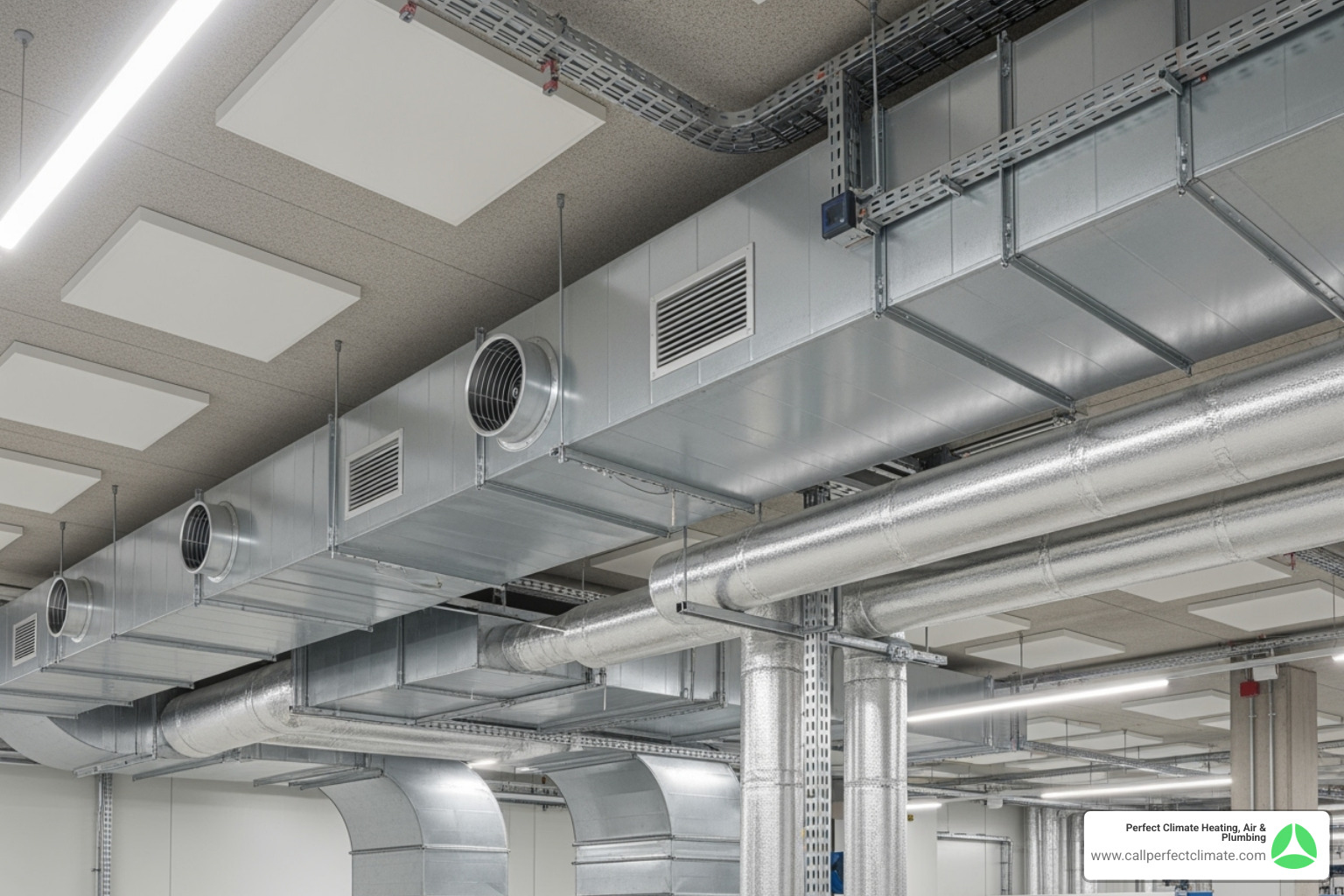
A quiet commercial HVAC system is a sign that it’s running efficiently and reliably. Addressing noise issues provides several long-term benefits for your Newburgh business:
- Improved Energy Efficiency: A quiet system isn’t struggling, which means it uses less energy. Fixing the source of a noise can lower utility bills.
- Extended Equipment Life: Prompt repairs prevent excessive wear and can add years to your system’s lifespan, delaying costly replacement.
- Better Indoor Air Quality: Many noise sources, like dirty coils or filters, also degrade air quality. Fixing them creates a healthier environment.
- Consistent Comfort: A well-running system maintains even temperatures, improving employee productivity and customer experience.
- Peace of Mind: Reliability means you can focus on your business without worrying about unexpected HVAC failures.
How Regular Maintenance Prevents Noise
Most HVAC noise is preventable with regular maintenance. During a service visit, technicians perform key tasks to keep your system quiet:
- Lubricating moving parts to prevent grinding and squealing.
- Tightening electrical connections to eliminate buzzing and reduce fire risk.
- Cleaning coils and blowers to ensure proper airflow and prevent strain.
- Checking refrigerant levels to prevent hissing and compressor damage.
- Calibrating thermostats to ensure proper cycling.
- Inspecting ductwork for leaks and blockages.
Our comprehensive commercial HVAC solutions are designed to catch small issues before they become loud, expensive problems.
Choosing the Right Newburgh HVAC Service Provider
When your commercial HVAC making noise in Newburgh IN needs service, choose a provider that is:
- Licensed and Insured: This protects your business and ensures technician competency.
- Experienced with Commercial Systems: Commercial HVAC is more complex than residential.
- Available 24/7 for Emergencies: Problems don’t always happen during business hours.
- Positively Reviewed by Local Businesses: Check testimonials for feedback on reliability and quality.
- Knowledgeable About Various System Types: Ensure they can service your specific equipment.
For more guidance, see our article on 5 qualities to look for in an HVAC repair company.
Frequently Asked Questions about Commercial HVAC Noise
Are certain HVAC noises more common in winter or summer in Indiana?
Yes, different noises are common in different seasons. In winter, you might hear banging from a furnace during ignition. In summer, the constant AC use can reveal hissing from refrigerant leaks. Noises can also appear when you first start the system after it has been dormant for a season.
Can a noisy HVAC system affect my business’s energy bills?
Absolutely. A noisy HVAC system is an inefficient one. The problem causing the noise—be it friction, restricted airflow, or a leak—forces the unit to work harder and consume more energy, which directly increases your monthly utility bills.
Is a new commercial HVAC system guaranteed to be quiet?
Not necessarily. While modern systems are quieter, proper installation is the most critical factor for quiet operation. An improperly sized unit or poorly designed ductwork can make even the best new equipment noisy. Choosing an experienced commercial installer is as important as selecting the equipment itself. Our guide on choosing the right rooftop unit for your business can help you understand the key factors.
Don’t Let HVAC Noise Disrupt Your Newburgh Business
Your commercial HVAC making noise in Newburgh IN is a clear warning sign. As we’ve covered, ignoring a rattle, squeal, or buzz leads to higher energy bills, decreased productivity, and eventually, costly emergency repairs.
A quiet HVAC system is an efficient, reliable system—and proactive maintenance is the key to achieving it. Don’t let a disruptive noise turn into a business-halting breakdown.
The expert technicians at Perfect Climate Heating, Air & Plumbing have the commercial expertise to diagnose and resolve any HVAC issue, protecting your investment and ensuring a comfortable environment for your employees and customers.
For expert diagnosis and repair of your noisy commercial HVAC system in the Newburgh area, reach out to us today. Contact us for commercial HVAC services and restore peace and quiet to your business.