Quick answer
Read in 4 minA sewer camera scope ($250-$400) reveals what's happening between your home and the city main — root intrusion, bellies, offset joints, and clay-pipe failures invisible from above. For homes built before 1980 with original clay or cast-iron laterals, the scope pays for itself the first time it catches a problem before backup. For newer homes, it's diligence; for older homes, it's the difference between a $400 inspection and a $9,000 emergency excavation.
- 01 Camera scope cost: $250-$400; lateral excavation costs $4,000-$15,000+.
- 02 Pre-purchase scope on any home pre-1980: standard practice, catches deal-breakers.
- 03 Recurring backups in same drain: scope first, snake second.
- 04 Root intrusion through clay tile joints is the #1 finding we see in Evansville pre-1970 homes.
- 05 Lining (CIPP) is often $4,500-$9,000 vs $8,000-$18,000 for full dig — scope tells you which is possible.
Section 02
Buying an older home
Home inspection covers a lot but rarely includes sewer lateral. For any home built before 1980, a $300 scope before closing is the single highest-ROI inspection available — it can reveal $10,000-$25,000 of hidden cost that nobody else will mention.
Section 03
Recurring backups
If you've snaked the same drain twice in a year, something is causing it. Roots, a belly, an offset joint, or a partial collapse. A scope identifies the cause; otherwise you're paying for snaking forever without addressing it.
Section 04
Adding a basement bathroom or finished space
Before you spend $25,000 finishing a basement, knowing the existing lateral can handle the load is non-negotiable. Adding fixtures to a marginal lateral is buying future flooding.
Section 05
After yard work or tree removal
Heavy equipment can crack laterals invisibly. New tree removal can release surrounding soil and shift pipes. A baseline scope after major yard work documents condition for insurance and future claims.
Compare your options
The choice, honestly compared.
Option A: Camera scope only (diagnostic)
Right call as a starting point — before snaking, before excavation, before buying. $250-$400 with video and locator marks. Reveals condition, depth, and exact problem location if any. Wrong call as a substitute for action — if the scope shows a real problem, you still need to fix it. Lifespan of the diagnostic: a scope is a snapshot; conditions can change in months on a failing line.
Option B: Trenchless CIPP lining
Right call when the lateral has minor cracks, root intrusion, or offset joints but is still structurally intact (verified by scope) and is the right diameter for lining. A cured-in-place pipe (CIPP) liner installed runs $4,500-$9,000 for typical lateral lengths in SW Indiana. Minimally invasive — no full lawn dig, 1-2 day install, 50+ year life on the liner. Wrong call when the existing pipe is collapsed, when the line has reverse slope, or when bellies are too severe for liner to bridge. Lifespan 50+ years.
Option C: Full excavation and replacement
Right call when the lateral is collapsed, has severe bellies, has reverse slope, or is too deteriorated for lining. Excavation and PVC SDR-35 replacement runs $8,000-$18,000 in SW Indiana depending on length, depth, driveway/landscape disturbance, and city tap requirements. Wrong call when CIPP lining is possible — full dig is overscope. Lifespan: 75+ years on PVC, longer than the next owner.
Key terms in context
Vocabulary you'll see on a real estimate.
This guide is written for plumbing decisions in Southwest Indiana. It uses the same terminology you'll hear from techs, inspectors, and the permit office.
Failure mode 01
Snaking the same drain every 6 months without scoping
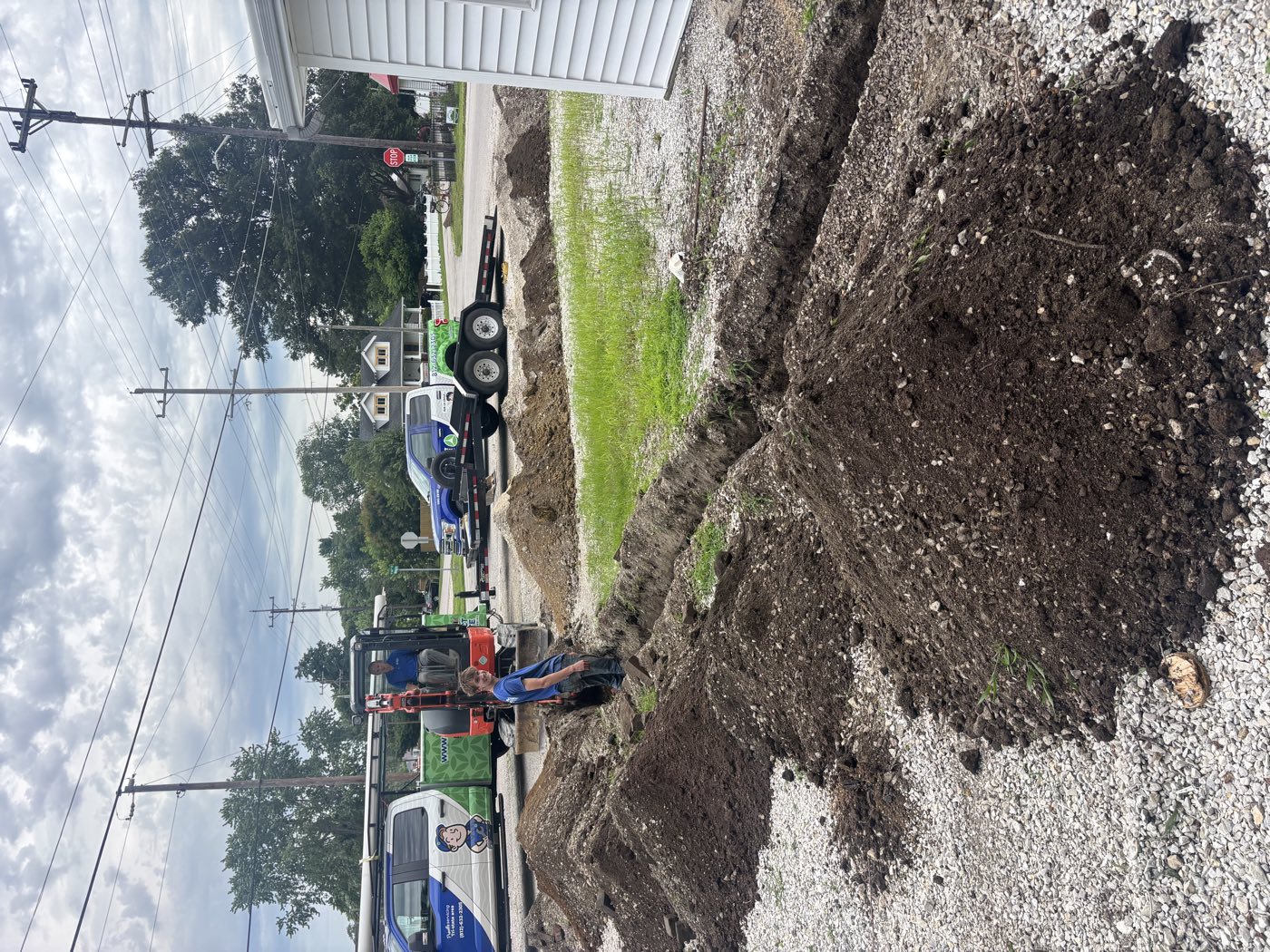
We see homeowners pay $200 every 4-9 months to snake out roots from the same clay joint. Five snakings later, they've spent more than the scope + lining would have cost — and the next backup is in the kitchen during Thanksgiving.
Failure mode 02
Skipping the pre-purchase scope on a pre-1980 home
The single biggest hidden cost in older Evansville and Vincennes home purchases is a failing lateral that wasn't on the inspection report. $300 of scope can find $15,000 of repair before you sign.
Proof, process & local validation
- 01 Every scope includes video, locator marks on the lawn, and a written 1-page condition summary.
- 02 We don't sell line work off the scope cold — you get the report, you decide.
- 03 Licensed plumbers; lining and excavation done in-house, not subbed to whoever's available.
How we build this guidance
- Licensed plumbers using calibrated push cameras with locator — we'll mark depth and direction on the lawn.
- Every scope ends with a recorded video and a written summary you keep.
- We've scoped pre-1960 cast-iron laterals across Evansville's older neighborhoods — we know what to look for.
Methodology · Sewer recommendations based on recorded camera scope, calibrated depth/distance locator, and Indiana plumbing code — we cite what we see.
Last updated 2026-06-24
Ready for the next step?
Get a free, no-obligation estimate. An honest range, on paper.
Continue exploring
Related reading + your next step.
Common questions
Questions, answered.
01 How long does a sewer scope take?
30-60 minutes on-site. We access through a cleanout if available; otherwise we pull a toilet (re-set after). The camera pushes from the home to the city tap, recording the whole run. You watch live on the monitor and get the video file by email.
02 Is the scope safe for my plumbing?
Yes — push cameras are designed for sewer lines, flexible to handle 90-degree bends, and won't damage healthy pipe. Cleanout access is preferred to keep toilet flanges undisturbed. We tell you ahead of time which access we'll use.
03 What does 'belly' mean on a scope?
A belly is a low spot in the lateral where waste collects instead of flowing through. Minor bellies (1-2 inches) are common and usually fine; deeper bellies cause recurring backups and can't be lined — they need excavation. The scope measures belly depth.
04 Can roots really destroy a sewer pipe?
Yes — tree roots intrude through clay joints and small cracks, grow inside the line, and trap waste until full blockage. Over years they can crack the pipe further. Once roots are inside, they regrow after snaking unless the line is lined or replaced.
05 Is trenchless lining as good as full replacement?
For most failures, yes — CIPP lining creates a new pipe inside the old one with 50+ year life and equal flow characteristics. It can't fix collapsed pipe, severe bellies, or reverse-slope problems. The scope tells us which solution fits your line — we don't recommend lining where excavation is the right call.