Furnace Repair in Newburgh, IN
Furnace Repair Newburgh IN: Fast, expert diagnostic and repair for homes and businesses. Schedule service now for reliable heat.

Furnace Repair in Newburgh, IN
When your furnace gives out during a brutal Indiana cold snap, you don't just need a fix; you need answers and you need them fast. For furnace repair in Newburgh, IN, Perfect Climate Heating and Air provides expert diagnostic and repair services for both homes and businesses. We're dedicated to getting your reliable heat back, ensuring your indoor air is healthy, and making sure your system runs as efficiently as possible. With Newburgh's chilly winters, the unpredictable river humidity, and often older buildings with aging equipment, quick and precise furnace repair isn't just about comfort—it's crucial for your safety and your energy budget.
.jpeg)
Common furnace problems we diagnose in Newburgh homes and businesses
Understanding common symptoms helps you recognize issues early. Typical furnace problems include:
- No heat or intermittent heat - blower runs but no warm air, or heat stops after a short time.
- Short-cycling - furnace turns on and off repeatedly, increasing wear and energy use.
- Unusual noises - banging, rattling, squealing, or metallic clanking coming from the furnace or ductwork.
- Pilot light or ignition failure - standing pilots that won’t stay lit or electronic ignitors that fail to spark.
- Blower or airflow problems - weak airflow, cold spots, or dust blowing from vents.
- Frequent shutdowns with error codes - modern units log faults that point to specific components.
- Odors and poor indoor air quality - burning smells or persistent dust that may indicate wiring, motor, or filter issues.
Step-by-step diagnostic process
Technicians follow a systematic approach to diagnose furnace issues so repairs are accurate and durable:
- Initial system evaluation - Inspect thermostat settings, filters, vents, and visible components to rule out simple causes.
- Safety lockout and visual inspection - Confirm power and fuel supply, check for obvious damage, and visually inspect heat exchanger and combustion chamber.
- Electrical and ignition testing - Test transformers, relays, ignitors, and flame sensors to isolate ignition and control problems.
- Airflow and blower analysis - Measure static pressure and airflow to detect duct restrictions, blower motor wear, or collapsed ducts.
- Fuel delivery and combustion checks - For gas furnaces, technicians examine gas supply, valves, burners, and perform combustion analysis where needed.
- Control and safety device checks - Verify limit switches, pressure switches, and safety interlocks are operating correctly.
- Carbon monoxide and combustion safety testing - Perform CO checks and inspect the flue and venting for blockages or leaks.
After diagnostics, the technician explains findings in plain language, outlines repair options, and notes parts likely needed.
Typical repairs and parts replacement
Common repairs you can expect during furnace service include:
- Ignitor or pilot assembly replacement - resolves ignition failures.
- Flame sensor cleaning or replacement - fixes frequent shutdowns.
- Blower motor repair or replacement - restores proper airflow and reduces noise.
- Limit switch or control board replacement - for systems that overheat or display error codes.
- Gas valve or pressure regulator service - addresses fuel delivery problems.
- Heat exchanger inspection and repair - critical for safety; cracked exchangers often require system replacement.
- Duct sealing and register repairs - improves distribution and comfort.
Replacement parts are matched to your brand and model to preserve efficiency and compatibility.
Safety and carbon monoxide checks
Safety is non-negotiable. Every diagnostic includes:
- Carbon monoxide testing near the furnace and in living spaces when combustion is present.
- Heat exchanger inspection for cracks or corrosion that can allow combustion gases into the home.
- Vent and flue inspection to confirm proper draft and to identify blockages or damage.
- Electrical safety checks to identify overloaded circuits or failing components that could present fire risk.
Technicians use calibrated CO detectors and combustion analyzers and follow local codes for safe operation.
Response times and emergency service
Response time depends on symptom severity and scheduling needs. Typical patterns:
- Non-emergency repairs are often scheduled within 24 to 48 hours.
- High-priority situations such as no heat during freezing conditions or suspected carbon monoxide exposure receive expedited attention and may be handled same day.
- Emergency service options are available for urgent risks and after-hours needs, with technicians equipped to perform temporary remedies and safe shutoffs when required.
Technicians carry common parts and tools to increase the chance of same-visit fixes.
Cost drivers and warranty information
Repair cost varies by the extent of the issue, parts required, system age, and accessibility. Factors that affect cost include:
- Type and model of the furnace
- Whether parts must be ordered
- Complexity of disassembly or ductwork access
- Whether safety-sensitive components like the heat exchanger require replacement
Warranties commonly include limited parts warranties from manufacturers and short-term labor guarantees from repair providers. Warranty lengths and coverage vary by part and brand; confirm specifics before work begins.
Maintenance tips to prevent future breakdowns
Regular maintenance is the best defense against emergency repairs. Key preventive actions:
- Replace or clean filters every 1 to 3 months depending on use and indoor air quality.
- Schedule annual professional tune-ups before the heating season to inspect combustion, controls, and airflow.
- Keep the area around the furnace clear and ensure vents and returns are unobstructed.
- Install and routinely test carbon monoxide detectors on each level of the building.
- Address odd noises, increased cycling, or rising energy bills promptly rather than waiting.
- Routine maintenance extends equipment life and helps protect manufacturer warranties.
Brands and models serviced
Service covers most residential and commercial furnace brands and models, including but not limited to:
- Carrier, Trane, Lennox
- Rheem, Goodman, Ruud
- Bryant, Amana, York
- Bosch, Mitsubishi (for specialty units)
Technicians are trained on common control boards, ignition systems, and modular parts used across manufacturers.
How scheduling and follow-up typically work
Scheduling for furnace repair is handled through standard service channels. Appointments are booked based on urgency with options for daytime windows or priority response for emergencies. On-site visits include a written diagnostic, an explanation of recommended repairs, and documentation of parts and labor performed. Follow-up typically includes a brief check to confirm system performance after repairs and guidance on next maintenance steps.
What Our Clients
Say About Us
Our clients consistently praise our dedication and expertise. They appreciate our commitment to meeting their needs and providing sound advice, which has fostered long-lasting relationships.
SERVICE AREAS
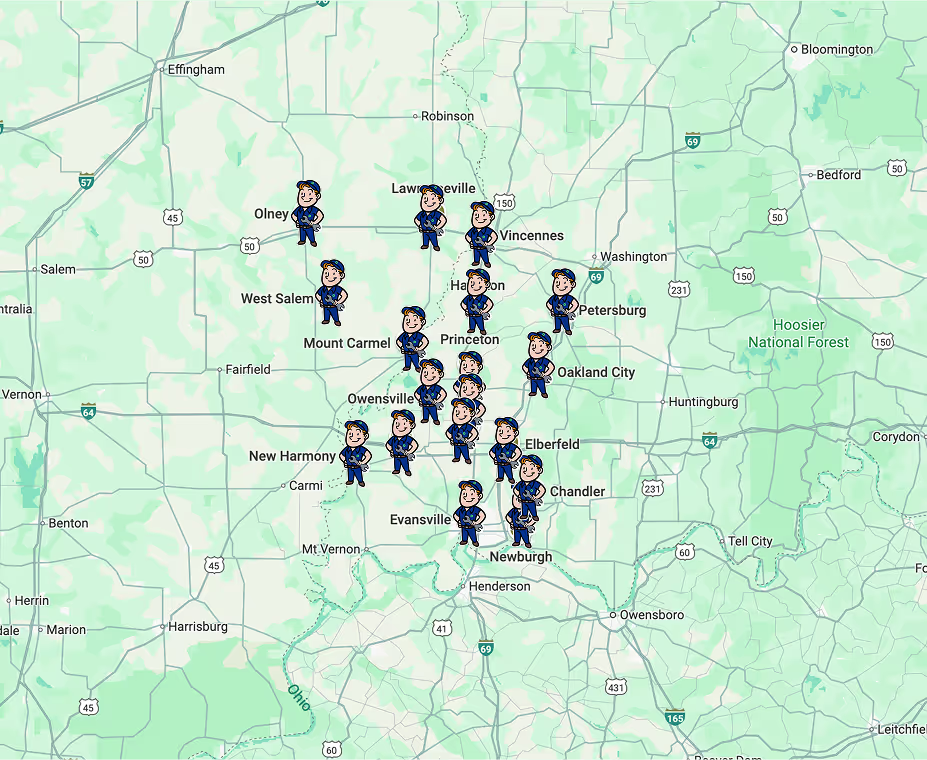
We proudly serve clients throughout our surrounding communities, delivering reliable service wherever you need us. No matter the location, our team is committed to the same high-quality results and responsive support.