Whole House Filtration in Chandler, IN
Whole House Filtration in Chandler: Learn how installation improves indoor air quality, reduces allergens, odors, and VOCs—schedule service today.

Whole House Filtration in Chandler, IN
Ready for a real game-changer in your home's comfort and health? Cleaner indoor air is truly one of the best long-term investments you can make. With whole house filtration from Perfect Climate Heating and Air, we help Chandler, IN homes combat everything from seasonal pollen and summer's humidity-driven mold growth to winter combustion particles, and all the dust and agricultural particulates so common in our beautiful region.
.jpeg)
Why whole-house filtration matters in Chandler, IN
Chandler homes experience spring and early summer pollen, warm humid summers that encourage mold in ducts and on coils, and occasional smoke or odors from nearby agricultural or neighborhood burning. A whole-house filtration system treats the air centrally through the HVAC system so every room benefits—reducing allergens, particles, and odors without relying on multiple portable units.
Common whole house filtration options
- Media (pleated) filters with MERV ratings
- MERV 8–11: Good for general dust, pollen, and pet dander in most homes.
- MERV 12–13: Higher particle capture for allergy sufferers and homes wanting better smoke/PM2.5 protection.
- HEPA-compatible whole-house systems
- True HEPA captures particles down to 0.3 microns with very high efficiency, often used for severe allergies or immunocompromised occupants. Induct HEPA requires careful design to avoid excessive pressure drop or uses a dedicated fan/HEPA cabinet.
- Electronic (electrostatic) filters
- Reusable units that charge and collect particles. Effective when cleaned regularly but require maintenance and attention to potential ozone generation on some older models.
- Activated carbon stages
- Targets odors and VOCs (cooking smells, smoke, chemical odors) that particulate filters do not remove. Often paired as a final stage.
- UV-C (ultraviolet) treatments
- Installed near the coil to control microbial growth and reduce mold on the evaporator coil and drain pan; helpful in humid Chandler summers. UV does not remove particulates but complements filtration by controlling biological contaminants.
How systems are installed and integrated with HVAC
- Assessment and duct inspection
- Evaluate airflow capacity, existing filter housing size, duct leakage, and return locations. Homes with older furnaces or ductwork may need sealing or ductwork repairs before adding high-efficiency filters.
- Selection of location and equipment
- Install media/HEPA housings at the return plenum or in a dedicated HEPA cabinet with its own blower. UV lamps are mounted at the coil access point. Activated carbon beds usually follow the particulate stage.
- Installation and electrical work
- Mount filter housings or cabinets, wire UV lamps to safe power and controls, and ensure any added blower or bypass integrates with existing controls and safety switches.
- Commissioning and balancing
- Test static pressure and airflow, adjust fan speed if needed, and confirm the system operates across heating and cooling modes without excessive restriction.
- Verification testing
- Use particle counters and HVAC performance checks to document improved indoor air quality and acceptable system pressures.
Performance and health benefits
- Allergen and particle reduction
- Upgrading from a basic filter to MERV 12–13 or a HEPA-capable solution significantly reduces airborne pollen, dust, and pet dander—helpful during Chandler’s pollen season.
- Odor and VOC control
- Carbon media reduces odors and many household VOCs that particulate filters miss.
- Microbial control
- UV treatments reduce coil-related mold growth and can improve system efficiency and indoor hygiene, especially in humid months.
- Comfort and HVAC efficiency
- Properly sized filters and regular maintenance maintain airflow and can help the HVAC system run more efficiently; conversely, over-restrictive filters without system adjustments can reduce airflow and comfort.
Choosing the right filtration for your home
Consider these typical scenarios:
- General homes with routine dust and pollen: A MERV 8–11 pleated media filter provides good value and low impact on airflow.
- Allergy or asthma sufferers: Aim for MERV 12–13 or a HEPA-compatible solution. Balance filtration with airflow—HEPA usually requires dedicated housings or blower upgrades.
- Pet owners and heavy indoor dust: Combine a washable prefilter with a higher-MERV pleated media filter to protect the main filter and extend service life.
- Homes with odors, smoke exposure, or VOC concerns: Include an activated carbon stage.
- Homes with mold issues or frequent coil fouling: Add a UV-C lamp to the coil area and address humidity control.
Important technical note: Higher MERV ratings increase resistance to airflow. Before upgrading, confirm your HVAC blower and ductwork can handle the added pressure drop or use multi-stage filtration (prefilter + high-efficiency stage) to limit impacts.
Maintenance schedules and filter replacement guidance
- Visual checks: Inspect filters monthly, especially during pollen season or wildfire smoke events.
- Pleated filters (1–4 inch):
- 1-inch basic pleated: check monthly; replace every 1–3 months for most homes.
- Deeper media filters (4–6 inch): typically last 6–12 months depending on load.
- HEPA modules: Service intervals vary by system—expect 1–3 years or per manufacturer guidance; check pressure drop annually.
- Electronic precipitators: Clean collector cells every 1–3 months and replace parts per manufacturer.
- Activated carbon cartridges: Replace as adsorption capacity is used—often every 6–12 months depending on odor load.
- UV-C lamps: Replace annually or per lamp life rating; clean lamp sleeves as part of annual coil service.
- Seasonal tune-ups: Perform an HVAC tune and air quality check before high-use seasons (spring pollen and summer cooling).
Testing and verification of indoor air improvements
- Baseline and follow-up particle counts (PM2.5/PM10): Portable particle counters can quantify reductions in fine particulate matter after installation.
- Allergen sampling: For targeted allergies, specific allergen tests can show reductions in airborne or settled allergen loads.
- HVAC performance metrics: Static pressure readings, airflow (CFM), and blower amperage confirm the system operates safely with the new filter.
- Humidity and microbial checks: Measure indoor humidity and inspect coils/ducts for microbial signs; UV performance is verified by reduced coil fouling.
Documented testing provides quantifiable evidence of improvement and helps select the optimal combination of filtration stages.
Practical final considerations for Chandler homes
- Schedule inspections around local pollen peaks and before humid months to reduce mold risk.
- Pair filtration with source control (exhausting kitchens, sealing combustion appliances, controlling indoor smoking) and ventilation strategies to maximize indoor air quality.
- Balance filtration efficiency with HVAC airflow—an effective system is one that improves air quality without compromising comfort or system longevity.
What Our Clients
Say About Us
Our clients consistently praise our dedication and expertise. They appreciate our commitment to meeting their needs and providing sound advice, which has fostered long-lasting relationships.

SERVICE AREAS
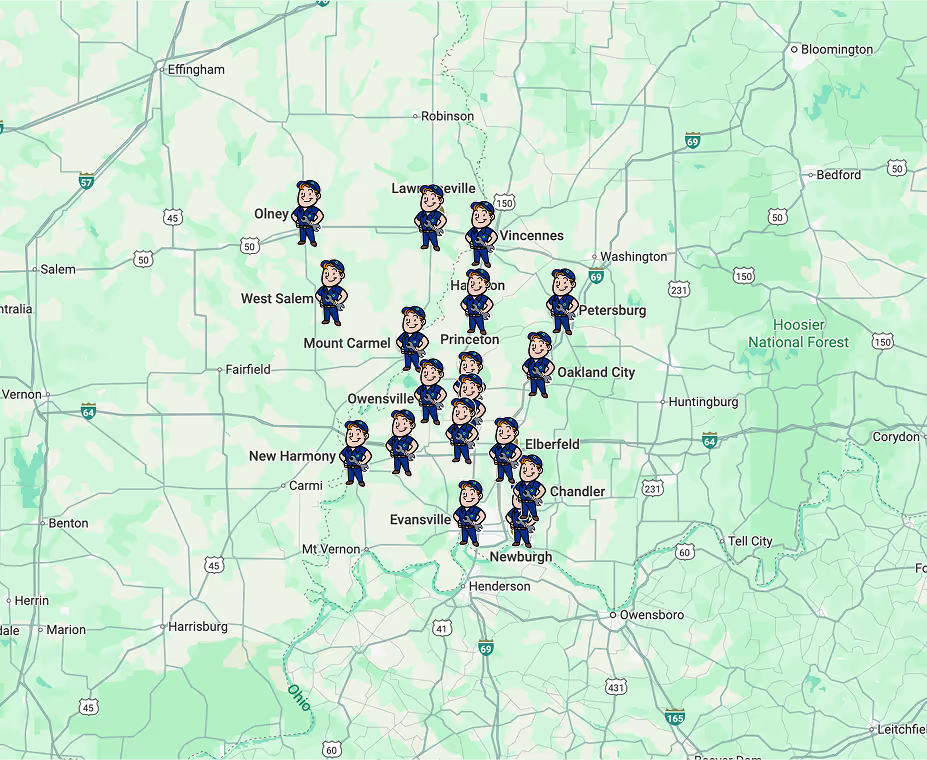
We proudly serve clients throughout our surrounding communities, delivering reliable service wherever you need us. No matter the location, our team is committed to the same high-quality results and responsive support.