Whole House Filtration in Elberfeld, IN
Elberfeld IN explore whole-house filtration options, installation steps, and maintenance tips to improve indoor air quality. Learn more

Whole House Filtration in Elberfeld, IN
Seriously, keeping the air in your Elberfeld home clean isn't just a seasonal thing – it's crucial all year long. Seasonal tree and grass pollen in spring, humid summers that encourage mold spores, wood stove and fireplace use in winter, and occasional regional wildfire smoke all increase indoor particle levels. That's why Perfect Climate Heating and Air offers whole house filtration systems that remove contaminants right at the source, treating the air as it circulates through your HVAC. This means better protection for family members with allergies or asthma, less pet dander, and a much more comfortable home overall. We're here to walk you through your filtration options, explain how these systems are installed and maintained, what kind of performance you can really expect, and ultimately, help you pick the perfect level of protection for your Elberfeld home.
.jpeg)
Common whole-house filtration options and how they differ
- High-MERV pleated filters (in-duct)
- MERV ratings range from 1 to 16 for residential media. MERV 8 is common for basic protection; MERV 11-13 captures finer particles like pollen, smoke, and many pet dander particles.
- Pros: low cost, simple retrofit in most systems. Cons: higher MERV increases airflow resistance and may require blower adjustments.
- HEPA-grade in-duct systems
- True HEPA removes 99.97% of particles 0.3 microns in size. In-duct HEPA requires a sealed cabinet or a dedicated bypass duct and sufficient blower capacity.
- Pros: best for allergy/immune-compromised households. Cons: more complex installation and usually higher initial cost.
- Electronic air cleaners (electrostatic/ionizing)
- Active systems that charge and capture particles on collector plates. High efficiency on small particles when maintained properly.
- Pros: strong particle removal without thick filters. Cons: require periodic cleaning and some models can produce low levels of ozone; choose tested, ozone-complaint units.
- UV-C germicidal add-ons
- UV lamps mounted in the air handler or return duct target microbes on coils and in air streams. Not a particle filter, but effective for reducing bacteria, viruses, and preventing mold growth on coils.
- Pros: helps with biological contaminants and improves system hygiene. Cons: lamps require annual replacement and do not remove particles.
- Hybrid systems
- Combine prefilters (to protect the main filter), high-MERV or HEPA filtration, and UV treatment for a layered approach that balances particle removal and microbial control.
How filtration integrates with your existing HVAC
Whole-house filtration is typically installed in the return-air pathway ahead of the air handler. Options include a filter cabinet sized for thicker media filters, a dedicated in-duct HEPA chamber with blowers or bypass, or an electronic air cleaner mounted in the return plenum. Key integration points for Elberfeld homes:
- Pressure balance and airflow: Upgrading to a higher-MERV filter increases static pressure. Your system may need a variable speed blower or a professional tune to maintain airflow and efficiency.
- Duct sealing and return design: Proper filtration performs best with a well-sealed duct system. Leaky ducts let untreated air bypass the filter and reduce overall effectiveness.
- Compatibility checks: A technician will assess fan capacity, available filter cabinet space, and whether a bypass or dedicated filtration module is required.
Choosing the right filtration level for your home
- Households with mild allergy symptoms or standard indoor air concerns: MERV 8-11 provides good protection for dust, pollen, and pet hair.
- Homes with allergy or asthma sufferers, pets, or frequent smoke infiltration (seasonal wildfire smoke or wood burning): MERV 11-13 is often recommended for substantial reduction in fine particles.
- Immune-compromised occupants or households wanting the highest particle removal: HEPA-grade in-duct systems or a HEPA-equipped whole-house air cleaner are the strongest choice.
- If mold or microbial control is a priority, add UV-C to address biological growth on coils and reduce airborne microbes (note UV does not filter particulates).
Make selections based on occupant health needs, HVAC capacity, and lifestyle factors like pet ownership and fireplace use.
Installation and maintenance expectations
- Installation: A professional assessment verifies blower capacity, duct layout, and space for filter cabinets or modules. Typical steps include sizing the filtration device, installing filter housing or in-duct modules, and adjusting the blower or controls to offset added resistance. For HEPA retrofits, a cabinet or secondary blower is often necessary.
- Filter replacement schedules:
- 1 inch pleated filters: replace every 1 to 3 months depending on load.
- 4 inch and 5 inch media filters: typically last 6 to 12 months.
- HEPA modules: follow manufacturer guidance; prefilters may still require regular replacement.
- Electronic air cleaner cells: clean every 1 to 3 months and replace components per manufacturer schedule.
- UV lamps: replace annually for consistent germicidal performance.
- Service plans and inspections: Regular tune-ups protect warranty and system performance. Inspections include pressure drop checks, airflow verification, and ensuring filters and electronics are functioning correctly.
Performance expectations and certifications
- Measured efficiency: HEPA is rated 99.97% at 0.3 microns. MERV ratings per ASHRAE 52.2 indicate particle capture across size ranges. For portable or room air cleaners, AHAM CADR ratings describe clean air delivery for smoke, dust, and pollen.
- Realistic outcomes: Whole house filtration can reduce indoor particulate concentrations by large percentages (often 50-90% depending on system and conditions), improving symptoms for allergy and asthma sufferers. Expect improved indoor air quality but not absolute elimination of all particles—sources like cooking, open windows, or frequent door traffic will continue to introduce particles.
- Verification: Particle counters or professional IAQ testing can document before-and-after performance, useful for homeowners prioritizing measurable improvements.
Financing and phased upgrade strategies for Elberfeld homes
Upgrading whole-house filtration can be done in phases to spread cost and disruption. Common strategies:
- Start with a higher-MERV media filter and improved sealing of ducts to capture more particles with minimal system changes.
- Add UV-C later if microbial control is needed.
- Move to in-duct HEPA when occupants require the highest protection or when other measures are inadequate.
- Financing options and equipment upgrade plans are commonly available through local providers; combining filtration upgrades with scheduled HVAC maintenance or duct sealing can improve overall value and efficiency.
For Elberfeld homeowners facing seasonal pollen, pet dander, wood smoke, or occasional regional wildfire haze, a whole house filtration system tailored to your household's health needs and your HVAC capabilities provides the most practical, low-maintenance path to cleaner indoor air. Prioritize a professional assessment that checks blower capacity and duct integrity, choose filtration levels based on occupant risk, and follow a regular maintenance schedule to sustain performance over time.
What Our Clients
Say About Us
Our clients consistently praise our dedication and expertise. They appreciate our commitment to meeting their needs and providing sound advice, which has fostered long-lasting relationships.

SERVICE AREAS
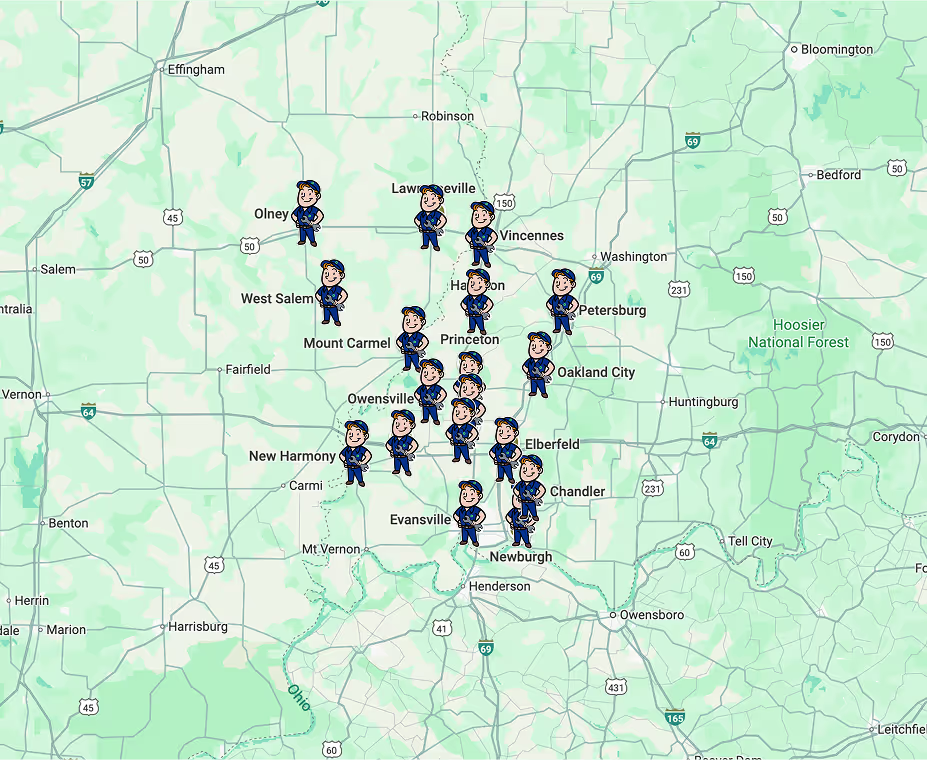
We proudly serve clients throughout our surrounding communities, delivering reliable service wherever you need us. No matter the location, our team is committed to the same high-quality results and responsive support.