Whole House Filtration in Owensville, IN
Whole-house filtration for Owensville, IN improves indoor air quality with scalable options; learn more about installation and maintenance today.

Whole House Filtration in Owensville, IN
Imagine breathing easier in your Owensville, IN home. Cleaner indoor air truly starts with the right whole-house filtration system, perfectly matched and installed for your unique needs. Whether your home is surrounded by farmland, near bustling county roads, or features older ductwork, our team at Perfect Climate Heating and Air can help. A quality whole-house filtration system drastically cuts down on pollen, dust, pet dander, smoke, odors, and those tiny airborne microbes that often trigger allergies and respiratory issues.
.jpeg)
Common whole-house filtration options and what they do
- High-MERV media filters (1 to 4 inch)
These mechanical filters trap particles by size. Higher MERV ratings capture finer particles (mold spores, pet dander, some smoke) while thicker media (4 inch and up) reduces pressure drop for the HVAC system. Best for homes with allergy sufferers wanting continuous, reliable particulate removal with low operational complexity. - HEPA-compatible systems
True HEPA efficiency captures very small particles (HEPA standard is 99.97% at 0.3 microns). In whole-house installations, HEPA is often used in a dedicated air handler or in a bypass configuration because standard system blowers can be impacted by HEPA’s higher resistance. HEPA is recommended when occupants have severe allergies, immunocompromise, or frequent wildfire/wood-smoke exposure. - Electronic air cleaners
Electronic or electrostatic air cleaners charge and collect particles on plates. They can handle high air flows with low pressure drop and are washable, reducing ongoing filter cost. They require regular cleaning of collector cells and can generate small amounts of ozone if not designed or maintained properly. - Multi-stage purification (UV, activated carbon)
UV lamps installed in the air handler reduce microbial load on coils and in ductwork; they are not primary particulate filters but help control bacteria, viruses, and mold growth. Activated carbon stages adsorb odors and many volatile organic compounds (VOCs) from household cleaners, paints, and combustion sources—useful in rural areas with agricultural inputs and homeowners using wood stoves.
Diagnosing needs and system compatibility
A proper whole-house solution begins with a system assessment:
- Measure the HVAC system airflow in cubic feet per minute (CFM) and check static pressure to determine filter size and allowable resistance.
- Inspect existing filter housings and space around the air handler; many homes need a retrofit housing for thicker media or HEPA.
- Evaluate ductwork condition. Owensville homes built before recent code updates often benefit from duct cleaning and sealing to maximize filtration performance and prevent bypass leaks.
- Consider occupant needs: seasonal pollen sensitivity, pets, smokers, proximity to agricultural dust or wood smoke, and whether anyone is immunocompromised.
Installation process and timeline
Typical steps for a whole-house filtration install:
- On-site assessment and airflow measurement.
- Recommendation of one or more filtration options based on system capacity, space, and indoor air goals.
- If required, installation of upgraded filter housing or dedicated HEPA module and any multi-stage components (UV lamp, carbon cell).
- Integration with the existing blower and ductwork, balancing airflow, and testing static pressure and system operation.
- Commissioning and documentation of filter sizes, replacement schedules, and maintenance needs.
Most standard installs can be completed in a single day; larger retrofits that require new housings or duct modifications may take longer.
Maintenance plans and ongoing care
Whole-house filtration systems perform best with regular maintenance. Typical schedules:
- 1-inch disposable filters: check monthly; replace every 1 to 3 months depending on loading.
- 4-inch (or thicker) media filters: generally replaced every 6 to 12 months.
- HEPA systems: prefilters changed per recommendation; HEPA modules inspected annually and replaced according to manufacturer guidance.
- Electronic air cleaners: collector plates cleaned every 1 to 3 months; an annual professional inspection recommended.
- UV lamps: replace every 9 to 12 months to maintain germicidal output.
Maintenance plans commonly include scheduled filter replacement, annual performance checks, and documented service visits that protect warranties and preserve system efficiency.
Performance considerations
- Filtration efficiency vs. airflow: Higher efficiency filters typically increase resistance (pressure drop). Proper sizing and thicker media reduce impacts on system airflow and energy use.
- Air changes and CADR: Whole-house filtration effectiveness depends on how often the system circulates house air. Systems with higher CADR and correctly sized fans will provide more air cleaning per hour.
- Target contaminants: Use mechanical filtration (high-MERV or HEPA) for particles; add activated carbon for odors and VOCs; add UV for biological control. A layered or multi-stage approach often provides the most comprehensive indoor air quality improvement.
- Local pollutants: Owensville experiences seasonal pollen and tree bloom in spring, humid summers that encourage mold growth in poorly ventilated areas, and occasional smoke from residential wood-burning. These factors should influence the chosen filtration strategy.
Warranty and financing overview
Manufacturers typically offer parts warranties for filters, UV lamps, and electronic cells; some components carry limited lifetime warranties. Labor warranties vary by installer; routine, documented maintenance is often required to maintain warranty coverage. Financing options are commonly available to spread installation costs over time, and many homeowners choose payment plans for higher-end HEPA or multi-stage systems to make comprehensive indoor air quality upgrades more affordable.
How to choose the right whole-house filtration in Owensville, IN
Use this practical checklist to match a solution to your home:
- Do occupants have asthma, allergies, or immune concerns? Prioritize HEPA-compatible or high-MERV media with dedicated housings.
- Are odors or VOCs a problem (chemicals, smoke, farming operations)? Add activated carbon stages.
- Is your home older with restricted housing space? Consider electronic cleaners or install a retrofit filter housing for thicker media.
- Do you want low ongoing cost and low maintenance? High-MERV media is a balance between performance and straightforward upkeep.
- Do you need microbial control on coils and in ducts? Add a UV lamp to the air handler and schedule periodic duct cleaning.
- Factor in energy and noise: ensure any high-resistance filter is matched to blower capacity to prevent efficiency loss and excess cycling.
What Our Clients
Say About Us
Our clients consistently praise our dedication and expertise. They appreciate our commitment to meeting their needs and providing sound advice, which has fostered long-lasting relationships.

SERVICE AREAS
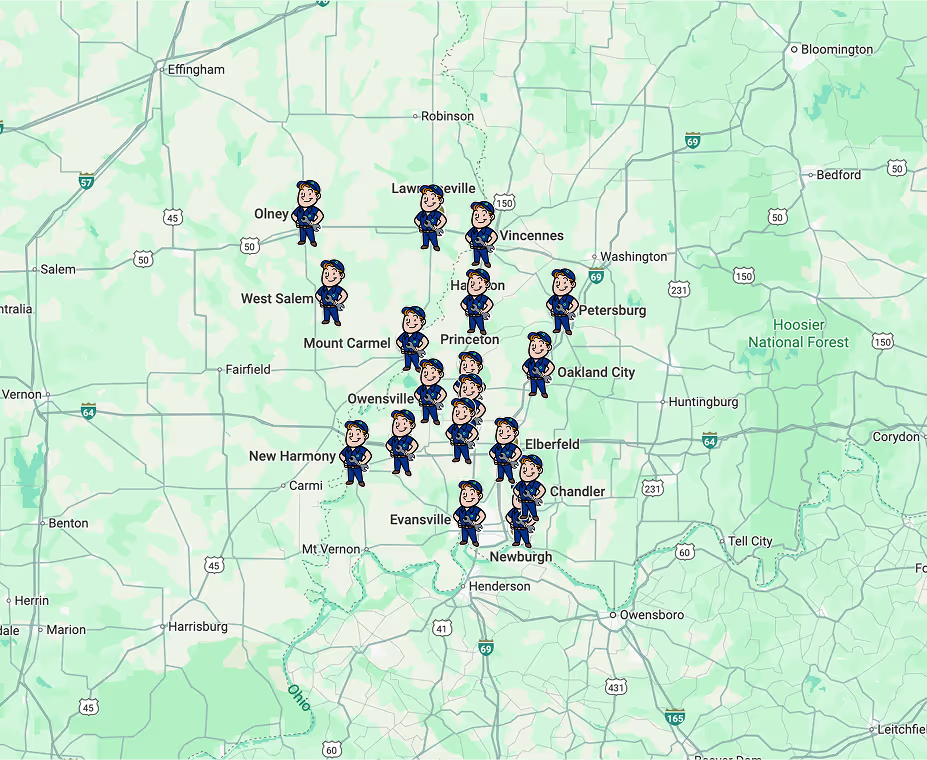
We proudly serve clients throughout our surrounding communities, delivering reliable service wherever you need us. No matter the location, our team is committed to the same high-quality results and responsive support.