Whole House Humidifiers in Poseyville, IN
Whole House Humidifiers Installation in Poseyville, IN: Learn how proper sizing, installation, and maintenance boost comfort and protect woodwork. Learn more.

Whole House Humidifiers in Poseyville, IN
When Poseyville winters bring dry, cold air inside, your home's comfort and even your health can suffer. But there's a simple, effective solution: a whole-house humidifier. Here at Perfect Climate Heating and Air, we know that maintaining proper indoor humidity isn't just about feeling better; it protects your beautiful woodwork, furniture, and helps keep your family healthier. These systems integrate seamlessly with your existing HVAC to ensure ideal humidity levels year-round, stopping those annoying static shocks, dry skin, and respiratory issues before they start.
.jpeg)
Common humidity problems in Poseyville homes
- Dry air during the heating season: Low outdoor humidity and forced-air heating drop indoor relative humidity to uncomfortable levels.
- Wood floors, cabinets, and trim cracking or shrinking.
- Static electricity and increased dust circulation.
- Sore throat, dry eyes, and aggravated asthma or allergy symptoms.
- Uneven humidity between rooms due to duct or zoning issues.
Types of whole house humidifier systems
- Bypass humidifiers
- Use furnace airflow to move air across a water panel.
- Low electrical use and quiet operation.
- Require a connection between supply and return ducts and sufficient airflow.
- Fan-powered humidifiers
- Include an integrated fan to push air through the water panel.
- Deliver faster humidification and work well when furnace fan runtime is limited.
- Steam humidifiers
- Create steam independently of furnace operation and inject it into the duct or plenum.
- Fastest and most precise control, suitable for larger homes and very dry climates.
- Higher electricity use and greater upfront cost.
Each option has benefits depending on home size, existing HVAC configuration, and target humidity goals.
Sizing and compatibility with existing HVAC systems
- Proper sizing is crucial: undersized units struggle to maintain humidity; oversized units cycle unnecessarily.
- Technicians determine capacity based on square footage, insulation levels, typical winter indoor setpoint, and air leakage.
- Compatibility checks include furnace make/model, duct layout (bypass needs a return-to-supply connection), available electrical supply (steam units need 240V in many cases), and whether your system uses zoning or variable-speed fans.
- Older furnaces and non-ducted systems may require modifications or alternative solutions like ductless whole-home options or room humidifiers.
Installation process — what a professional consultation and installation typically cover
- Home assessment: measuring living area, reviewing HVAC equipment, and checking duct layout and water supply.
- Load and sizing calculations to choose the right model and capacity.
- Site planning: locating the humidifier on the furnace or in the duct, planning water line and drain routing, and identifying electrical needs.
- Installation work: mounting the unit, connecting water feed and drain, wiring to the furnace transformer or dedicated circuit (for steam models), connecting humidistat controls, and sealing any duct penetrations.
- System start-up and balancing: verifying humidifier operation, calibrating humidistat, checking for leaks, and testing distribution to ensure consistent humidity throughout the home.
Controls, humidistats, and automation
- Manual humidistats allow simple on/off control and setpoint adjustments.
- Digital humidistats with automatic sensors maintain precise relative humidity and can interface with smart thermostats and home automation systems.
- Integrated controls prevent over-humidification by factoring outdoor temperature (to limit condensation on windows) and can be set seasonally.
- For zoned systems, controls are coordinated to avoid conflicts between HVAC zones and the humidifier.
Maintenance and filter/replacement schedules
- Replace or clean the evaporative pad/water panel annually; high-mineral (hard) water may require more frequent changes.
- Steam electrodes or cartridges may need replacement every 1 to 3 years depending on water quality and use.
- Inspect water feed and drain lines yearly for clogs, leaks, or mineral buildup.
- Clean strainers and check automatic fill valves each heating season.
- Typical seasonal checklist: pre-heating-season start-up, mid-season inspection, and end-of-season shutdown/cleaning if recommended by the manufacturer.
Energy considerations
- Bypass humidifiers use minimal electricity because they rely on furnace airflow.
- Fan-powered models use additional fan power but still remain relatively efficient.
- Steam humidifiers consume more electricity and may impact utility bills, but provide rapid and precise control—useful for large homes or very dry conditions.
- Properly sized systems prevent unnecessary runtime and maintain comfort without overspending on energy.
Common FAQs and troubleshooting
- My humidifier is running but humidity is low: Check pad condition, water supply, outdoor temperature limits in the humidistat, and furnace fan runtime. Inspect ducts for leaks that dilute humidity.
- I see water on windows or condensation: Humidity may be set too high for current outdoor temperatures. Use an outdoor-compensating humidistat or lower setpoint.
- Strange odors after installation: New pads or residual manufacturing oils can smell initially. Persistent moldy odors usually indicate a clogged drain, dirty pad, or poor ventilation.
- Noisy operation: Fan-powered units are louder than bypass units; rattles often come from loose duct connections or mounting hardware.
- Mineral buildup and white dust: Hard water causes deposits on pads, steam elements, and can produce white dust. Consider a scale-reducing option or regular maintenance.
Product options and warranties
- Residential whole house humidifiers come in entry-level bypass units, mid-range fan-powered models, and premium steam systems.
- Many manufacturers offer parts warranties from 1 to 5 years; some components such as heaters or certain housings may carry extended warranties. Warranty coverage often depends on proper installation and routine maintenance, so documented annual service helps preserve protections.
Local considerations for Poseyville, IN
- Winter months in Poseyville commonly create dry indoor conditions; adding whole-house humidification protects heritage woodwork found in older local homes and preserves comfort for residents with respiratory sensitivities.
- Local water hardness and mineral content can affect maintenance frequency and component life; water treatment or scale-control options can reduce long-term service needs.
- Homes with older furnaces or complex ductwork typical of regional housing stock may require additional compatibility work during installation.
Long-term benefits and maintenance advice
- Maintaining relative humidity in the recommended range (roughly 35 to 45 percent in winter) improves perceived warmth, allowing lower thermostat settings without sacrificing comfort.
- Proper humidity protects wood floors, trim, musical instruments, and antiques common in area homes.
- Seasonal maintenance and timely pad or electrode replacement extend system life, maintain efficiency, and prevent indoor air quality issues.
- Consider integrating the humidifier with your thermostat or home automation to simplify seasonal adjustments and prevent over-humidification.
What Our Clients
Say About Us
Our clients consistently praise our dedication and expertise. They appreciate our commitment to meeting their needs and providing sound advice, which has fostered long-lasting relationships.

SERVICE AREAS
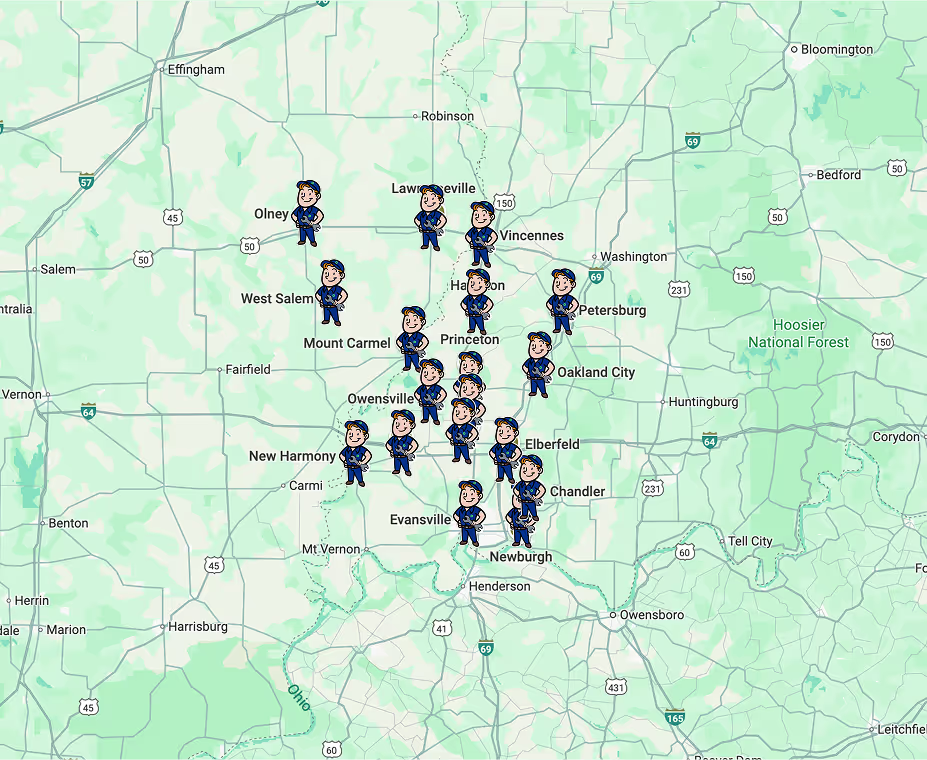
We proudly serve clients throughout our surrounding communities, delivering reliable service wherever you need us. No matter the location, our team is committed to the same high-quality results and responsive support.