Radiant Heating
Radiant heating installation in Haubstadt, IN offers efficient, comfortable warmth with proven design, installation steps, and maintenance guidance. Learn more.

Radiant in Haubstadt, IN
Radiant heating provides consistent, comfortable warmth by transferring heat through floors rather than forcing warm air. For homeowners in Haubstadt, IN, where winters are chilly and humid months follow, radiant systems—both in-floor hydronic and electric—offer efficient, allergy-friendly heating that pairs well with modern boilers or heat pumps. Our content explains system types, design and layout considerations, installation steps and subfloor work, controls and thermostats, retrofit pathways, and maintenance best practices so you know what to expect when choosing radiant heating in Haubstadt.
.avif)
Why radiant works well in Haubstadt, IN
Haubstadt experiences cold snaps in late fall through early spring and humid summers that can benefit from a heating strategy that reduces air movement and improves thermal comfort. Radiant delivers:
- Even floor-to-ceiling warmth that removes cold spots common with forced-air systems
- Lower operating temperatures for hydronic systems, improving efficiency with condensing boilers or heat pumps
- Reduced airborne dust and allergens because it does not rely on ducted air circulation
- Quiet operation and comfortable floor surfaces during winter months
Types of radiant systems
- Hydronic in-floor (hot water): Flexible tubing is embedded in the floor slab or a thin screed and connected to a boiler or heat pump via a manifold. Best for whole-house heating and new construction or major remodels.
- Electric radiant: Heating cables or mats are installed beneath finished floor coverings. Ideal for smaller rooms, bathrooms, or retrofit spaces where adding a boiler is impractical.
- Staple-up or panelized systems: Hydronic tubing attached under subfloor between joists or installed on prefabricated panels for faster installation in retrofit projects.
Common radiant heating issues in Haubstadt homes
- Cold spots from inadequate insulation under the slab or between joists
- Slow response time in large slab installations if not zoned properly
- Floor height changes after adding radiant layers in retrofit scenarios
- Incompatible floor coverings or adhesives that limit heat transfer
- Improper control strategy leading to overheating or inefficient cycling
All of these are solvable through proper assessment, design, and equipment selection during the planning stage.
Design and layout considerations
- Heat loss calculation: A professional heat loss analysis for each room defines the required output. This is essential in Haubstadt where exterior temperatures can vary widely.
- Floor covering compatibility: Tile and stone transfer heat best; engineered hardwood and luxury vinyl require attention to maximum surface temperatures and installation methods.
- Tube or cable spacing: Closer spacing increases output but raises material and labor costs. Typical spacing is selected based on the heat loss in each zone.
- Zoning and manifold placement: Zone rooms independently to match use patterns and improve responsiveness. Place manifold in an accessible location for balancing and service.
- Insulation and thermal break: Continuous insulation below the system prevents downward heat loss to soil or crawlspaces and significantly improves efficiency.
- System depth and floor build-up: Account for finished floor height and thresholds; low-profile panels or electric mats can mitigate excessive floor-rise in retrofits.
Subfloor work and preparation
For reliable radiant performance, subfloor preparation is critical:
- New slab construction: Install insulation under the slab and a vapor barrier to mitigate ground moisture. Tubing is laid and secured before concrete placement.
- Retrofit over existing slab: Options include thin pours or cementitious toppings over tubing or installing low-profile panels adhered to the existing slab. Ensure good adhesion and leveling.
- Joist bay installations: When installing between joists, add insulation below to reflect heat upward and install proper support for floor loads.
- Moisture management: Confirm existing slabs or subfloors are dry and structurally sound. Address any water intrusion or drainage issues before installation.
Installation steps — what to expect
- Site assessment and heat loss calculations for each zone.
- System design and layout approval including manifold location and thermostat types.
- Subfloor preparation: insulation, vapor barrier, and leveling as needed.
- Installation of tubing or electric mats and securing per manufacturer specifications.
- Connection to manifolds, boiler, heat pump, or electrical circuits by licensed trades.
- Embedment in thinset, lightweight screed, or concrete as required.
- Flooring installation after proper drying and curing times.
- System commissioning: pressure testing, flushing and filling (hydronic), electrical continuity checks (electric), balancing, and thermostat programming.
Expect installation timelines to vary by scope. New construction is typically faster than full retrofits because of fewer constraints on floor height and access.
Controls and thermostats
Smart, zone-capable controls are central to performance:
- Zoning thermostats: Independent room control prevents overheating and saves energy by heating only occupied areas.
- Mixing valves and outdoor reset: For hydronic systems, mixing valves and outdoor reset controls optimize supply water temperatures to match outdoor conditions, increasing efficiency in Haubstadt’s variable climate.
- Smart thermostat integration: Modern thermostats allow scheduling, remote access, and learning algorithms that reduce energy use while maintaining comfort.
- Floor sensors: Provide precise surface temperature feedback to protect sensitive floor coverings like hardwood.
Choose controls that support zoning, read floor sensors, and integrate with boilers or heat pumps as needed.
Retrofit options for existing homes
- Electric mat installations under tile or thin-set floors present a low-profile solution with minimal floor rise.
- Low-profile hydronic panels or preformed subfloor systems reduce buildup and allow routing through existing floor structures.
- Staple-up tubing in accessible basements or crawlspaces combined with insulated subfloors can heat floors from below.
- Evaluate door clearances and trim adjustments when adding layers. A design review will determine the least invasive method that meets heating goals.
Maintenance best practices
- Annual boiler or heat pump service for hydronic systems, including combustion checks, pressure checks, and circulator inspection.
- Manifold checks: Inspect flow meters, actuators, and valves each heating season and bleed air from lines as needed.
- Electrical inspections for electric mats: Verify thermostat operation and ground continuity if you notice irregular heat patterns.
- Monitor floor surface temperatures and address uneven heating promptly; this often indicates balancing issues or an isolated failure.
- Keep rooms at stable setpoints to reduce thermal cycling and wear on components.
Benefits recap for Haubstadt homeowners
Radiant heating delivers steady, comfortable warmth with reduced drafts and improved indoor air quality. Properly designed and installed systems in Haubstadt homes offer efficient operation through lower fluid temperatures, compatibility with modern heat sources, and long service life. When combined with adequate subfloor insulation, zoning, and quality controls, radiant provides a durable, quiet heating solution tailored to the seasonal demands of the region.
What Our Clients
Say About Us
Our clients consistently praise our dedication and expertise. They appreciate our commitment to meeting their needs and providing sound advice, which has fostered long-lasting relationships.

SERVICE AREAS
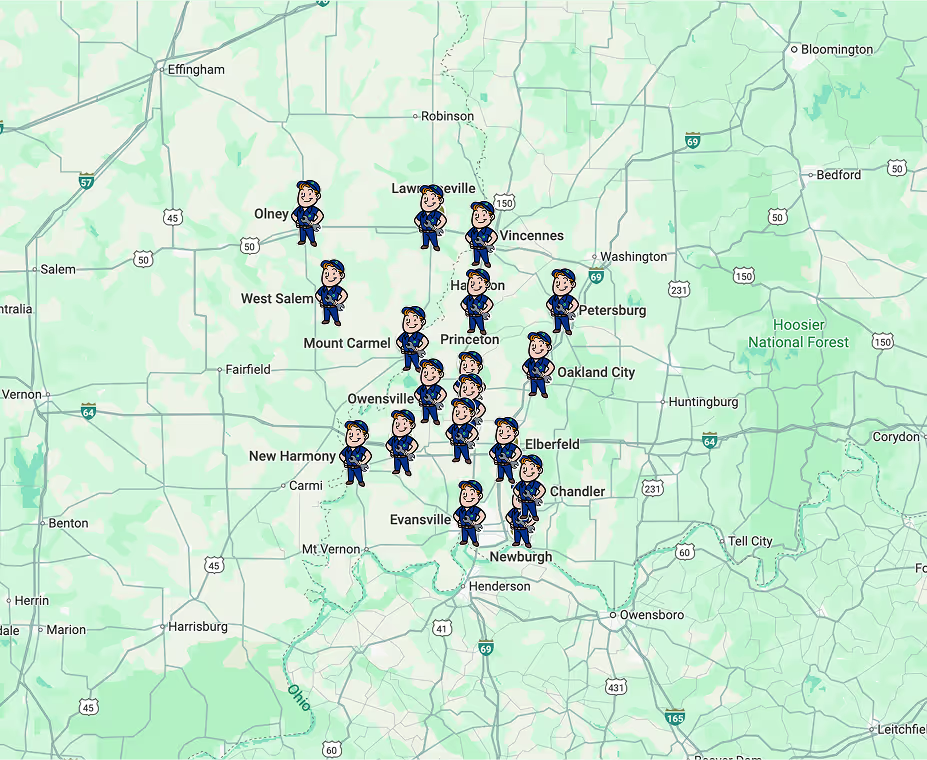
We proudly serve clients throughout our surrounding communities, delivering reliable service wherever you need us. No matter the location, our team is committed to the same high-quality results and responsive support.