UV Lights
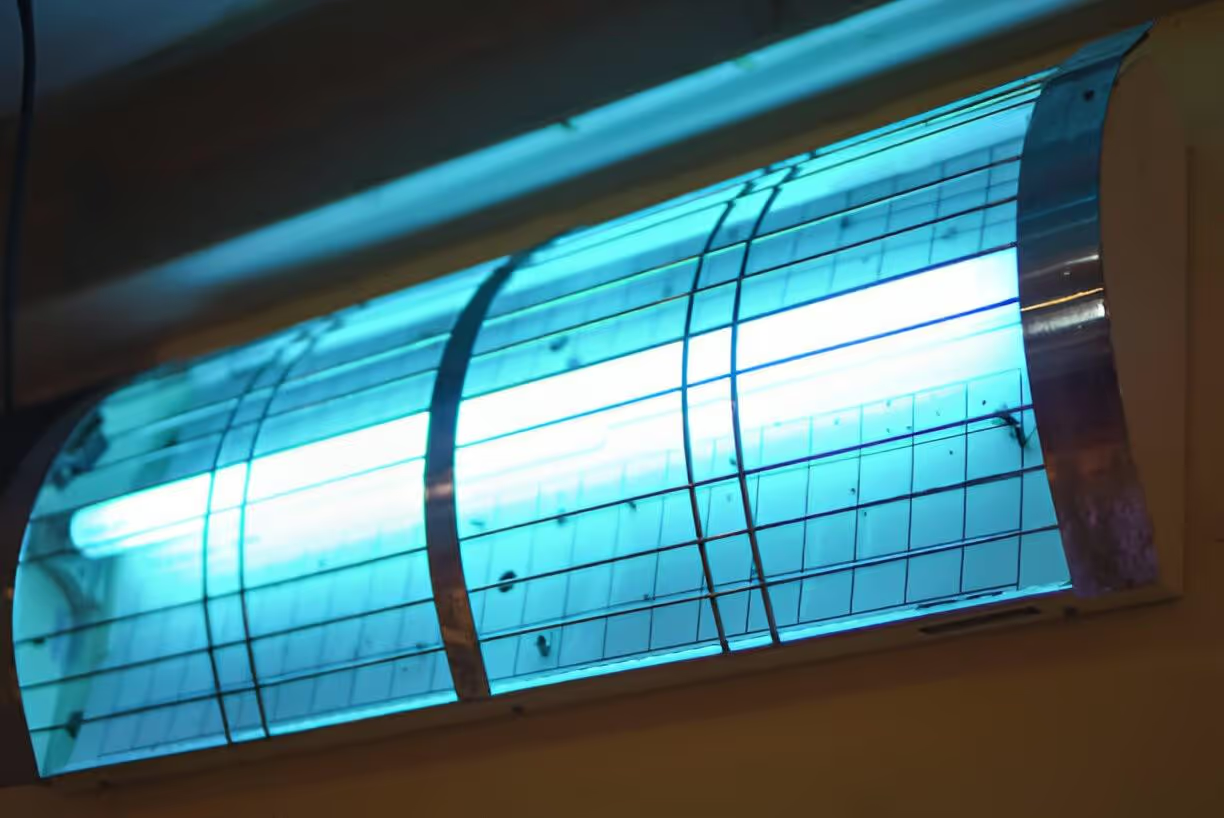
UV lights are essential tools in various industries, known for their ability to disinfect surfaces and purify air. They are widely used in healthcare settings to maintain sterile environments.

UV Lights in Haubstadt, IN
Ultraviolet (UV) air sanitation systems are a targeted way to reduce microbial contamination inside HVAC systems and improve indoor air quality in Haubstadt, IN homes. UV-C lights in the right place can inactivate bacteria, mold spores, and many viruses that accumulate on coils, drain pans, and inside ducts. For homeowners dealing with humid summers, spring and fall pollen, or odors from basement moisture, understanding how UV lights work, where they belong, and what to expect from installation and maintenance helps you make an informed decision.
Why UV-C matters for Haubstadt homes
Haubstadt experiences humid summers and seasonal agricultural pollen that increase biological loading on HVAC systems. That combination promotes coil and drain pan growth, recurring musty odors, and reduced system efficiency. UV-C lights in Haubstadt, IN address these local challenges by targeting the biological sources that filters and ventilation alone do not fully control. UV-C contributes to cleaner coils, fewer microbial odors, and more stable airflow, which is especially helpful in older homes and houses with basements or crawlspaces that trap moisture.
Common UV light placements and what they do
Coil-mounted (near the evaporator coil)
- Sits above or in front of the indoor cooling coil.
- Keeps the coil surface free of biological growth, restoring heat transfer efficiency and reducing musty smells.
- Best when the coil is a recurring source of mold or when condensation is common.
Duct-mounted (in the supply or return duct)
- Provides airborne disinfection for moving air.
- Requires proper lamp sizing and multiple lamps or reflectors for sufficient exposure.
- Useful when in-duct surface contamination or airborne pathogens are primary concerns.
Dual systems
- Combine coil and duct lamps to treat both surfaces and airborne contaminants.
- Often chosen for homes with chronic IAQ problems or medically vulnerable occupants.
Installation requirements and safety
- Compatibility with your HVAC: Not every HVAC system is the same. Lamp size, mounting method, and ballast type must match the air handler or duct geometry for effective treatment. Placement that ensures direct line-of-sight exposure to the coil or airflow path is essential.
- Electrical: UV systems are typically hardwired to the air handler or powered through a dedicated circuit. Some smaller systems are plug-in. Ballast/driver type and voltage depend on the model.
- Safety: UV-C can cause eye and skin injury with direct exposure. Proper installations place lamps inside the air handler or ductwork and include shielding, interlocks, and warning labels. Installers should follow industry safety practices and local electrical codes.
- Avoid ozone-producing lamps: True germicidal UV-C at 253.7 nm does not produce ozone. Stay away from lamps that emit wavelengths below 200 nm or explicitly state ozone generation.
Effectiveness and limitations
What UV-C does well
- Reduces microbial growth on coils and drain pans, which often removes musty odors and improves system efficiency.
- Inactivates many airborne microbes when exposure time and intensity are sufficient.
- Lowers biofilm formation that can clog drain lines and reduce airflow.
What UV-C does not do
- Does not remove particulate matter such as dust, pollen, or pet dander. Filtration is still required for particle control.
- Has limited reach: UV is line-of-sight. Shadows, dirt buildup on lamps or surfaces, and high airspeed reduce dose and efficacy.
- Is not a standalone air cleaner for chemicals or VOCs. Address those with ventilation, activated carbon, or source control.
Bulb replacement and maintenance schedule
- Bulb output decay: Germicidal lamps lose effectiveness over time even if they still glow. Replace bulbs on a 9 to 12 month schedule for consistent germicidal output. Some manufacturers recommend annual replacement.
- Cleaning: Clean quartz sleeves or lamp surfaces every 3 months in dusty environments and at least every 6 months otherwise. Dust, pollen, and residue block UV transmission and reduce performance.
- Ballast and component checks: Inspect ballasts, wiring, mounts, and seals annually. Replace any failing ballast or corroded hardware to maintain reliability.
- Verification: Consider periodic performance checks with a UV-C meter or professional inspection to verify output, especially after one year of operation.
Diagnosing problems and typical solutions
Signs that a UV system or your HVAC could use attention in Haubstadt homes:
- Persistent moldy or musty odors after filters are changed.
- Visible mold on coil fins or drain pans.
- Frequent filter clogging in humid months.
- Reduced cooling performance or higher energy use despite proper thermostat settings.
Common remedies:
- Replace UV bulbs and clean sleeves.
- Reposition lamps to ensure proper exposure of the coil or airflow.
- Add reflectors in ducts to increase UV dose.
- Combine UV with higher-efficiency filtration and address sources of moisture.
How UV integrates with filtration and other IAQ measures
UV-C is most effective as part of a multi-layer indoor air quality strategy:
- Mechanical filtration: Use a properly sized filter (MERV 8 to 13 for most homes) or a HEPA solution in a dedicated air cleaner for particle removal. UV does not replace these filters.
- Humidity control: Maintain indoor relative humidity between 40 and 60 percent to limit microbial growth and optimize UV performance. Dehumidification is particularly important during Haubstadt summers.
- Ventilation: Balanced ventilation or air exchange reduces indoor pollutant concentration and complements UV disinfection of recirculated air.
- Source control: Fix leaks, address plumbing or insulation issues, and control indoor moisture to reduce the load on both filters and UV systems.
Final considerations for Haubstadt homeowners
For homes in Haubstadt, IN where seasonal pollen, agricultural dust, and summer humidity create recurring HVAC microbial issues, UV-C lights are a practical, evidence-based option to protect coil surfaces and reduce airborne microbes when used correctly. Expect annual maintenance for bulbs and periodic cleaning to maintain performance. The best outcomes come from integrating UV with filtration, humidity control, and proper ventilation to create a comprehensive indoor air quality plan tailored to local conditions.
What Our Clients
Say About Us
Our clients consistently praise our dedication and expertise. They appreciate our commitment to meeting their needs and providing sound advice, which has fostered long-lasting relationships.

SERVICE AREAS
We proudly serve clients throughout our surrounding communities, delivering reliable service wherever you need us. No matter the location, our team is committed to the same high-quality results and responsive support.