Furnace Replacement in Princeton, IN
Furnace replacement in Princeton, IN: compare replacement vs repair, sizing, permits, financing, and high-efficiency options. Learn more now.

Furnace Replacement in Princeton, IN
Is your furnace struggling to keep up with our tough Princeton winters? Or are your energy bills climbing without any real improvement in comfort? It might be time to seriously consider a furnace replacement right here in Princeton, IN. A modern, properly sized system won't just improve your comfort; it'll significantly reduce fuel use and help you avoid those recurring repair costs. At Perfect Climate Heating and Air, we're here to help you understand everything: how to decide between replacement and repair, our process for sizing and installing new systems, the efficiency gains you can expect, permit and code considerations specific to Princeton-area homes, available financing and rebate options (including loyalty replacement credits), and how to pick the perfect brand and configuration for long-term reliability you can count on.
.jpeg)
Do I need a replacement or just a repair?
Consider replacement when you see one or more of these signs:
- System age: furnaces older than about 15 years are approaching the end of typical service life and lack modern efficiency features.
- Frequent breakdowns: repeated repairs suggest diminishing returns compared with a new system.
- Rising heating bills: replacing a low-AFUE furnace with a high-efficiency model often produces clear energy savings.
- Uneven heating or loud operation: these can point to failing core components or mismatched system capacity.
- Safety concerns: cracked heat exchangers, persistent carbon monoxide alarms, or other safety issues require immediate evaluation and often replacement.
If the problem is a single component (like a pilot assembly, ignition system, or blower motor) and the system is otherwise sound, repair can be the right short-term solution. A professional assessment that includes a full system inspection and a load calculation will clarify whether replacement is the smarter long-term investment.
How we determine the right size: load calculations and system selection
Proper sizing is essential. Too large a furnace cycles on and off, reducing comfort and longevity; too small a unit won't heat the home properly. Technicians use Manual J load calculations to determine your home’s actual heating needs by evaluating:
- Square footage, ceiling height, and insulation levels
- Window area, orientation, and efficiency
- Air infiltration and ductwork condition
- Local climate factors such as typical winter temperature swings in southern Indiana
For Princeton homes, older construction and uninsulated attics or basements can increase load. The load calculation also guides ductwork assessment and whether you need upgrades like duct sealing or insulation to ensure efficient delivery of heated air.
Energy-efficient model recommendations and expected savings
Modern furnaces are rated by AFUE (Annual Fuel Utilization Efficiency). Replacing an older mid-efficiency or low-efficiency furnace with a high-efficiency condensing model (higher AFUE) can meaningfully reduce fuel use. Typical benefits include:
- Higher AFUE: more of the fuel’s heat becomes usable heat for your home.
- Variable-speed blowers and modulating burners: improved comfort, quieter operation, and better humidity control.
- Improved controls and thermostat compatibility: smart or programmable thermostats enhance efficiency through better scheduling and zoning.
Expected gains depend on your starting point. For example, moving from an older, low-efficiency unit to a modern high-efficiency furnace often results in noticeable savings on heating bills over time. Combine efficiency upgrades with proper sizing and duct sealing to maximize long-term value.
Professional removal and installation process
A thorough furnace replacement typically includes these steps:
- Initial assessment and load calculation to confirm right size and model.
- Detailed proposal outlining recommended equipment, efficiency ratings, and any required duct or venting work.
- Permit submission and scheduling (see code compliance below).
- Safe removal of the old furnace, including proper disposal of combustion-related components and filters.
- Installation of the new furnace, including venting, gas line or electrical hookups, duct connections, and thermostat integration.
- System startup, combustion analysis (for gas units), safety checks, and airflow balancing.
- Final inspection and documentation to satisfy local codes.
Most routine replacements in single-family homes can be completed within a day once permits are issued and parts are on hand. More complex jobs—such as switching fuel types, modifying ducts, or upgrading ventilation—may take longer.
Permit, inspection, and code compliance in Princeton
Furnace replacement must meet state and local codes. Permitting ensures:
- Proper venting and combustion air for gas furnaces
- Correct electrical and gas connections
- Compliance with local building and energy codes
Licensed technicians will pull required permits and coordinate inspections. In Princeton and the surrounding Tri-State area, it is important to work with contractors who understand local code nuances and inspection processes to prevent delays.
Financing, rebates, and loyalty replacement credits
Furnace replacement can be financed through several options. Local utilities and state energy programs often offer rebates for high-efficiency equipment; eligibility depends on installer certification and the model’s performance rating. Consider:
- Manufacturer rebates and utility incentives for high-AFUE furnaces
- Financing plans to spread the cost of an upgrade
- Loyalty replacement credits: many maintenance programs include credits toward new systems (for example, credits that accumulate each year of service up to a set cap)
Always verify current rebate and financing availability and the eligibility criteria from local programs before finalizing equipment choices.
Warranty and maintenance plan guidance
New furnaces come with manufacturer warranties covering parts (and sometimes heat exchangers for longer terms). Labor warranties vary by installer. A maintenance plan protects that investment by providing:
- Regular tune-ups (recommended at least annually, often twice a year for heating and cooling)
- Priority service and reduced diagnostic fees
- Service documentation that may be required for warranty protection
- Routine maintenance keeps efficiency high, extends equipment life, and can preserve warranty coverage.
Choosing the right brand and configuration
Select equipment based on:
- Fuel type common to your neighborhood (natural gas is typical in many Princeton homes)
- AFUE rating aligned with your energy goals and budget
- Configuration: single-stage, two-stage, or modulating burners; variable-speed blowers; and compatibility with zoned systems or heat pumps
- Reliability and local serviceability: consider brands with good local parts availability and technician familiarity
- A trusted installer will review options and explain tradeoffs—initial cost versus long-term operating savings, noise levels, and comfort improvements.
What Our Clients
Say About Us
Our clients consistently praise our dedication and expertise. They appreciate our commitment to meeting their needs and providing sound advice, which has fostered long-lasting relationships.

SERVICE AREAS
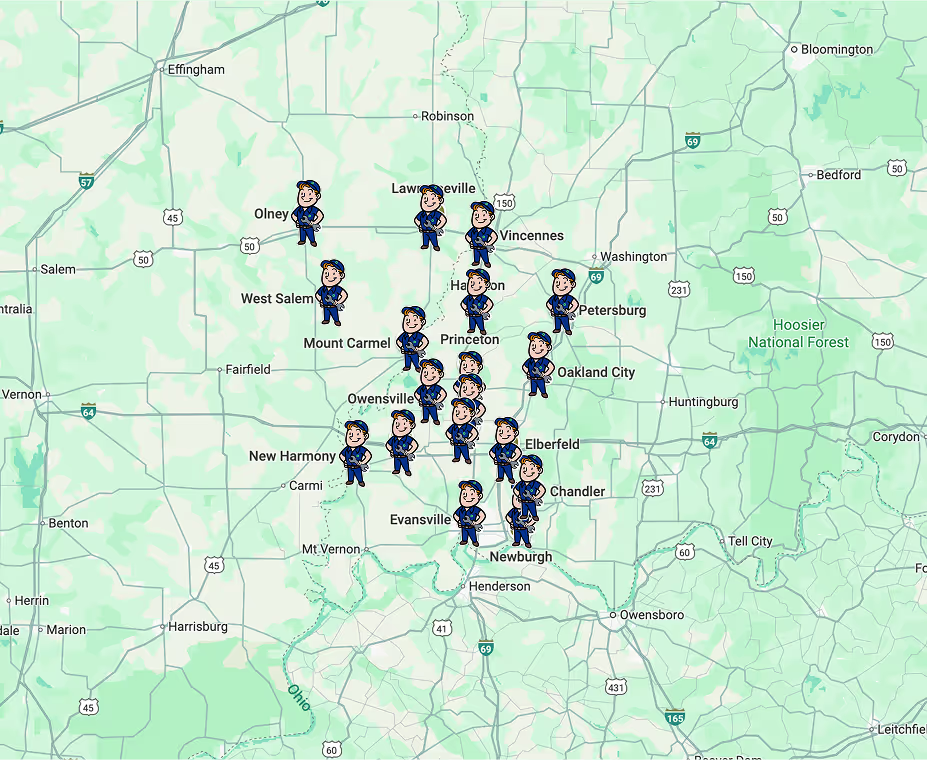
We proudly serve clients throughout our surrounding communities, delivering reliable service wherever you need us. No matter the location, our team is committed to the same high-quality results and responsive support.