Whole House Filtration in Lawrenceville, IL
Improve Lawrenceville, IL indoor air with Whole-House Filtration. Learn how different systems reduce allergens and boost system efficiency—learn more today

Whole House Filtration in Lawrenceville, IL
Here in Lawrenceville, IL, truly clean indoor air is one of the most significant upgrades you can make for your family's comfort and health. Unlike single-room portable purifiers, the whole house filtration systems offered by Perfect Climate Heating and Air treat all the air circulating through your HVAC system, ensuring every room benefits. If you're a homeowner tackling seasonal pollen, agricultural dust, high summer humidity, or even winter wood smoke, a properly selected whole-home filtration solution from Perfect Climate Heating and Air can make a real difference. It will reduce allergens, enhance your HVAC's performance, and help protect the most vulnerable members of your family.
.jpeg)
Why whole-house filtration matters in Lawrenceville, IL
Lawrenceville and the surrounding southern Indiana communities face several local air-quality challenges:
- Spring and early summer pollen from oaks, maples, and grasses increase allergy symptoms.
- Nearby farmland and construction can introduce fine dust and outdoor particulates.
- Hot, humid summers raise indoor mold spore counts when humidity control is inconsistent.
- Winter wood-burning and vehicle exhaust can bring fine soot and odors inside.
Whole-home filtration addresses these by capturing particles before they circulate through living spaces and by reducing contaminant load on your ductwork and HVAC components. The result is cleaner air, fewer allergy triggers, and often a more efficient HVAC system when filters are maintained correctly.
Common whole house filtration systems and what they do
Understanding system types helps you match technology to your home’s needs.
- Media (pleated) filters
- Available in 1-inch, 4-inch, and deeper sizes. Higher surface area media holds more dust and offers lower resistance for a given filtration level.
- Good balance of performance and cost for most homes. Can be rated up to higher MERV levels when using deeper media.
- High-MERV mechanical filters
- MERV ratings quantify particle-capture efficiency. MERV 8–11 works well for general dust and pollen. MERV 12–13 captures finer particles including many allergens and some smoke particles.
- Higher MERV filters trap more particulates but increase pressure drop. Proper sizing for your HVAC system is essential.
- Electronic air cleaners (electrostatic precipitators)
- Charge and collect particles on plates. Effective for fine particles with low ongoing filter costs.
- Require regular plate cleaning and proper maintenance. Some older electronic models can produce small amounts of ozone; modern units mitigate this issue.
- HEPA-capable whole-house systems
- True HEPA captures 99.97% of particles 0.3 microns and larger. Because HEPA media is dense, whole-house HEPA usually requires a dedicated housing, bypass fan, or specialized retrofit that can manage the airflow and pressure requirements.
- Best for homes with severe allergy or immunocompromised occupants, but must be paired with HVAC components capable of handling higher resistance.
- Activated carbon and odor control
- Carbon layers or separate canisters address gases, VOCs, and odors from cooking, smoke, or cleaning products. Often combined with particulate filtration for broader indoor air quality benefits.
Health and allergy benefits
Whole-home filtration reduces the airborne triggers that aggravate allergies, asthma, and respiratory irritation. Benefits include:
- Lower indoor pollen, dust mite debris, pet dander, and mold spores in living spaces.
- Fewer particles circulating through bedrooms where sensitive sleepers spend many hours.
- Reduced accumulation of dust on surfaces and in ductwork, which can lower long-term cleaning and maintenance needs.
Note: Filtration reduces airborne particles but does not remove all pathogens, chemicals, or address humidity — complementary measures (humidity control, ventilation, and targeted cleaning) improve overall results.
Selection criteria: what to consider for your Lawrenceville home
Choosing the right system means balancing filtration efficiency with HVAC performance.
- MERV rating vs airflow
- Select a MERV that your air handler or furnace blower can support without significant loss of airflow. For many homes, MERV 8–13 is a practical range. Consult a professional if you’re considering MERV 13+ or whole-house HEPA to confirm compatibility.
- Filter depth and surface area
- Deeper media filters (4 inches or more) provide higher capture capacity with lower pressure drop compared to thin 1-inch filters at the same efficiency rating.
- HVAC capacity and blower strength
- Older or undersized blowers may struggle with higher-resistance filters. Upgrading the blower or using a bypass/return-mounted solution can preserve airflow while improving filtration.
- Home size and occupancy
- Larger homes or households with multiple occupants, pets, or smokers typically benefit from higher-capacity media and staged filtration (pre-filter + main filter + optional carbon).
- Specific sensitivities
- Families with asthma, severe allergies, or immune-compromised members should prioritize higher-efficiency capture (MERV 13 or HEPA-capable systems) and may pair filtration with humidity control and UV germicidal lights where appropriate.
Installation and maintenance essentials
A whole-house system performs best when installed and maintained professionally.
Professional installation steps
- Evaluate existing duct layout and HVAC capacity.
- Select appropriate filter housing (sliding bracket, media cabinet, or dedicated HEPA housing).
- Ensure proper sealing and airflow balance after installation; measure static pressure to confirm acceptable resistance.
- If adding carbon or electronic components, verify power and access for maintenance.
Ongoing maintenance
- Replace pleated filters on a schedule based on load (often every 60–120 days for MERV 8–11; higher-rated filters may require more frequent changes).
- Clean electronic collector plates per manufacturer guidance.
- Inspect media housings and seals annually and schedule duct cleaning if excessive dust is noticed.
- Monitor HVAC static pressure after changes to filtration to maintain efficiency.
Choosing the right system by home type
- Small single-family homes with mild allergy needs
- A 4-inch media filter with MERV 8–11 often balances capture and airflow without equipment upgrades.
- Homes with seasonal allergies or pets
- Consider MERV 11–13 in a deep-media cabinet and add a carbon stage if odors or smoke are an issue.
- Large homes, open-floor plans, or occupants with severe sensitivities
- Whole-house HEPA-capable systems or a combination of high-MERV media plus a bypass HEPA unit and dedicated fan may be warranted. Coordinate with HVAC professionals to ensure blower and ductwork compatibility.
- Older homes with leaky ducts or poor ventilation
- Pair filtration upgrades with duct sealing and targeted air-cleaning strategies; filtration alone won’t fix infiltration of outdoor dust or humidity problems.
Long-term benefits and practical tips
Investing in whole-house filtration pays dividends beyond immediate allergy relief:
- Improved HVAC longevity and reduced maintenance when filters catch damaging dust before it reaches components.
- Potential comfort gains and lower energy waste when systems operate with clean filters and correctly maintained airflow.
- Healthier indoor environment that complements other IAQ measures like humidity control and proper ventilation.
Maintenance tips for Lawrenceville homeowners:
- Check filters monthly during peak pollen, dust, or wood-burning seasons and change as needed.
- Use pre-filters where heavy dust is common during planting or construction periods.
- Combine filtration with a whole-home dehumidifier if humidity spikes in summer foster mold growth.
Choosing the right whole-house filtration system in Lawrenceville, IL requires matching technology to your home’s HVAC capacity and your household’s sensitivity to pollutants. With the right selection and proper maintenance, whole-home filtration delivers measurable reductions in airborne allergens, better indoor comfort, and cleaner HVAC operation all year round.
What Our Clients
Say About Us
Our clients consistently praise our dedication and expertise. They appreciate our commitment to meeting their needs and providing sound advice, which has fostered long-lasting relationships.

SERVICE AREAS
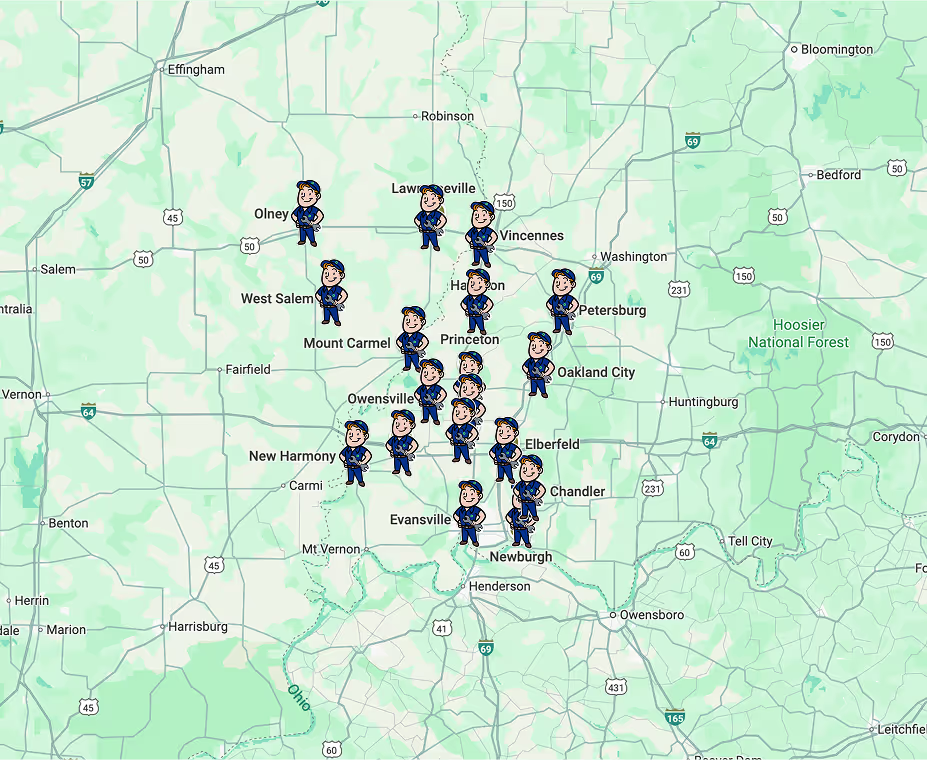
We proudly serve clients throughout our surrounding communities, delivering reliable service wherever you need us. No matter the location, our team is committed to the same high-quality results and responsive support.