Whole House Humidifiers in Lawrenceville, IL
Whole-house humidifiers for Lawrenceville, IL homes. Learn sizing, installation, maintenance, and energy tips to boost comfort today, too.

Whole House Humidifiers in Lawrenceville, IL
Living in Lawrenceville, IL, you're probably familiar with how dry winter air can make your home feel colder than it is, aggravate respiratory issues, create those startling static shocks, and even dry out beautiful wood floors and trim. The good news? A properly sized and professionally installed whole-house humidifier delivers consistent, controlled humidity right through your existing HVAC system. This means your home will be more comfortable, healthier, and better preserved all year long, especially when you choose Perfect Climate Heating and Air for the job.
.jpeg)
Why whole-home humidity control matters in Lawrenceville, IL
- Indiana winters are cold and dry. Indoor relative humidity often drops well below comfortable levels, causing dry skin, sinus irritation, and shrinking or cracking in woodwork.
- Controlled humidity improves perceived comfort so you can lower thermostat settings slightly without feeling colder, which helps with heating efficiency.
- Proper humidity protects hardwood floors, furniture, paint and wallpaper from excessive drying.
- Balanced humidity can reduce airborne irritants and help those with allergies breathe easier, but it must be managed to avoid excess moisture that can lead to mold.
Common whole house humidifier types (and which fits Lawrenceville homes)
Understanding the three primary options helps match system performance to your home’s needs.
- Bypass humidifiers
- How they work: Use furnace air pressure to pull warm air through a water panel and return humidified air to the ductwork.
- Best for: Homes with central forced-air systems and sufficient return-to-supply duct connection. Low electrical demand.
- Pros: Simple, energy efficient, quiet operation.
- Cons: Output depends on furnace fan runtime; less precise during periods when heating runs infrequently.
- Fan-powered humidifiers
- How they work: Include an internal fan that forces air through the water panel so humidification continues more evenly whenever the humidifier runs.
- Best for: Larger homes or homes where consistent humidity is needed even when furnace runs less frequently.
- Pros: Higher output and more consistent humidity control than bypass.
- Cons: Uses additional electricity and requires slightly more space.
- Steam humidifiers
- How they work: Generate steam directly and inject it into the duct or air stream. Operate independently of the furnace blower.
- Best for: Very dry conditions, large homes, or buildings requiring tight humidity control (multi-level homes, homes with significant woodwork).
- Pros: Fast, precise humidity control and high output.
- Cons: Higher energy use and more complex installation, may require hard-water treatment to prevent scale.
Sizing and compatibility with your existing HVAC
Correct sizing is crucial. Oversized or undersized units will not produce the desired results.
Factors a professional will evaluate:
- Home square footage and ceiling height
- Airtightness and insulation levels (leaky homes lose humidity faster)
- Duct layout and furnace/air handler type
- Typical occupancy and lifestyle (laundry, showers, houseplants affect humidity)
- Local climate patterns in Lawrenceville—colder outside temps mean lower allowable indoor RH to avoid window condensation
Practical guidance:
- Target winter indoor relative humidity in Lawrenceville is typically 30 to 40 percent, adjusted downward when nights are extremely cold to prevent condensation on windows.
- For older, draftier homes, aim for the lower end of the range and consider sealing ducts and improving insulation as part of the solution.
- Steam humidifiers are better when you need to maintain higher RH without relying on furnace cycles.
Professional installation: what to expect
A professional installation ensures safe, code-compliant integration and optimal performance.
- Assessment and recommendations
- Technician inspects your HVAC equipment, ductwork, and water access. They calculate the required output based on home size and airtightness.
- Unit selection
- Choose between bypass, fan-powered, or steam based on compatibility and humidity goals.
- Duct and mounting work
- Humidifier mounts to furnace plenum or duct. Bypass units need a bypass duct; fan-powered and steam units require clearances and electrical access.
- Water and drain connections
- A reliable water supply and a proper drain are installed; hard water solutions may be recommended for steam units.
- Controls and sensors
- Humidistat or integrated controls are installed, placed for accurate sensing—not near doors, windows, or direct vents.
- Commissioning
- System is calibrated, airflow balanced, and homeowner receives orientation on controls and maintenance schedule.
Routine maintenance and common troubleshooting
Regular maintenance keeps humidifiers efficient and prevents problems.
- Seasonal maintenance checklist
- Replace or clean the evaporative water panel or pad at least once per heating season.
- Inspect and clean drain lines, solenoid valves, and float assemblies.
- For steam units, descale elements as recommended and inspect electrodes or boilers for buildup.
- Test humidistat accuracy and placement.
- Common issues and fixes
- Low output: Dirty water panel, insufficient fan runtime, improperly sized unit, or inaccurate humidistat placement.
- Water leaks: Faulty supply connection, damaged water panel, or clogged drain.
- White dust or mineral buildup: Caused by hard water; consider a water softener, scale reduction kit, or steam unit maintenance.
- High humidity/condensation: Humidistat set too high for outdoor temperature or insufficient ventilation—reduce setpoint and check for cold spots near windows.
- When to call a pro
- Electrical wiring changes, persistent leaks, consistent low or high humidity despite maintenance, or steam unit scale issues.
- Professional servicing ensures safe repairs and preserves equipment longevity.
Energy and operational considerations
Choose the system that meets humidity needs without excessive energy use.
- Energy use comparison
- Bypass systems are the most energy efficient because they use existing furnace airflow.
- Fan-powered units use additional electricity for the internal fan but deliver more consistent humidity.
- Steam humidifiers use the most energy but are the most effective for rapid, high-output humidification and independent control.
- Water usage and treatment
- Humidifiers consume water proportional to output. Steam systems may require water treatment to prevent scale and preserve performance.
- In areas with hard water, scale control options reduce maintenance and extend service life.
- Long-term value
- Proper humidity can allow you to feel comfortable at lower thermostat settings, protect home finishes, and improve occupant wellbeing—all contributing to perceived cost savings over time.
What Our Clients
Say About Us
Our clients consistently praise our dedication and expertise. They appreciate our commitment to meeting their needs and providing sound advice, which has fostered long-lasting relationships.

SERVICE AREAS
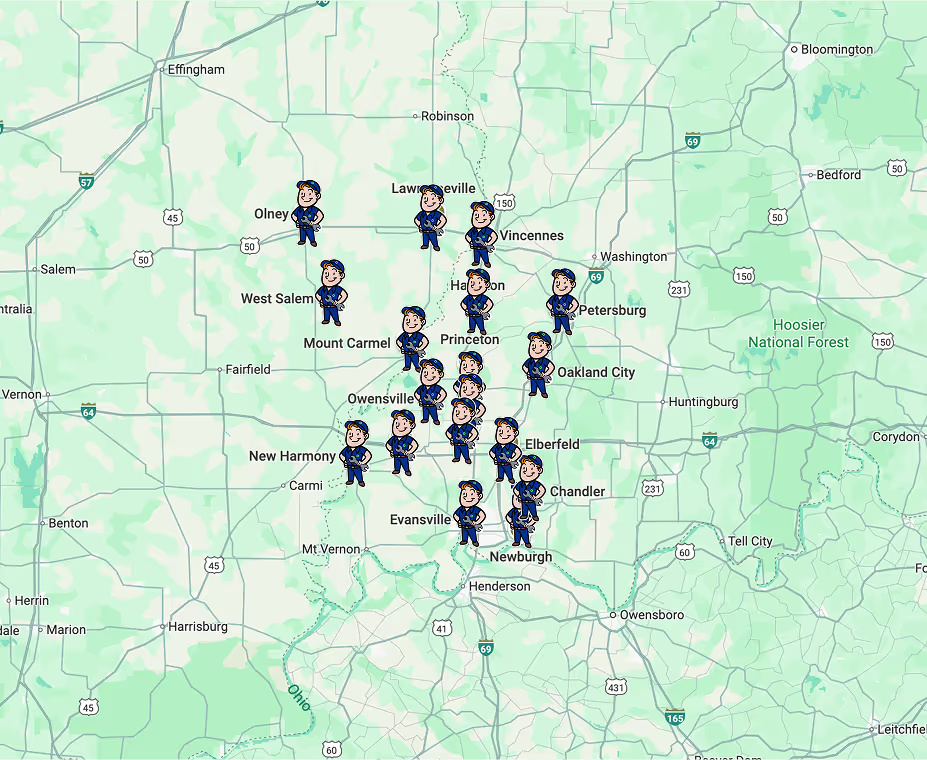
We proudly serve clients throughout our surrounding communities, delivering reliable service wherever you need us. No matter the location, our team is committed to the same high-quality results and responsive support.