AC Service in Mount Carmel, IL
AC service in Mount Carmel, IL keeps your home comfortable with diagnostics, maintenance, and timely repairs—learn more today.

AC Service in Mount Carmel, IL
Reliable AC service in Mount Carmel, IL is what keeps your home blissfully comfortable through those hot, humid summers and truly protects your valuable HVAC investment. In our area, high humidity, frequent summer storms, and seasonal pollen all place extra strain on air conditioning systems. That's why **Perfect Climate Heating and Air** emphasizes regular diagnostic inspections and preventive maintenance. Our proactive approach helps significantly reduce breakdown risk, dramatically improves efficiency, and ensures your equipment remains fully compliant with manufacturer warranty requirements, giving you peace of mind.
Why AC service matters for Mount Carmel homes
- Summers in Mount Carmel are typically hot and humid, which forces air conditioners to run longer and increases wear on compressors and refrigerant lines.
- Higher indoor humidity can lead to coil icing, reduced cooling capacity, and elevated energy bills if systems are not properly maintained.
- Timely service finds small issues before they become major failures during peak season when repairs may take longer.
Common AC service issues in Mount Carmel
Homeowners in Mount Carmel commonly need service for:
- Reduced cooling or uneven temperatures between rooms.
- Weak airflow caused by dirty filters, blocked ducts, or failing blower motors.
- Refrigerant leaks leading to low refrigerant levels and poor performance.
- Frequent short-cycling or systems that run constantly.
- Strange noises from the outdoor condenser or indoor air handler.
- Thermostat miscalibration or poor communication with the HVAC system.
- Dirty evaporator and condenser coils that lower efficiency and capacity.
What a diagnostic inspection includes
A comprehensive diagnostic inspection identifies root causes and documents the system’s condition. Typical diagnostic steps include:
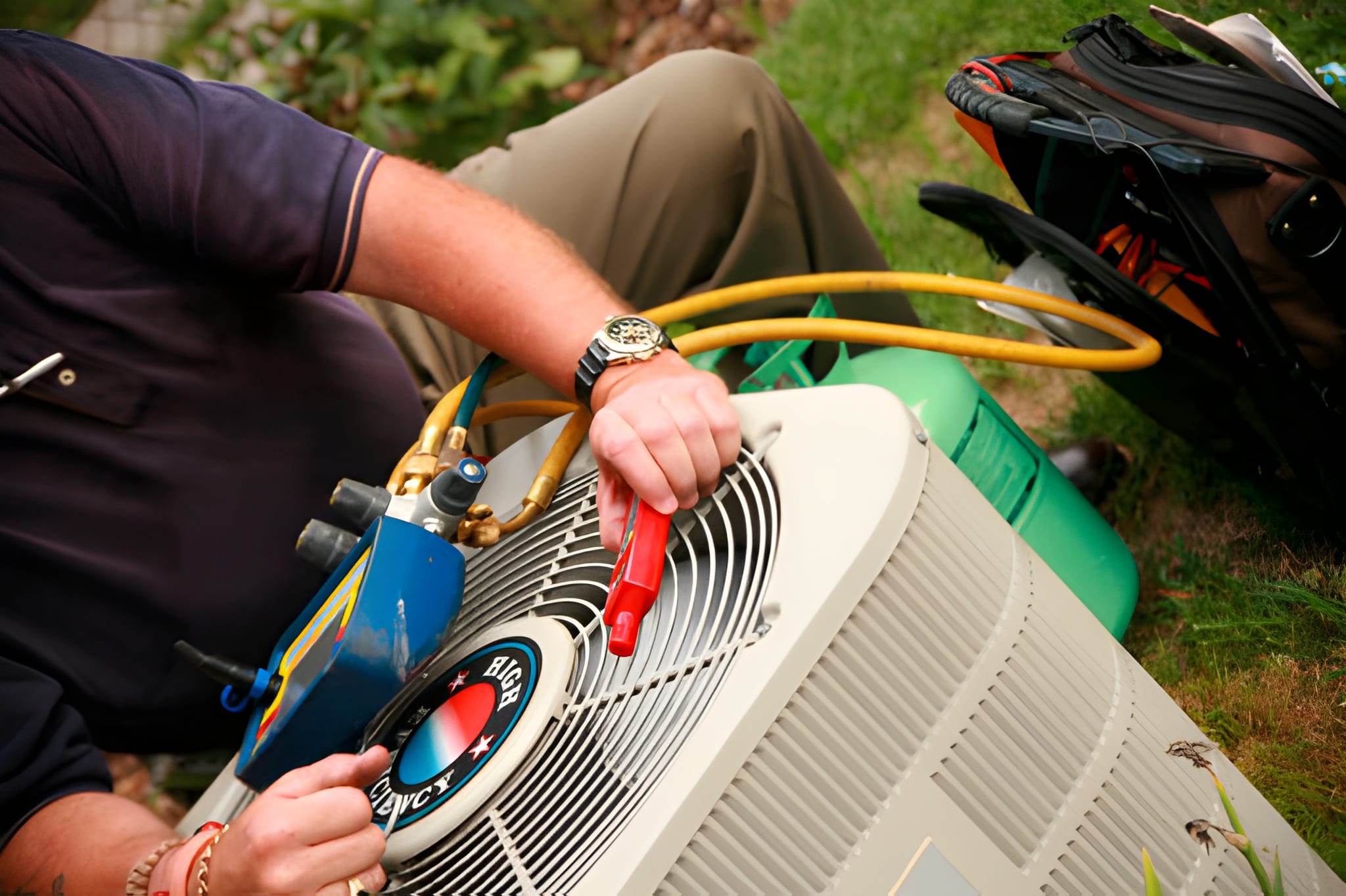
- Visual inspection of outdoor condenser and indoor air handler for corrosion, debris, and physical damage.
- Measuring refrigerant pressures and verifying refrigerant charge against manufacturer specifications.
- Electrical testing of contactors, fuses, capacitors, relays, and safety controls.
- Motor and compressor amp draw testing to detect mechanical stress or electrical faults.
- Airflow measurement and static pressure checks to evaluate duct and blower performance.
- Thermostat calibration and verification of correct set points and sensor operation.
- Inspection of condensate drain lines and pans to prevent water damage and microbial growth.
Routine maintenance tasks performed during service visits
Regular maintenance keeps systems operating efficiently and extends equipment life. Routine AC service typically includes:
- Replacing or cleaning air filters and recommending proper filter type and replacement frequency.
- Cleaning evaporator and condenser coils to restore heat transfer efficiency.
- Clearing debris from around the outdoor unit and straightening fins for optimal airflow.
- Lubricating moving parts where applicable to reduce friction and wear.
- Tightening electrical connections and inspecting controls for safe operation.
- Checking refrigerant levels and searching for leaks when levels are low.
- Verifying correct condensate drainage and cleaning drain lines to stop clogs.
Repairs and adjustments commonly recommended
After diagnostics, technicians often recommend targeted repairs to restore performance and prevent repeat issues. Common repairs and adjustments include:
- Sealing or repairing small refrigerant leaks and recharging refrigerant to spec.
- Replacing capacitors, contactors, and relays that show electrical wear.
- Repairing or replacing blower motors and belts to restore proper airflow.
- Repairing or replacing thermostats and control boards for accurate system control.
- Coil repairs or full coil replacements when corrosion or damage impairs heat transfer.
- Duct sealing and minor duct repairs to reduce losses and balance airflow.
Expected service timelines and what happens during a visit
- Diagnostic inspection: typically completed in 60 to 90 minutes depending on system complexity. This includes testing, measurements, and a written summary of findings.
- Routine maintenance tune-up: generally 45 to 90 minutes; includes filter change, coil cleaning, electrical checks, and airflow verification.
- Minor repairs (capacitors, contactors, thermostat): many can be completed within 1 to 2 hours on the same visit if parts are available.
- Major repairs (compressor, coil replacement) or refrigerant leak remediation: may require ordering parts or a follow-up visit; timeline depends on part availability and the permit or recovery requirements for refrigerant handling.
- During service visits, technicians perform a safety-focused checklist, document findings, and explain recommended next steps in plain language so you understand the tradeoffs between repair and replacement.
How regular service protects warranties and lowers costs
Manufacturers commonly require documented maintenance to keep certain portions of a warranty valid. Regular, professional AC service:
- Preserves warranty eligibility by providing logged inspections and tune-ups.
- Improves system efficiency, lowering monthly energy costs during Mount Carmel’s hot months.
- Reduces the chance of catastrophic failures that result in costly emergency replacements.
- Extends equipment life so replacement can be planned rather than forced by a sudden breakdown.
Seasonal timing and maintenance cadence for Mount Carmel
- Spring pre-season tune-up: ideal to prepare the system for heavy summer use—check refrigerant, coils, and controls.
- Mid-summer check if you notice reduced performance or higher-than-normal energy consumption.
- Fall service after summer’s heavy use can catch refrigeration-related wear and prepare the system for any winter heating integration if applicable.
For most homes, biannual service aligned with spring and fall is recommended to maintain warranty compliance and peak performance.
Simple homeowner tips to support AC performance
- Change or clean filters every 1 to 3 months depending on filter type and household conditions.
- Keep the outdoor unit free of leaves, grass, and debris to maintain airflow.
- Avoid closing multiple vents in unused rooms; restricted airflow stresses the system.
- Use a programmable thermostat or smart thermostat settings to reduce runtime when no one is home.
- Keep curtains and blinds closed during peak sun hours to reduce cooling load.
What Our Clients
Say About Us
Our clients consistently praise our dedication and expertise. They appreciate our commitment to meeting their needs and providing sound advice, which has fostered long-lasting relationships.

SERVICE AREAS
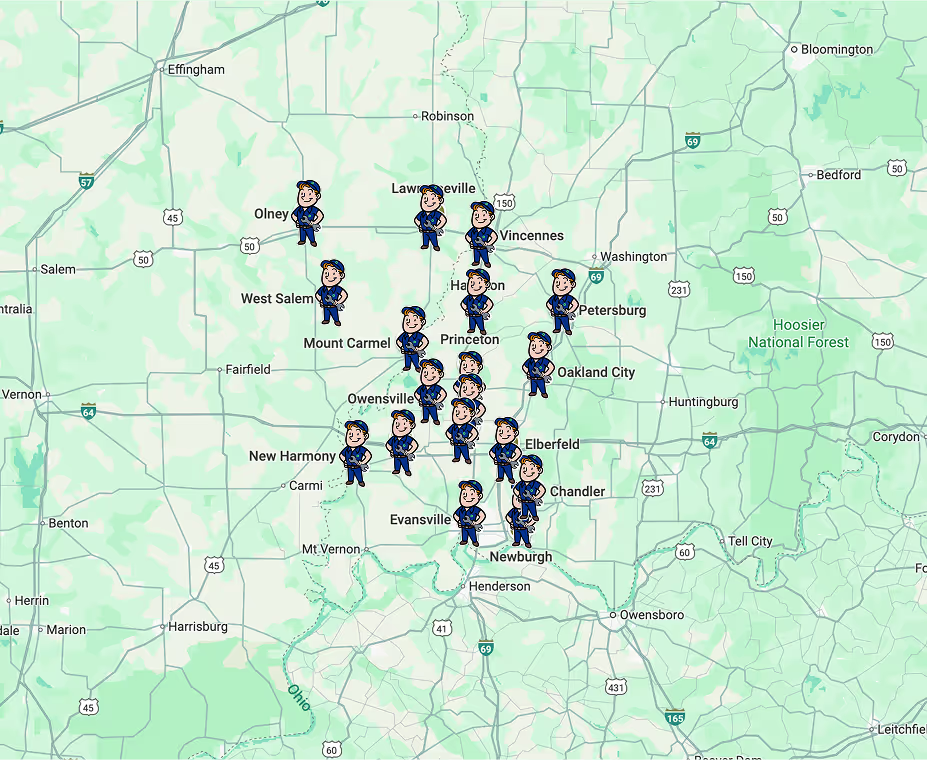
We proudly serve clients throughout our surrounding communities, delivering reliable service wherever you need us. No matter the location, our team is committed to the same high-quality results and responsive support.