Mini Split Installation in Fort Branch, IN
Mini Split Installation in Fort Branch, IN delivers precise zoning, energy efficiency, and ductless comfort. Learn more about professional installation options.

Mini Split Installation in Fort Branch, IN
For homes in Fort Branch, IN, a mini split installation is a fantastic, flexible solution for heating and cooling, especially if you're dealing with a lack of ductwork or simply want precise zoned comfort. We know those Midwest summers can be hot and humid, and winters get truly cold! That's why homeowners in Fort Branch often find that ductless mini split heat pumps, installed by experts like Perfect Climate Heating and Air, deliver incredibly precise temperature control, help lower operating costs, and significantly boost overall indoor comfort.
.jpeg)
Why choose a Mini Split for Fort Branch, IN homes
- Zoning and comfort: Mini splits allow room-by-room temperature control, ideal for older homes, additions, or finished basements common in the region.
- Energy savings: High-efficiency inverter-driven compressors and modern refrigerants reduce energy use compared with window units or oversized central systems.
- No ducts required: For homes without ductwork, mini splits avoid the energy losses and maintenance associated with ducts.
- Year-round use: Many mini splits are heat pump systems that provide efficient heating in shoulder seasons and mild winter conditions, minimizing furnace runtime.
Common Mini Split system types and common issues in Fort Branch
- Single-zone vs. multi-zone systems — choose single-zone for individual rooms and multi-zone to serve several areas with one outdoor unit.
- Wall-mounted, floor-mounted, ceiling cassette, and ducted indoor units — selection depends on space, aesthetics, and airflow needs.
- Common local issues: undersized systems for high-summer humidity, improper placement causing short-cycling, and insufficient electrical capacity in older homes.
On-site evaluation and load calculation
A proper installation begins with an on-site evaluation and a formal load calculation (Manual J or equivalent). This confirms:
- Room dimensions, window exposure, insulation levels, and occupancy patterns.
- Local climate factors—Fort Branch’s hot humid summers and cold winters—used to size equipment for both cooling capacity and heating performance.
- Building envelope issues that might affect sizing, such as drafty windows or poorly insulated walls.
Accurate load calculation prevents oversizing or undersizing, both of which cause comfort problems and reduce efficiency.
Choosing the right system and indoor/outdoor unit placement
System selection balances capacity, efficiency ratings (SEER/HSPF), noise levels, and features like variable-speed (inverter) compressors and smart controls.
Placement considerations:
- Outdoor unit: locate where it has good airflow, is accessible for service, and is protected from heavy snow or flood-prone areas. Place on a level pad or wall bracket and keep clearances per manufacturer instructions.
- Indoor units: place for balanced airflow and even temperature distribution—avoid direct sunlight on sensors, and keep units away from obstructions and high-dust areas. For multi-zone systems, balance capacities across zones rather than oversizing one unit.
Electrical and mounting requirements
- Electrical supply: verify existing service capacity; many mini splits need a dedicated circuit and disconnect. Older Fort Branch homes may need panel upgrades.
- Wiring: low-voltage control wiring runs between indoor and outdoor units and must comply with local electrical codes.
- Mounting: indoor units require secure wall mounting or ceiling suspension. Outdoor units need a sturdy pad or bracket anchored to a foundation that resists frost heave and settling.
Permitting and code compliance often require documentation of electrical work and system specifications.
Timeline for installation and what to expect
Typical residential installations vary by system complexity:
- Single-zone: 4–8 hours on average for a professional two-person crew (site prep, mounting, refrigerant line routing, wiring, electrical connection, and start-up).
- Multi-zone or complex installs: 1–3 days depending on line-set runs, wall openings, and any electrical upgrades.
- Possible delays: permit approvals, electrical panel upgrades, or unexpected structural obstacles.
Technicians will typically leave work areas clean, and any penetrations through exterior walls are sealed to code.
Permits and local code compliance
- Local building and electrical permits are usually required. The installer should file permits with the appropriate Fort Branch or county jurisdiction and follow Illinois/municipal code requirements.
- Inspections: Electrical and mechanical inspections may be required before the final sign-off. Ensure permits are documented to protect warranties and future resale value.
Testing, commissioning, and performance verification
Commissioning ensures the system operates as intended:
- Leak and pressure tests on refrigerant lines.
- Proper refrigerant charge adjustment based on manufacturer specs and measured line conditions.
- Verify airflow patterns, check temperature differentials, and test heating and cooling modes.
- Confirm thermostat or control connectivity (including Wi-Fi features if present).
- Demonstration of operation for homeowners, including filter locations, basic maintenance, and control use.
A complete commissioning report should document operating pressures, temperatures, and electrical readings for future reference.
Energy-efficiency considerations and potential rebates
- Efficiency ratings: look for high SEER and HSPF ratings and variable-speed inverter technology to optimize seasonal efficiency.
- Right-sizing: accurate sizing prevents short-cycling and loss of efficiency.
- Insulation and air sealing: improving envelope performance can reduce system size and operating costs.
Rebates and incentives: homeowners in the Fort Branch area may be eligible for utility rebates, state energy incentives, or manufacturer promotions for high-efficiency mini splits. Eligibility often depends on equipment efficiency, installation by a licensed contractor, and proper documentation or rebate application submission.
Post-installation support and warranty information
- Manufacturer warranties: cover compressors and major components—terms vary by brand and model. Register systems promptly as required to preserve coverage.
- Installer warranties: expect workmanship guarantees on installation labor and mounting work. Get the warranty terms in writing.
- Maintenance recommendations: routine tasks include quarterly or monthly filter cleaning, outdoor unit debris clearance, and annual professional tune-ups to check refrigerant, electrical connections, and system controls. Regular maintenance sustains efficiency and honors many warranty conditions.
What Our Clients
Say About Us
Our clients consistently praise our dedication and expertise. They appreciate our commitment to meeting their needs and providing sound advice, which has fostered long-lasting relationships.

SERVICE AREAS
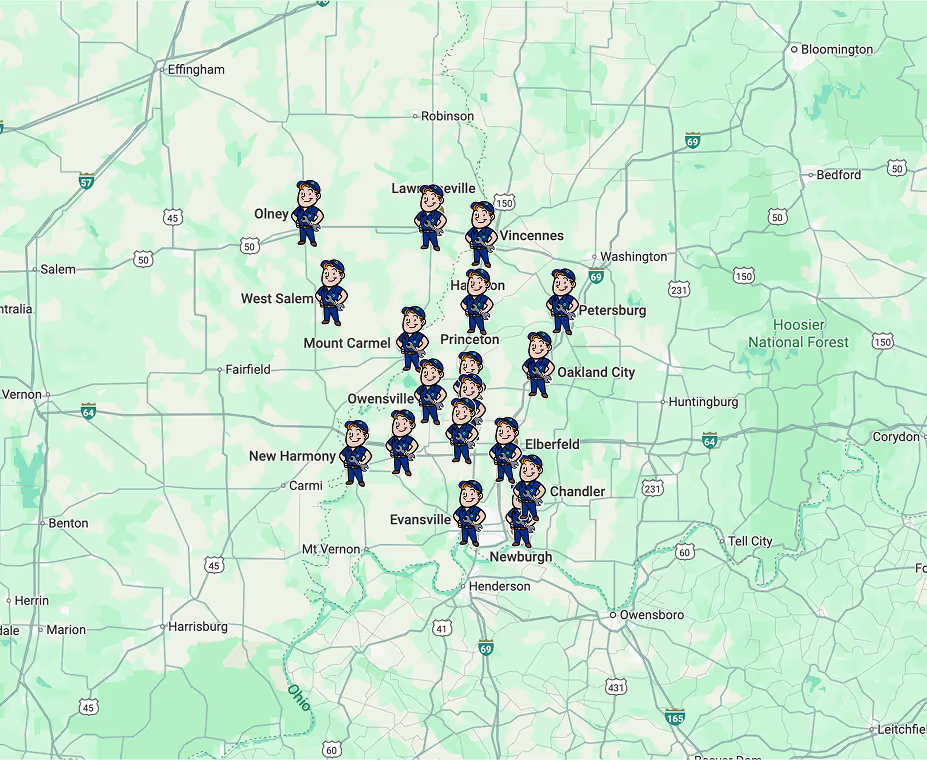
We proudly serve clients throughout our surrounding communities, delivering reliable service wherever you need us. No matter the location, our team is committed to the same high-quality results and responsive support.