Mini Split Installation in Owensville, IN
Mini Split Installation in Owensville, IN delivers efficient, ductless comfort for homes. Learn more about installation steps, pricing, and expert service today

Mini Split Installation in Owensville, IN
For Owensville, IN homeowners seeking efficient heating and cooling without the hassle of ductwork, a properly installed mini split system is often the perfect answer. It's an ideal solution for targeted comfort, significantly lower energy bills, or for homes needing a smart ductless retrofit. Whether you're finally adding climate control to that sunroom, transforming your basement into a livable space, saying goodbye to a noisy, inefficient window unit, or simply wanting personalized comfort zones throughout your home, choosing Perfect Climate Heating and Air for your professional mini split installation guarantees reliable performance, adherence to all codes, and impressive long-term energy savings. We ensure it's done right!
.jpeg)
Why Owensville homes benefit from Mini Splits
Owensville experiences humid Indiana summers and chilly winters that place seasonal stress on traditional HVAC systems. mini splits:
- Provide efficient cooling during humid summers with variable-speed compressors that modulate output.
- Offer heat pump operation for moderate heating needs in shoulder seasons and backup heat in winter.
- Fit well in older or rural homes that lack central ductwork, avoiding the cost and disruption of installing ducts.
- Enable room-by-room zoning to reduce energy use for unoccupied spaces common in single-family and multi-level homes.
Common Mini Split installation types
- Single-zone mini split: One outdoor compressor connected to a single indoor air handler. Best for individual rooms, additions, or garages.
- Multi-zone mini split: One outdoor unit serving two to eight indoor units. Ideal for open floor plans or multiple rooms needing separate controls.
- Ceiling cassette, wall-mounted, or floor-mounted units: Selection depends on room layout, ceiling height, and aesthetic preferences.
Typical problems that lead homeowners to replace or install a Mini Split
- Poor or no ductwork in older Owensville houses
- High energy bills from whole-house central systems
- Hot or cold spots in additions, sunrooms, or finished basements
- Replacing noisy, inefficient window units or portable heaters
- Desire for better indoor air quality and humidity control in humid seasons
The installation process — step by step
- Initial consultation and load calculation
- A trained technician assesses your space and performs a Manual J load calculation to size the system correctly.
- Assessment includes insulation levels, window area and orientation, occupancy, and intended usage patterns.
- Equipment selection
- Compare single-zone versus multi-zone based on layout and budget.
- Discuss efficiency ratings (SEER and HSPF), inverter technology, and control options like smart thermostats or Wi-Fi enabled interfaces.
- Popular brands commonly available include Mitsubishi, Fujitsu, Daikin, LG, and Panasonic; each offers different warranty terms and feature sets.
- Site assessment and planning
- Choose indoor unit locations for optimal airflow, comfort, and aesthetics while minimizing line set length.
- Select an outdoor unit location with proper clearance, stable pad or bracket mount, and easy service access.
- Plan electrical routing and confirm breaker sizing and disconnect requirements.
- Mounting and refrigerant line installation
- Install indoor wall brackets, ceiling supports, or floor stands as required.
- Drill a small wall penetration for the refrigerant lines, condensate drain, and control wiring; properly seal the penetration to prevent drafts and pests.
- Run insulated liquid and suction lines with a continuous slope for drainage and to minimize refrigerant loss.
- Electrical hookup
- Connect the outdoor unit to the home electrical service with an appropriately sized disconnect and breaker, complying with National Electrical Code requirements.
- Low-voltage control wiring links indoor and outdoor units; all wiring is secured, labeled, and tested.
- System evacuation, charging, and commissioning
- Evacuate the refrigerant lines with a vacuum pump and perform a leak check.
- Charge and tune the system according to manufacturer specifications using superheat/subcooling or factory charge guidelines.
- Configure controls, set temperature sensors, and verify airflow, defrost cycles, and noise levels.
- System testing and homeowner orientation
- Run the system through heating and cooling modes to verify operation under load.
- Demonstrate controller use, filter access, and basic maintenance points like condensate line checks.
Permits, code compliance, and certifications
- Most installations require local permits and electrical inspections; your installer should secure necessary approvals through Posey County or local Owensville authorities.
- Technicians must follow local building codes and the National Electrical Code for disconnects and breaker sizing.
- Refrigerant handling must be performed by EPA Section 608 certified technicians, and proper recovery practices must be followed for existing refrigerant.
Warranty and post-installation protection
- Manufacturer warranties typically cover compressors and major components for 5 to 12 years depending on brand and registration. Parts warranties vary.
- Labor warranties are provided separately by installers and should be reviewed for duration and coverage details.
- Registering equipment with the manufacturer and following scheduled maintenance preserves warranty eligibility.
Energy efficiency and cost benefits
- Mini splits use inverter-driven compressors that match output to demand, often delivering 25-50% energy savings over window units or resistance heating.
- Zoning capability reduces wasted heating/cooling in unused spaces.
- Improved comfort control and humidity management can reduce wear on other systems and lower overall home energy use.
- Potential local, state, or federal incentives and rebates for heat pump systems may be available; check current programs when planning a purchase.
Common installation issues and how a pro prevents them
- Incorrect sizing: Proper Manual J calculations prevent short-cycling and inefficient operation.
- Poor placement: Technicians select locations to avoid dead zones and minimize noise and drafts.
- Improper refrigerant charge: Using gauges and superheat/subcooling methods ensures peak efficiency and longevity.
- Inadequate drainage: Correct condensate piping and secondary drain pans prevent leaks and moisture damage.
Maintenance tips and expected lifespan
- Basic maintenance: Clean or replace filters every 1-3 months, inspect condensate drains, and keep outdoor units clear of debris and vegetation.
- Annual professional tune-ups: Verify refrigerant levels, electrical connections, and perform coil cleaning to maintain efficiency and uphold warranties.
- Lifespan: With proper maintenance, mini split systems commonly last 12-20 years depending on usage and climate.
Mini split installation in Owensville, IN provides a flexible, efficient heating and cooling solution that addresses local climate realities and the common challenges of older or ductless homes. When planned and executed by certified technicians—taking into account load calculations, proper mounting, electrical code compliance, and careful commissioning—you gain consistent comfort, better energy performance, and reliable operation for years to come.
What Our Clients
Say About Us
Our clients consistently praise our dedication and expertise. They appreciate our commitment to meeting their needs and providing sound advice, which has fostered long-lasting relationships.

SERVICE AREAS
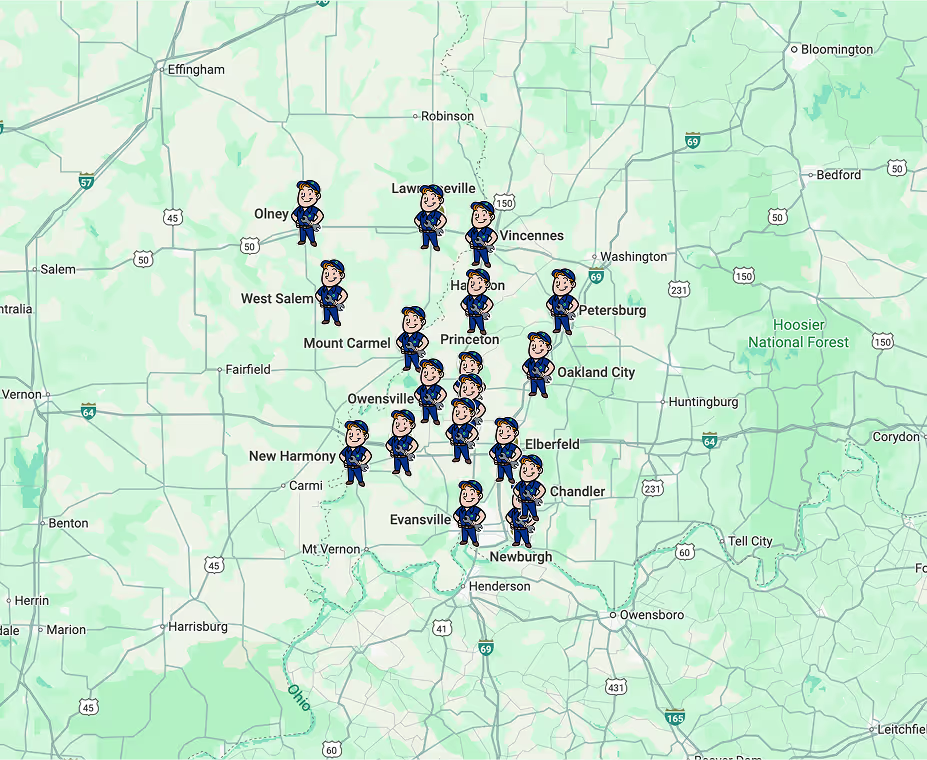
We proudly serve clients throughout our surrounding communities, delivering reliable service wherever you need us. No matter the location, our team is committed to the same high-quality results and responsive support.