AC Service in Lawrenceville, IL
AC service in Lawrenceville, IL keeps your system efficient with routine maintenance. Schedule your service today for fewer breakdowns and lower energy bills.

AC Service in Lawrenceville, IL
For homes in Lawrenceville, IL, where hot, humid summers and seasonal pollen put real stress on cooling systems, keeping your air conditioner well-maintained is absolutely essential. With **Perfect Climate Heating and Air**, regular AC service ensures you enjoy reliable comfort, helps you reduce energy use, and critically, prevents those inconvenient and costly mid-summer breakdowns. We're here to help you understand what our routine AC service includes, the common issues we frequently see in Lawrenceville homes, what our skilled technicians diagnose and repair during their visits, how often you should schedule service with us, and practical guidance on both costs and appointment timing.
Common AC service issues in Lawrenceville, IL
Homes in and around Lawrenceville commonly experience these cooling problems caused or aggravated by local climate and housing stock:
- Dirty or clogged filters and coils from spring pollen and summer dust, reducing airflow and efficiency
- Reduced cooling capacity due to low refrigerant or slow leaks
- Electrical failures (capacitors, contactors, worn wiring) from heavy seasonal runtimes
- Restricted condensate drains that cause overflow and shutoffs during humid periods
- Thermostat drift or calibration issues leading to uneven temperatures
- Duct leaks or poor airflow in older homes or homes with undersized ductwork
What a routine AC service visit includes
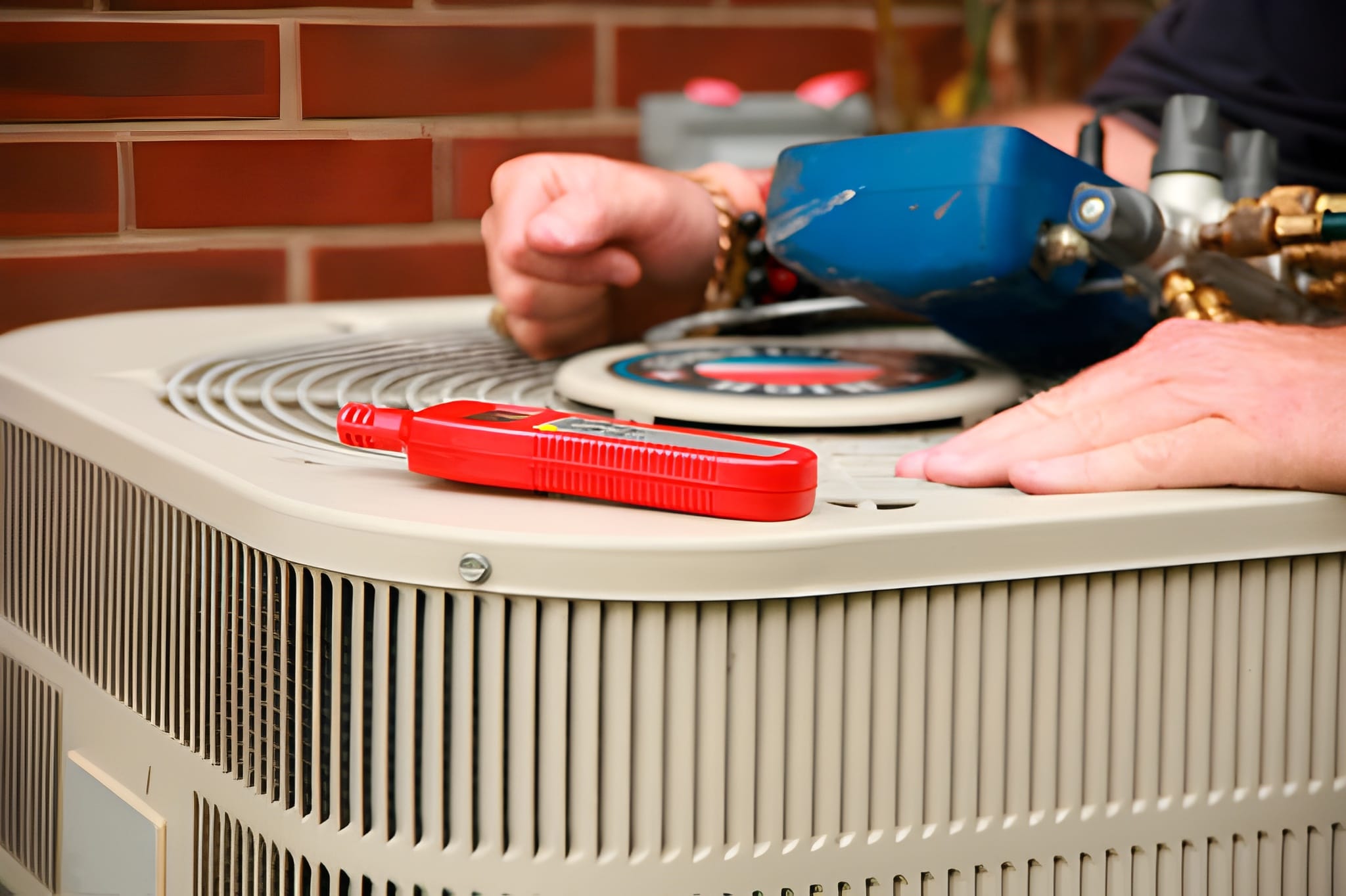
A comprehensive, routine AC service focuses on diagnostics, safety checks, and small repairs that restore efficient operation. Typical inclusions are:
- Diagnostic inspection: Full system start-up and performance assessment, including cooling output and temperature split
- Filter check and replacement: Inspecting existing filters and replacing or recommending the correct size and MERV level for your system
- Refrigerant level check: Measuring refrigerant pressures and temperatures to detect undercharge or signs of leaks
- Electrical testing: Inspecting capacitors, contactors, fuses, breakers, and control wiring for wear or faults
- Airflow testing: Measuring blower performance, static pressure, and checking for obstructions in returns and supply vents
- Coil and drain maintenance: Visual cleaning of evaporator and condenser coils where accessible and clearing condensate drains
- Safety and control checks: Verifying thermostat communication, limit switches, and safety cutouts
- System tune-up: Lubrication where applicable, tightening electrical connections, and confirming correct fan and compressor operation
Minor repairs commonly done during service calls
Many service visits resolve small issues on the spot to restore reliable cooling without a follow-up appointment. Common minor repairs include:
- Replacing air filters and condensate drain traps
- Cleaning or straightening bent condenser fins and accessible coil cleaning
- Replacing failed capacitors, contactors, fuses, and relays
- Tightening electrical connections and replacing worn terminals
- Replacing thermostat batteries or recalibrating controls
- Clearing condensate clogs and replacing small sections of drain tubing
Note: Refrigerant recharge or leak repair requires proper diagnostics and may be completed during the same visit if equipment and parts are available and local regulations are followed.
Typical diagnostic process — what technicians check and why
Technicians follow a methodical diagnostic flow to identify root causes, not just symptoms:
- Visual inspection of indoor and outdoor units for obvious damage or obstructions
- System start-up monitoring to observe compressor, fan, and control behavior
- Electrical measurements to find failing components before they fail outright
- Refrigerant pressure and temperature checks to evaluate charge and heat exchange efficiency
- Airflow and duct inspection to confirm correct blower operation and vent performance
- Indoor comfort assessment (temperature differential, humidity behavior) to match findings with homeowner concerns
- This approach reduces callbacks by addressing underlying issues rather than temporary fixes.
Recommended service frequency
- Biannual tune-ups: For most Lawrenceville homes, schedule HVAC service twice a year — once in spring for cooling and once in fall for heating. The spring visit prepares your AC for the heaviest use period.
- High-use or older systems: Systems over 10 years old or those that run constantly during heat waves benefit from more frequent checks.
- Homes with indoor air quality concerns or pets: Filters and coils can clog faster; consider quarterly filter checks and annual professional tune-ups.
Benefits of regular AC service
Regular maintenance delivers measurable advantages:
- Improved efficiency and lower energy use: A clean, well-tuned system runs less and cools better.
- Extended equipment life: Routine care reduces wear on critical components and delays costly replacements.
- Fewer emergency repairs: Preventative diagnostics identify failing parts before they cause breakdowns.
- Better comfort and indoor air quality: Proper airflow, filtration, and coil cleanliness reduce hot spots and allergens.
- Warranty protection: Many manufacturers require documented maintenance to keep warranties valid.
Pricing guidance — what affects cost
While specific prices vary, the factors that determine the cost of an AC service visit include:
- Age and complexity of the system (single-stage vs variable-speed, packaged units vs split systems)
- Scope of the service (diagnostic only vs diagnostic plus minor repairs or parts replacement)
- Accessibility of equipment (easy-access condenser and air handler vs tight attic or crawlspace work)
- Local regulations and parts availability for refrigerant work
- A transparent service provider will outline which items are included in the visit and which repairs require additional authorization.
Scheduling considerations and what to expect
- Best timing: Book routine cooling service in spring before peak heat arrives; avoid scheduling during heat waves when appointment windows tighten.
- Appointment window: Technicians typically provide arrival windows; a thorough service can take 45 minutes to 2 hours depending on system condition.
- Documentation: Expect a written summary of findings, recommended repairs, and any maintenance performed. This documentation is useful for warranty records and future service history.
- Preparation: Clear access to the indoor air handler, outdoor condenser, and thermostat helps technicians complete checks faster.
Regular AC service in Lawrenceville, IL pays for itself through improved comfort, lower operating costs, and fewer emergency repairs. For homes facing humid summers and seasonal allergens, preventive maintenance keeps systems running efficiently when you need them most.
What Our Clients
Say About Us
Our clients consistently praise our dedication and expertise. They appreciate our commitment to meeting their needs and providing sound advice, which has fostered long-lasting relationships.

SERVICE AREAS
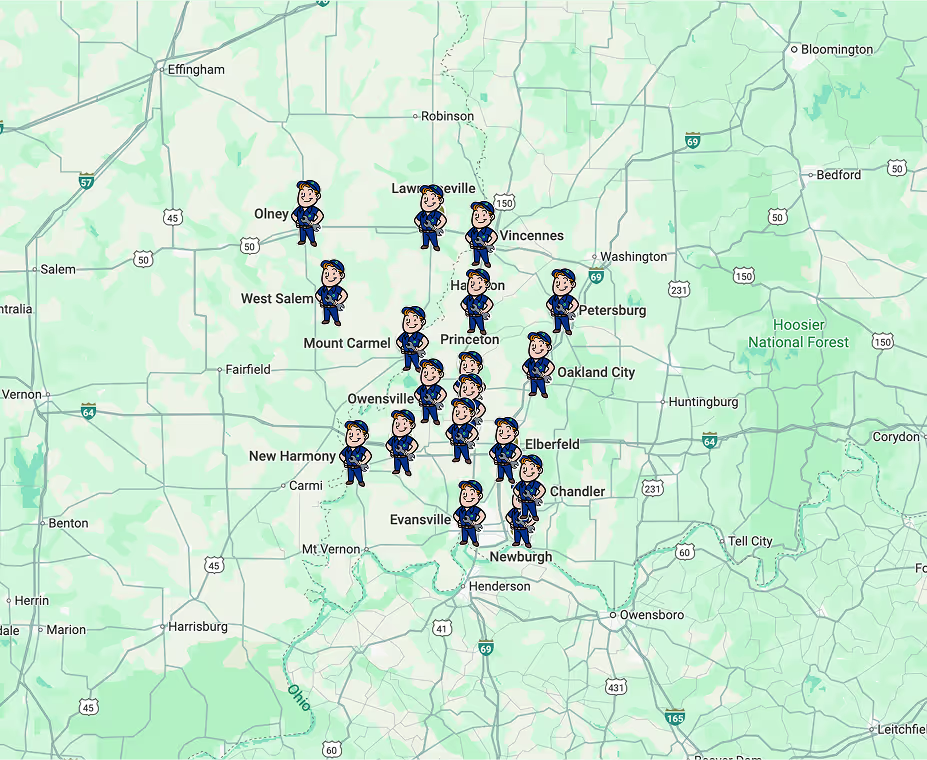
We proudly serve clients throughout our surrounding communities, delivering reliable service wherever you need us. No matter the location, our team is committed to the same high-quality results and responsive support.