AC Tune-up in Lawrenceville, IL
AC tune-up service in Lawrenceville, IL improves efficiency, prevents breakdowns, and extends system life. Schedule your maintenance today.

AC Tune-up in Lawrenceville, IL
To keep your air conditioning system running strong through the Lawrenceville summers and even help prevent wear during winter, a professional seasonal AC tune-up is absolutely key. Here in Lawrenceville, IL, our hot, humid summers, spring pollen, and even the occasional storm debris really put extra stress on outdoor units. That’s where Perfect Climate Heating and Air comes in! A thorough tune-up from our team can significantly reduce those unwelcome breakdowns, boost your system's efficiency, and ultimately help it last longer.
Why a seasonal AC tune-up matters in Lawrenceville, IL
Lawrenceville households face high humidity and heavy cooling loads from May through September. That increases runtime, accelerates component wear, and fosters mold or corrosion in damp conditions. Spring brings tree pollen and dust that can clog coils and filters, while late-summer storms can leave debris around the outdoor condenser. A seasonal tune-up prepares your system for these local stresses, ensuring safe, efficient operation when you need it most.
Common AC problems in Lawrenceville homes
- Poor cooling or uneven temperatures across rooms
- Rising energy bills despite similar usage patterns
- Frequent short-cycling (turning on and off rapidly)
- Strange noises from the blower, compressor, or ductwork
- Frozen evaporator coil or ice buildup on lines
- Water leaks at the indoor unit or clogged condensate drain
- Outdoor unit blocked by leaves, grass, or storm debris
Many of these issues are caught or prevented during a proper tune-up. Addressing them early avoids emergency repairs during peak cooling season.
What a full seasonal AC tune-up includes
A professional tune-up is more than a quick filter swap. A complete service covers safety, performance, and preventative tasks that together restore system efficiency and reliability.
- Coil and condenser cleaning
- Evaporator and condenser coils are cleaned to restore heat transfer efficiency. Dirty coils restrict airflow and cause higher compressor workload and energy use.
- Condenser and outdoor area inspection
- Technicians remove debris, trim vegetation for proper airflow, and check for damage or corrosion to fins and cabinet.
- Refrigerant and pressure checks
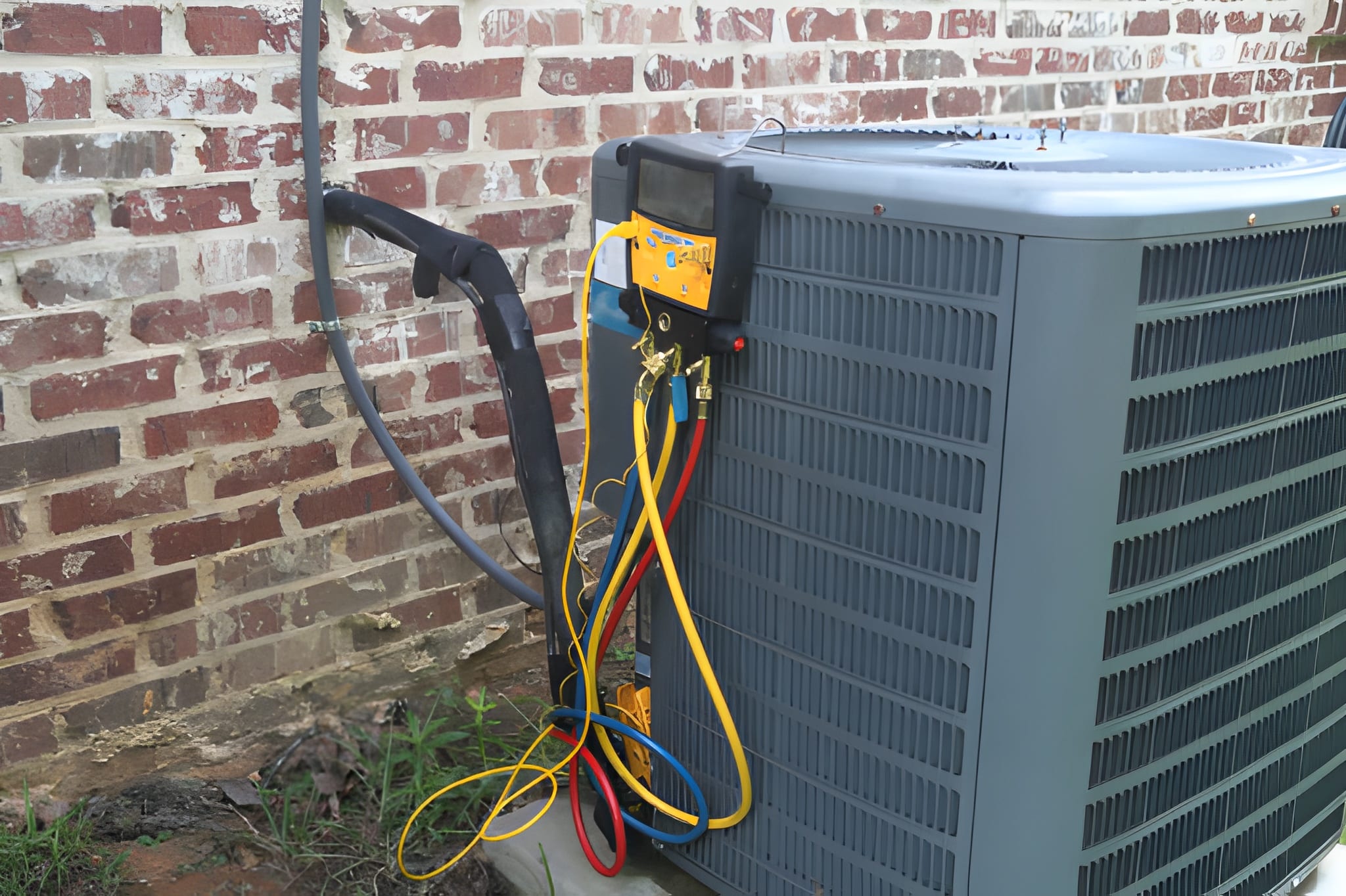
- System pressures are measured to verify the correct refrigerant charge. Low or high refrigerant levels point to leaks or system restrictions that reduce cooling performance.
- Thermostat calibration and control checks
- Thermostats are tested and recalibrated for accurate temperatures, proper cycling, and correct control signals to the system.
- Belt and motor inspections
- Blower motors, belts, and pulleys are inspected for wear, proper alignment, and secure mounting. Worn belts or failing motors reduce airflow and can fail suddenly.
- Lubrication of moving parts
- Bearings and moving components are lubricated where applicable to reduce friction and extend component life.
- Safety and electrical checks
- Electrical connections, contactors, capacitors, fuses, and breakers are tested for proper function and safety. Faulty electrical parts are a common cause of compressor or control failures.
- Performance testing and system measurements
- Technicians record temperature differentials (supply vs return), current draw on motors, and overall run performance to ensure the system meets expected parameters.
- Condensate drain inspection and cleaning
- The drain line and pan are checked and cleared to prevent backups and water damage inside the home.
- Airflow and ductwork assessment
- Supply and return airflow is evaluated; obvious duct leaks or restricted vents are noted because airflow problems mimic mechanical failures.
- Filter check and recommendations
- Filters are inspected and replaced or recommended based on type, improving indoor air quality and protecting internal components.
Typical diagnostic findings and simple explanations
- Dirty coils or clogged filters: reduces heat transfer and causes the system to run longer. Cleaning restores efficiency.
- Refrigerant leaks or incorrect charge: the system cannot reach target temperatures. Pressure tests identify leaks and guide repair.
- Weak capacitors or failing contactors: cause starting problems or loud clicks; replacing these small parts prevents compressor damage.
- Motor or belt wear: leads to reduced airflow and noise; inspection allows scheduled replacement before failure.
- Blocked condensate drain: causes water to back up and trigger safety switches, shutting the system down.
Pre-summer and pre-winter tune-up checklists
Pre-summer checklist (recommended in late spring):
- Clean condenser and evaporator coils
- Test refrigerant pressures and airflow
- Calibrate thermostat and check programmable settings
- Clean/replace filters and inspect ductwork for visible issues
- Clear condensate drain and inspect for mold or blockages
- Inspect electrical connections, capacitors, and contactors
Pre-winter checklist (for heat pump systems and offseason care):
- Verify reversing valve operation if you have a heat pump
- Inspect outdoor unit for winter-ready condition (clear debris, check for rust)
- Ensure proper refrigerant charge and electrical integrity
- Lubricate accessible moving parts and test defrost cycle if applicable
How tune-ups tie into a maintenance plan
A documented tune-up schedule—typically twice a year, before cooling and heating seasons—provides the most reliable protection. Regular tune-ups:
- Preserve manufacturer warranty requirements by providing service records
- Create a maintenance history that highlights progressive wear so replacements can be planned, not reactive
- Improve energy efficiency, often lowering seasonal cooling costs
- Reduce the likelihood of mid-season emergency repairs by identifying worn parts early
Maintenance plans often bundle scheduled inspections, priority service, and detailed reports of system condition. For homeowners in Lawrenceville, this planned approach matches the seasonal demands caused by humidity and storms, delivering peace of mind and predictable system performance.
Signs you should schedule a tune-up now
- Your energy bill has increased without a change in use
- Rooms are consistently warmer than thermostat settings
- The system runs almost constantly or cycles frequently
- You notice strange odors or water where it shouldn’t be
- You hear unusual grinding, squealing, or rattling sounds
A timely tune-up addresses these symptoms before they evolve into major component failures.
What Our Clients
Say About Us
Our clients consistently praise our dedication and expertise. They appreciate our commitment to meeting their needs and providing sound advice, which has fostered long-lasting relationships.

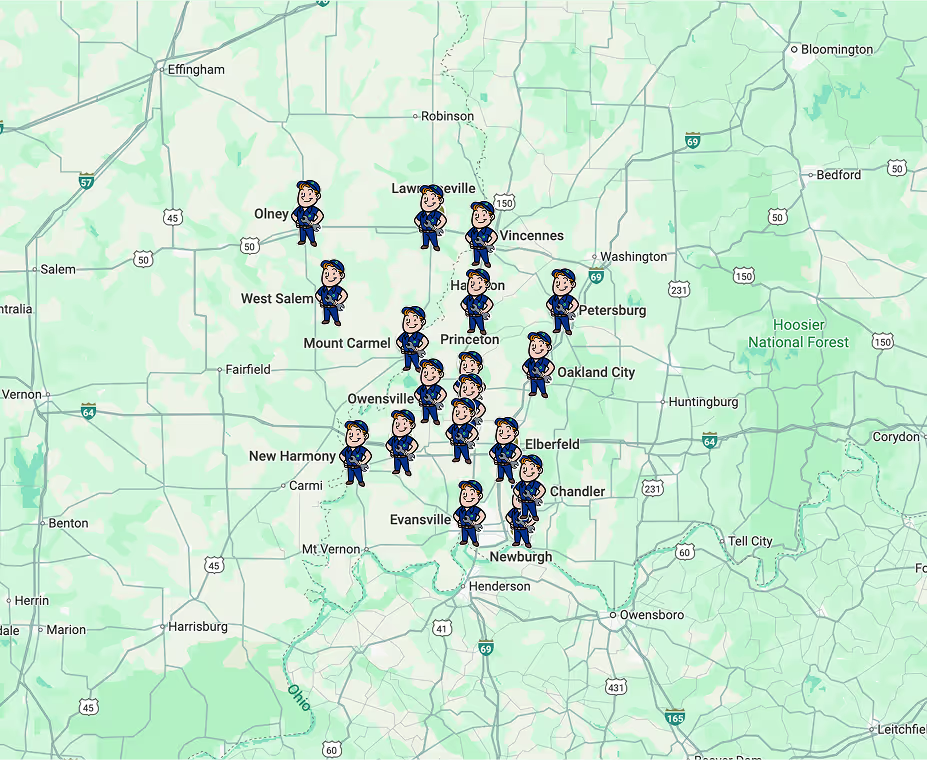
SERVICE AREAS
We proudly serve clients throughout our surrounding communities, delivering reliable service wherever you need us. No matter the location, our team is committed to the same high-quality results and responsive support.