Furnace Repair in Lawrenceville, IL
Furnace repair in Lawrenceville, IL: fast diagnostics, clear repair options, transparent pricing. Schedule service today for safe heat.

Furnace Repair in Lawrenceville, IL
Nothing's worse than your furnace conking out when the Lawrenceville, IL winter is at its worst. It throws everything off – your comfort, your family's safety, even your daily routine. That's why at Perfect Climate Heating and Air, we know that when your Lawrenceville home needs furnace repair, you need fast, precise diagnostics. We'll give you clear, honest options – whether it's a lasting repair or if a temporary fix is all that's possible – along with straightforward info on parts and warranties, so you always know what to expect.
Why timely furnace repair matters in Lawrenceville, IL
Lawrenceville experiences freezing temperatures and occasional winter storms that make a working furnace essential. Older homes in the area often have aging heating systems that are more prone to failure. Delaying repairs can lead to frozen pipes, increased energy costs, and unsafe combustion conditions. Prompt service minimizes risk, restores comfort faster, and helps protect your heating system investment.
Common furnace problems in Lawrenceville homes
Homeowners in Lawrenceville typically report these issues:
- No heat at all - Furnace fails to produce warm air despite running.
- Ignition or pilot problems - Trouble with electronic ignitors, pilot lights, or ignition controls.
- Short-cycling - Furnace turns on and off frequently, reducing efficiency and lifespan.
- Strange noises - Rattling, banging, screeching, or popping sounds indicating mechanical or airflow problems.
- Poor airflow - Weak or inconsistent warm air due to clogged filters, duct leaks, or blower motor issues.
- Uneven heating - Some rooms are cold while others are warm, often caused by zoning, ductwork, or thermostat placement.
- Safety or combustion concerns - Strong odors, visible soot, or carbon monoxide alarm events require immediate attention.
Typical diagnostic steps
A standard professional diagnostic follows a clear sequence to identify root causes efficiently:
- Symptom assessment - Technician documents observed behavior, recent changes, and any error codes from the system or thermostat.
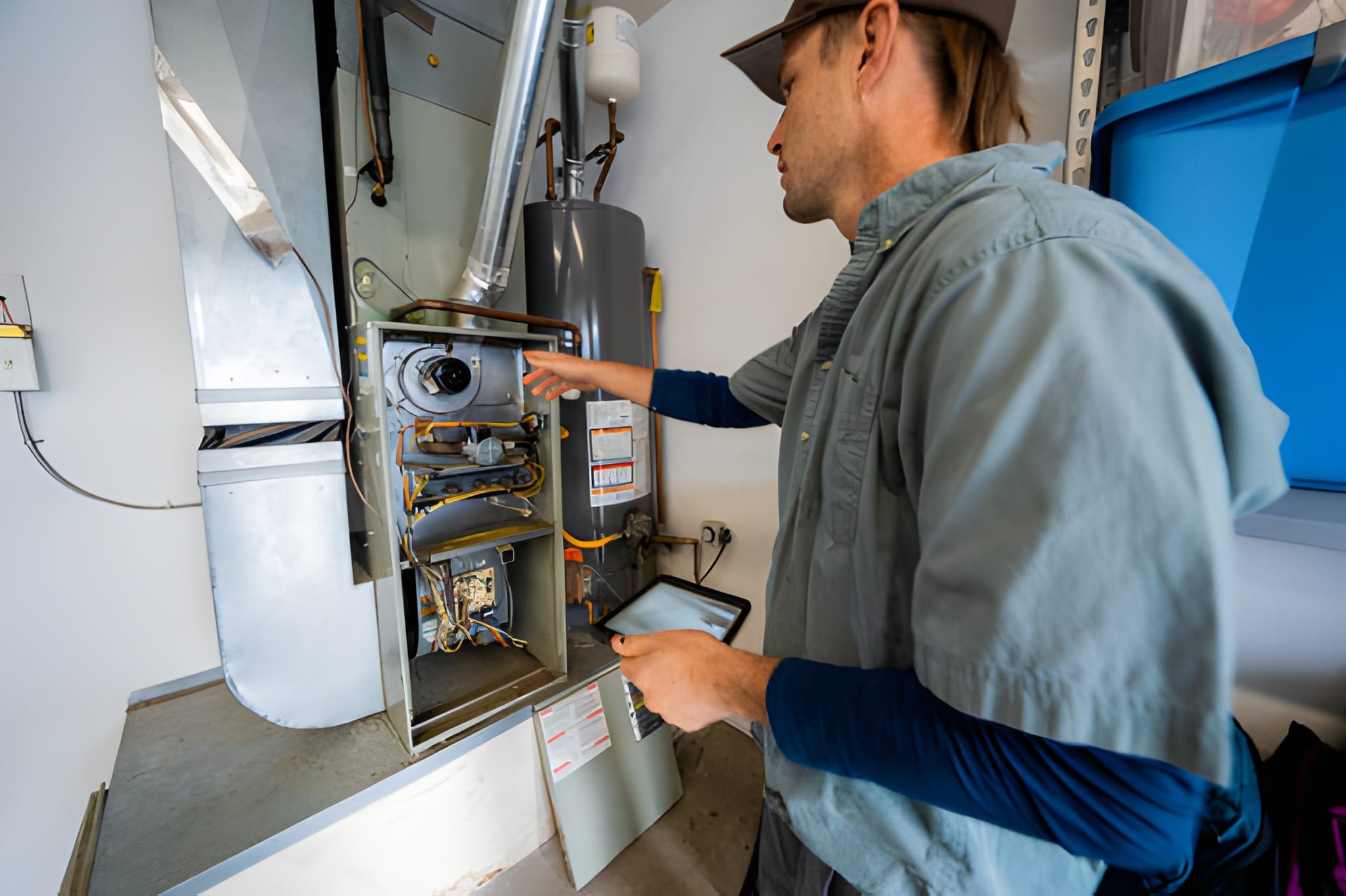
- Visual and safety checks - Inspection of vents, flue or chimney, heat exchanger (when safely accessible), visible wiring, and combustion components for leaks, corrosion, or soot.
- System testing - Power and continuity checks, burner and ignition testing, airflow measurements, and thermostat calibration verification.
- Operational run test - Observe startup sequence, flame characteristics, cycling behavior, and temperature rise across the heat exchanger.
- Additional testing as needed - Gas pressure checks, CO monitoring, motor amperage draw, and leak detection for refrigerant in hybrid systems.
Technicians document findings and provide repair options based on safety, cost-effectiveness, and long-term performance.
Repairs, parts replacement, and warranties
Common repairs include replacing ignitors, flame sensors, limit switches, motors, blower assemblies, control boards, belts, and thermostats. When parts are replaced:
- Parts typically carry manufacturer warranties; installation labor may have a separate warranty period.
- Technicians should note serial numbers and model information for warranty validation.
- When replacement is recommended, options will usually include repairing the failed component or replacing the entire furnace based on age, efficiency, and cost-effectiveness.
Transparent repair estimates explain part costs, labor, warranty terms, and why a particular solution is recommended. Expect written estimates that distinguish diagnostic fees from repair pricing and which specify warranty coverage for parts and labor.
Emergency response and expected response times
Emergency scenarios include no heat during severe cold, suspected carbon monoxide leaks, or gas odors. Local factors in Lawrenceville such as narrow streets or regional staffing levels can affect response windows, but professional services commonly provide:
- Emergency triage advice over the phone to ensure safety.
- Priority scheduling for dangerous conditions, often with same-day or next-available dispatch depending on call volume.
- Typical response times for non-emergencies measured in business-day windows; urgent heating loss during winter frequently receives expedited attention.
When arranging emergency repair, be prepared to describe symptoms, home access, furnace model, and whether any safety alarms are active.
Recommended temporary fixes vs permanent repairs
Temporary measures can reduce discomfort while waiting for professional service, but many are not long-term solutions:Safe temporary steps
- Replace or check the air filter for severe clogging that restricts airflow.
- Verify thermostat settings and batteries.
- Ensure vents and registers are open and unobstructed.
- For minor pilot/light issues on older units, follow manufacturer guidance if comfortable doing so.
When to stop and seek help
- If you smell gas, detect carbon monoxide, see soot or flame discoloration, or suspect a cracked heat exchanger, evacuate and notify the gas utility or emergency services immediately.
- Do not attempt internal repairs on gas or electric furnaces, including ignitor or gas valve work. These require trained technicians and specialized tools.
Permanent repairs
- Address root causes such as worn motors, failing control boards, cracked heat exchangers, or extensive duct leakage with approved replacement parts and tested repairs to restore safe, efficient operation.
Preventative maintenance to avoid future breakdowns
Regular maintenance significantly reduces emergency repairs and extends furnace life, especially in Lawrenceville where winters intensify wear:
- Annual tune-up before heating season: cleaning burners, inspecting heat exchanger and combustion components, checking safety controls, and testing system efficiency.
- Change basic air filters monthly to quarterly, depending on filter type and household conditions.
- Keep vents and returns free of furniture, carpets, or debris.
- Seal and insulate accessible ductwork in unconditioned spaces to improve airflow and efficiency.
- Maintain clear combustion air intake and flue passages; remove snow or debris that could block exhaust in winter.
- Install and maintain carbon monoxide detectors near sleeping areas and on each floor.
What to expect when scheduling service
When you schedule furnace repair in Lawrenceville, providers usually request:
- Furnace make, model, and age if available.
- A concise description of symptoms and any recent changes.
- Access details for the equipment location and preferred service windows.
- Permission to perform diagnostic testing with an estimate process explained up front.
After diagnostics, expect a written summary of findings, prioritized options for repair or replacement, associated costs and warranty terms, and a timeframe for parts and completion. Emergency calls typically include an ETA and an explanation of immediate safety steps you can take.
What Our Clients
Say About Us
Our clients consistently praise our dedication and expertise. They appreciate our commitment to meeting their needs and providing sound advice, which has fostered long-lasting relationships.

SERVICE AREAS
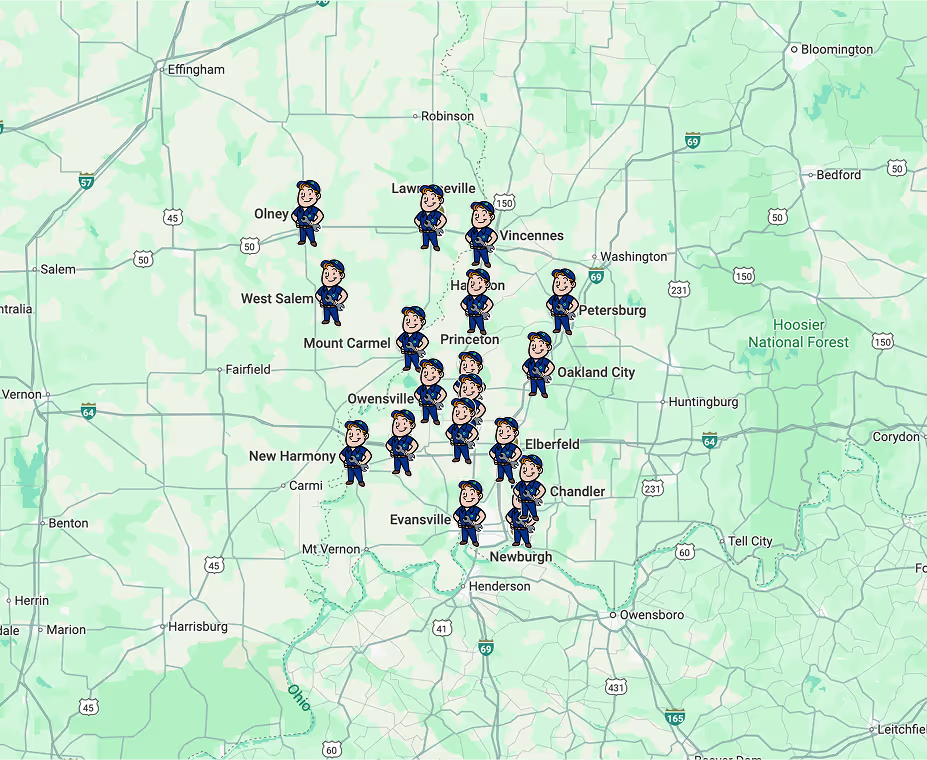
We proudly serve clients throughout our surrounding communities, delivering reliable service wherever you need us. No matter the location, our team is committed to the same high-quality results and responsive support.