Heating Replacement in Lawrenceville, IL
Heating replacement services in Lawrenceville IN provide solid evaluation, efficient system options, and financing help. Learn more today.

Heating Replacement in Lawrenceville, IL
For homes in Lawrenceville, IL, a properly sized and efficient heating system is truly a cornerstone of comfort and smart investment. Southern Indiana winters bring those long, cold stretches, and older or undersized equipment can lead to frustratingly high energy bills, chilly drafts, and even safety concerns. At Perfect Climate Heating and Air, we're dedicated to helping you recognize the signs that your heating system is ready for replacement. We'll guide you through our professional evaluation process, explain the various system types and efficiency ratings, detail how we handle the removal and responsible disposal of old equipment, demystify what impacts replacement costs, and outline the common rebate and financing options available. Our goal is to ensure Lawrenceville homeowners feel confident and informed when making a heating replacement decision.
.jpeg)
Common signs it’s time for heating replacement in Lawrenceville, IL
- Frequent breakdowns or escalating repair history: repeated service calls often indicate diminishing returns on repairs.
- Age of the unit: furnaces and heat pumps older than 12 to 15 years typically lose efficiency and reliability.
- Rising energy bills without usage change: declining efficiency or failing components cause fuel or electricity use to climb.
- Uneven heating, short cycling, or inability to maintain set temperature: these point to capacity or control issues.
- Safety or indoor-air concerns: persistent carbon monoxide alarms, rusted heat exchangers, or unusual odors require immediate evaluation.
- No replacement parts available for older models: limited parts supply increases downtime and cost of repairs.
The replacement evaluation and recommendation process
A competent heating replacement begins with a thorough, documented evaluation aimed at matching a system to your home’s needs and your comfort goals.
- Initial inspection and history review
- Assess the existing equipment, age, service records, and any known failures.
- Check visible ductwork, venting, combustion air supply, and thermostat controls.
- Load calculation (Manual J) and distribution check
- A proper heating replacement includes a Manual J calculation to determine the correct heating capacity for your home considering insulation, windows, orientation, and local climate patterns in Lawrenceville.
- Ductwork sizing and condition are evaluated; leaky or undersized ducts reduce capacity and efficiency.
- Safety and combustion analysis
- For gas or propane systems, combustion efficiency, venting, and carbon monoxide risk are tested. This step is essential in older homes with outdated venting.
- Energy and efficiency assessment
- Compare estimated annual energy use of your current system to proposed replacements using AFUE, HSPF, and other efficiency metrics.
- Identify opportunities for energy savings through zoning, thermostat upgrades, or improved insulation.
- Written recommendation and options
- The final recommendation outlines system types suitable for the home, expected performance, necessary duct or vent modifications, projected energy savings, and a clear scope of work for removal and installation.
Comparing system types and efficiency ratings
Lawrenceville homes commonly choose between a few reliable options depending on fuel availability, budget, and comfort goals:
- Gas furnaces (high-efficiency condensing vs standard)
- Efficiency measured in AFUE (Annual Fuel Utilization Efficiency). High-efficiency condensing furnaces (higher AFUE) recover heat from combustion byproducts and cut fuel use significantly compared to older units. They require proper venting and may need a condensate drain.
- Heat pumps (air-source and mini-split)
- Heat pumps provide both heating and cooling. Efficiency in heating is expressed with HSPF or a heating-season performance metric; modern units perform well even in cold Indiana winters, and cold-climate models extend performance at lower outdoor temperatures. Dual-fuel systems pair a heat pump with a gas furnace for optimal year-round performance.
- Hybrid / dual-fuel systems
- These combine electric heat pumps with gas furnaces, switching between heat sources to maximize efficiency and comfort under varying outdoor conditions.
- System controls and staging
- Single-stage, two-stage, and modulating systems differ in how precisely they control output. Modulating systems provide the best comfort and efficiency but at higher initial investment.
Removal and disposal of old equipment
Proper removal protects your home and the environment:
- Safe disconnect of gas, electrical, and refrigerant systems following code.
- Refrigerant recovery by certified technicians when replacing heat pump or hybrid components.
- Responsible recycling of metals and components; many parts are recyclable and must be handled per state and federal regulations.
- Site cleanup and verification that vents, flues, and drains are properly capped or reconnected.
Cost considerations (what affects the investment)
Replacement cost depends less on a one-size number and more on factors specific to your Lawrenceville home:
- System type and efficiency level chosen (higher-efficiency models cost more upfront but reduce operating expenses).
- Required ductwork repairs, insulation upgrades, or venting changes.
- Complexity of fuel conversions (electric to gas or vice versa) or additions like zoning and advanced controls.
- Accessibility of equipment and scope of labor (standalone furnace swap vs full system change).
- Local permitting and code compliance work.
Instead of a single price, prepare for a range of investment levels depending on these variables; a thorough evaluation will identify which costs are essential for performance and which are optional upgrades.
Rebate and financing assistance relevant to Lawrenceville, IL
- Federal incentives and tax credits: newer federal programs may offer credits for qualifying high-efficiency heat pumps and other energy-saving equipment. Eligibility often depends on equipment specifications and installation details.
- State and utility rebates: Indiana utilities and regional programs periodically offer rebates for high-efficiency heating systems, tune-ups, and home energy improvements; availability can vary seasonally.
- Manufacturer and retailer promotions: rebates or bundled incentives may be available on select equipment models.
- Financing options: many homeowners use low-interest financing, deferred payment plans, or split-payment options to spread the cost of higher-efficiency systems while beginning to realize energy savings immediately.
When evaluating incentives, confirm program eligibility and required paperwork (e.g., invoice details, model numbers, or pre-approval) to ensure a smooth rebate or tax-credit claim.
Expected performance and energy savings after replacement
A properly sized, modern system can deliver:
- More consistent temperatures and improved indoor comfort, especially during extended cold snaps typical of southern Indiana winters.
- Noticeable reductions in energy consumption compared with older units; actual savings depend on the efficiency gap between the old and new systems, your heating fuel, and home shell performance. Improvements like duct sealing and programmable thermostats further amplify savings.
- Improved indoor air quality and fewer service calls when newer equipment replaces end-of-life components.
Realistic expectations should be set during the evaluation: energy savings are influenced by usage patterns, thermostat settings, and home envelope condition.
Maintenance and long-term benefits
- Annual or bi-annual tune-ups preserve efficiency and protect warranties.
- Timely filter changes, duct inspections, and thermostat calibration maintain performance gains.
- Investing in high-efficiency equipment and addressing distribution issues (duct sealing, insulation) increases home value and comfort while lowering operating costs over the long term.
Replacing a failing or inefficient heating system is both a comfort and safety decision for Lawrenceville homeowners. A methodical evaluation, correctly sized equipment, and attention to distribution and controls deliver dependable heating, reduced energy use, and improved home comfort for years to come.
What Our Clients
Say About Us
Our clients consistently praise our dedication and expertise. They appreciate our commitment to meeting their needs and providing sound advice, which has fostered long-lasting relationships.

SERVICE AREAS
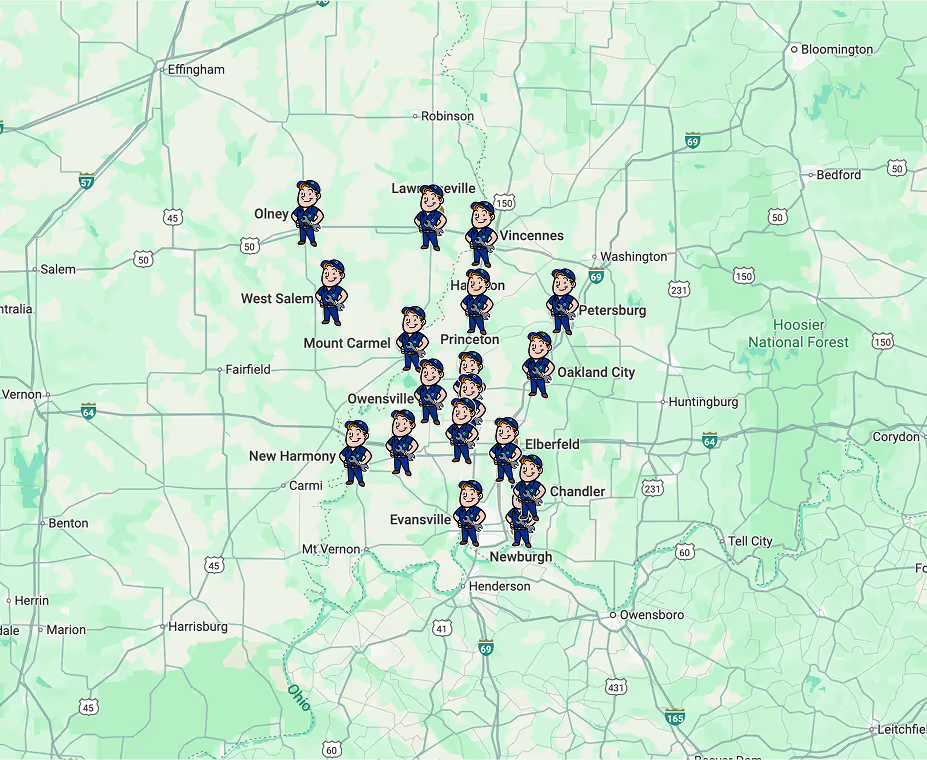
We proudly serve clients throughout our surrounding communities, delivering reliable service wherever you need us. No matter the location, our team is committed to the same high-quality results and responsive support.