
Storm Preparedness for Your Home Systems: 5 Essential Tips
Prepare your home for Midwest storms with expert storm preparedness for your home systems including HVAC, electrical, plumbing, and backup power.
Perfect Climate Heating, Air & Plumbing

Why Storm Preparedness for Your Home Systems Can Save You Thousands
Storm preparedness for your home systems is one of the most important steps you can take as a homeowner — especially in the Midwest, where severe thunderstorms, high winds, and heavy rainfall can strike fast and hit hard.
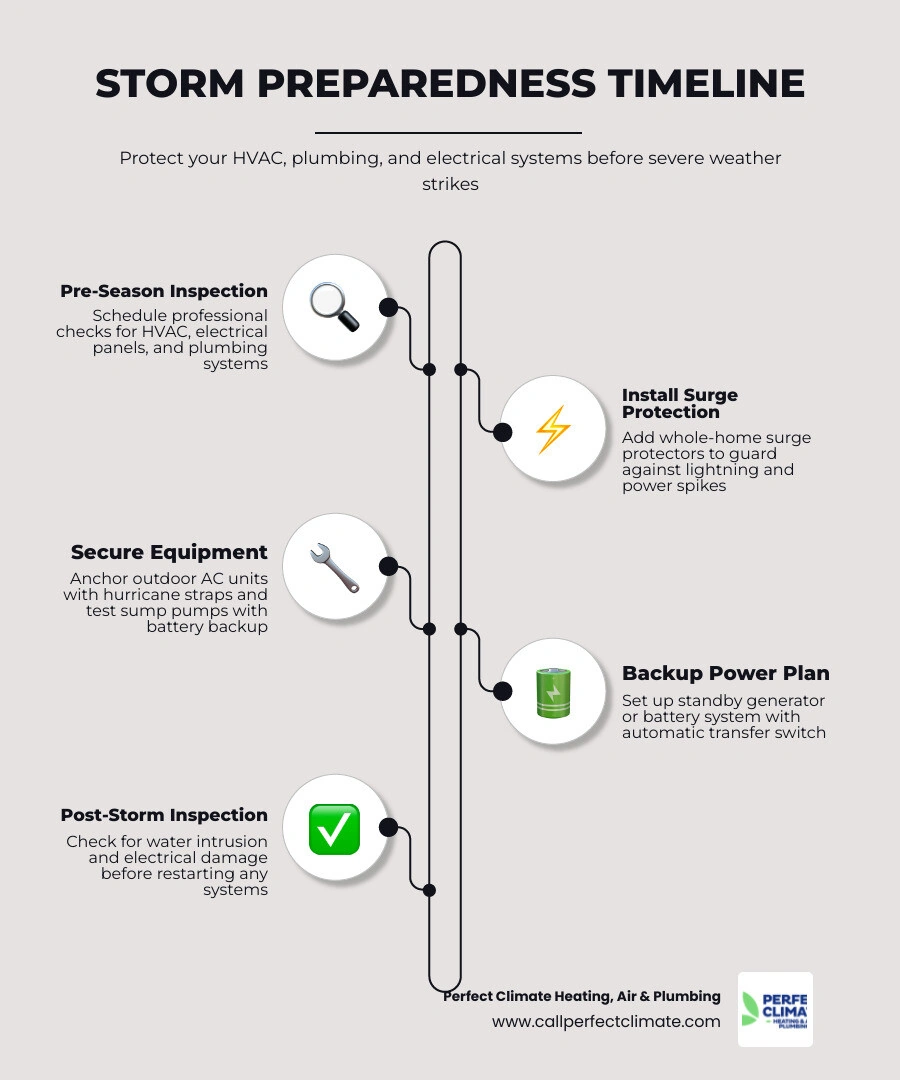
Here is a quick overview of the most critical steps to protect your home before, during, and after a storm:
- Schedule a pre-season inspection of your HVAC, electrical panel, and plumbing before storm season begins.
- Install whole-home surge protection to guard against voltage spikes from lightning and grid restoration.
- Test your sump pump and make sure a battery backup is in place before heavy rain arrives.
- Secure your outdoor AC unit with hurricane straps or condenser anchors.
- Have a backup power plan — whether a standby generator, portable unit, or battery system.
- Know when to shut systems off — including your main breaker and HVAC — during flooding or intense lightning.
- Inspect before you restart — never turn systems back on after a storm without checking for water intrusion, debris, or electrical damage.
The numbers tell a sobering story. Over 80% of U.S. power outages in the past two decades have been weather-related, and that number is climbing — outages have roughly doubled compared to the early 2000s. In 2024 alone, lightning caused more than 55,000 homeowners insurance claims across the country, with an average cost of nearly $19,000 per claim. And when major storms like Hurricanes Helene and Milton hit, the damage can reach into the hundreds of billions — affecting millions of households at once.
The good news? Research consistently shows that every dollar spent on hazard mitigation saves roughly six dollars in avoided losses — and in some analyses, that figure climbs as high as thirteen to one. That means the time you invest now in preparing your HVAC, plumbing, and electrical systems is not just about peace of mind. It is a genuinely smart financial decision.
At Perfect Climate Heating, Air & Plumbing, we help homeowners across Indiana and Illinois get their systems storm-ready before severe weather hits — so they are not scrambling when the forecast turns ugly.
Storm preparedness for your home systems word guide:
- how midwest weather extremes affect your hvac and plumbing
- weather related maintenance tips for midwest homeowners
Pre-Season Storm Preparedness for Your Home Systems
Proactive planning is the secret to surviving severe weather without a mountain of repair bills. In the Midwest, our weather is nothing if not unpredictable. From sudden spring tornadoes to heavy summer downpours and winter ice storms, our home systems take a beating year-round. Taking a weekend before the storm season kicks into high gear to check off a few maintenance items can make all the difference.
For a deep dive into how our local climate impacts your home, check out our Weather Related Maintenance Tips for Midwest Homeowners. By setting a solid foundation of preventive care, you can easily transition from standard maintenance to targeted storm hardening. Learn more about preventing major system breakdowns in our guide on How to Prevent HVAC Emergencies with Maintenance.
Hardening Your HVAC and Electrical Systems Against High Winds
High winds are a signature feature of Midwestern storms. Whether it is a straight-line wind event or a severe thunderstorm rolling through Evansville or Princeton, your outdoor systems are highly vulnerable.
To protect your outdoor air conditioning condenser, ensure it is firmly secured. Over time, the concrete or plastic pad your unit sits on can shift or settle.
- Condenser Anchors and Hurricane Straps: Utilizing heavy-duty condenser anchors or rust-resistant hurricane straps can keep your outdoor unit bolted down when high winds threaten to tip or slide it.
- Clear the Perimeter: Keep a minimum of three feet of clear space around your outdoor unit. Trim back any overhanging tree branches, bushes, or climbing vines. During a storm, loose branches quickly turn into dangerous projectiles that can crush delicate aluminum fins or snap refrigerant lines.
- Electrical Panel Weatherproofing: If your electrical panel or disconnect box is located outdoors or in an unconditioned space like a garage, inspect the weatherproofing seals. Ensure the latching door closes tightly and that the rubber gaskets are not dry-rotted or missing. Water leaking into an electrical disconnect box is a recipe for short circuits, corrosion, and electrical fires.
Protecting Plumbing and Foundations from Heavy Rainfall
Heavy Midwestern downpours can dump inches of rain in a matter of hours, putting immense pressure on your home’s plumbing and foundation.
- The Sump Pump Lifeline: Your sump pump is your home's primary defense against a flooded basement or crawl space. To test it, slowly pour a five-gallon bucket of water directly into the sump pit. The float switch should rise naturally, activate the pump, and rapidly discharge the water away from your foundation.
- Install a Battery Backup Sump Pump: A standard sump pump is useless during a power outage. Adding a battery backup system ensures your pump can run for up to 24 hours without grid power, shielding your basement from thousands of dollars in water damage.
- Backflow Prevention Valves: When municipal stormwater systems in cities like Boonville or Newburgh become overwhelmed, reverse pressure can force sewer water back up through your home's drains. Installing a backflow prevention valve ensures that water can only flow out of your home, never back in.
For immediate steps to take if your plumbing experiences a sudden failure, consult our Emergency Plumbing Repair Boonville IN Guide. If a pipe does fail under pressure, stay calm and follow the steps outlined in Burst Pipe Repair End Panic in 3 Steps.
The Value of Professional Pre-Season Inspections for Storm Preparedness for Your Home Systems
While DIY checks are incredibly valuable, some aspects of storm preparedness require a trained eye and specialized tools. A professional pre-season inspection is designed to find and fix weak points before extreme weather exposes them.
During a professional electrical and HVAC inspection, technicians will:
- Check the health of your HVAC system’s capacitors and control boards. Weak capacitors are highly sensitive to voltage fluctuations and are often the first components to fail during a storm-related power surge.
- Inspect your main electrical panel for signs of rust, corrosion, or loose wire connections that could cause a arc fault during heavy electrical loads.
- Clean your AC coils and clear the condensate drain line with vinegar or professional-grade clearing agents to prevent indoor water leaks.
- Verify that all safety breakers and GFCI outlets trip and reset exactly as designed.
Investing in these inspections ahead of time ensures that your heating and cooling systems are resilient enough to handle whatever the weather throws our way. If you find yourself facing heating issues during cooler storm seasons, refer to our Emergency Heating Repair Boonville IN Guide.
Selecting and Managing Backup Power and Surge Protection
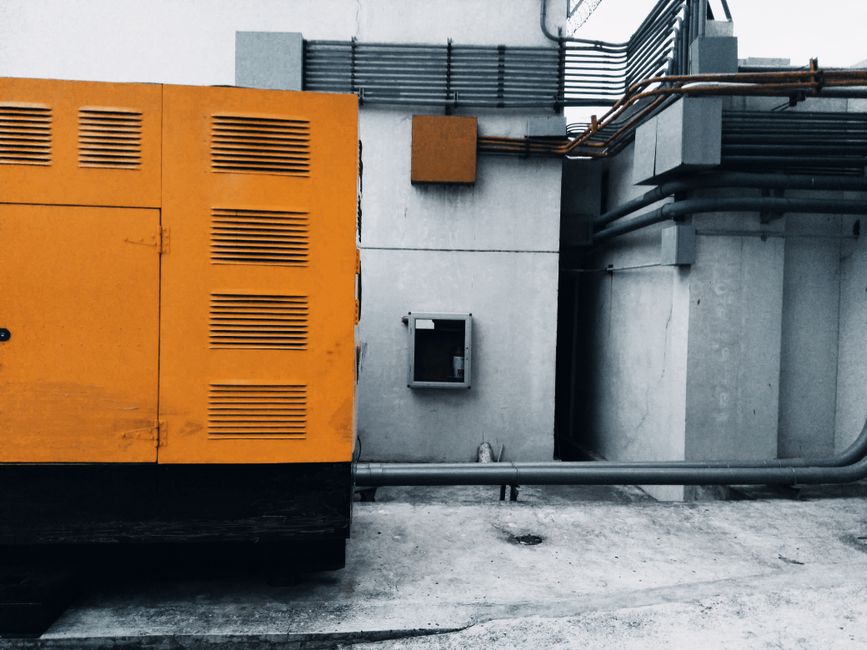
When severe weather knocks out the power grid, your home’s resilience depends entirely on your backup power and surge protection strategy. Today's modern homes are filled with sensitive microprocessors — not just in our computers and TVs, but inside our smart thermostats, variable-speed HVAC systems, and modern kitchen appliances. Protecting these systems requires a multi-layered approach.
| Backup Power Option | Power Source | Installation Type | Best For | Key Advantage |
|---|---|---|---|---|
| Standby Generator | Natural Gas / Propane | Permanent | Whole-Home Power | Runs automatically; virtually unlimited runtime |
| Portable Generator | Gasoline / Diesel / Propane | Manual Setup | Critical Circuits Only | Lower initial setup; highly versatile |
| Battery Storage System | Charged via Grid / Solar | Permanent | Critical Circuits or Eco-Backup | Silent; zero emissions; instant power transfer |
| Solar + Battery Storage | Solar Energy | Permanent | Extended Off-Grid Survival | Renewable energy source; operates indefinitely in sun |
Whole-Home Surge Protectors vs. Point-of-Use Strips
Many homeowners assume that plugging their electronics into a standard power strip is enough protection. Unfortunately, standard strips are simply not built to handle the massive voltage spikes associated with direct or indirect lightning strikes, or the violent power surges that occur when the utility grid is restored after an outage.
- Point-of-Use Strips: These are great for protecting low-voltage devices like lamps or phone chargers. However, they cannot protect hardwired appliances like your air conditioner, furnace, water heater, or well pump.
- Whole-Home Surge Protectors: Installed directly at your main electrical panel, a whole-home surge protector acts as a shield for your entire house. When a massive voltage spike hits your electrical lines, the device instantly detects the excess voltage and safely diverts it into the earth through your home's grounding system.
Adding a whole-home surge protector is one of the most cost-effective upgrades you can make to protect your home's mechanical systems from expensive control board failures.
Standby Generators and Battery Systems for Storm Preparedness for Your Home Systems
If you want to maintain complete comfort and safety during an extended outage, you will need a reliable backup power source.
- Standby Generators: These units are permanently installed outside your home and run on your existing natural gas or liquid propane supply. When the power grid goes down, an automatic transfer switch (ATS) detects the loss of power, starts the generator, and shifts your home's electrical load to the generator within seconds. This keeps your HVAC, refrigerator, and sump pumps running seamlessly.
- Battery Storage Systems: Modern home battery systems offer a silent, fuel-free alternative. They can be programmed to charge from the grid when energy rates are low, or paired with solar panels for continuous, self-sustaining power. Many modern battery systems feature automated weather monitoring, which automatically charges the batteries to 100% capacity whenever severe weather is forecasted in your area.
Safe Generator Testing and Operation Protocols
Whether you use a standby generator or a portable unit, safe operation is paramount. Electrical failures and carbon monoxide poisoning are entirely preventable with the right safety protocols.
- Keep Your Distance: Never, under any circumstances, run a portable generator indoors, in a garage, in a basement, or near open windows. Generator exhaust contains carbon monoxide (CO), an odorless, colorless, and deadly gas. Keep your generator at least 20 feet away from your home, with the exhaust pointed away from all doors and windows.
- Avoid Backfeeding: Never attempt to power your home by plugging a portable generator directly into a standard wall outlet (a dangerous practice known as "backfeeding"). Backfeeding can energize the utility lines outside your home, putting utility workers repairing the lines at risk of electrocution. Always use a professionally installed manual transfer switch or an outdoor generator inlet box.
- Perform Regular Load Tests: Do not wait for a storm to find out if your generator works. Test your generator under load at least once a month for 15 to 20 minutes. Plug in a high-draw appliance to confirm it is producing electricity properly, and always use fresh fuel treated with a quality stabilizer.
Post-Storm Inspection and Safe System Restoration
Once the storm passes and the skies clear, your first instinct might be to flip your breakers back on and get your home back to normal. However, restarting your mechanical systems too quickly after a major storm can cause permanent, irreversible damage. A careful, systematic post-storm inspection is essential to ensure your safety.
Inspecting HVAC and Electrical Systems Before Restarting
Before you turn your heating, cooling, or electrical systems back on, conduct a thorough visual inspection of your property.
- Check for Standing Water: If your basement, crawl space, or yard has flooded, do not touch your electrical panel or attempt to restore power. Water inside electrical panels, outlets, or switches can cause severe shocks or electrical fires even after the surfaces look dry. If your electrical panel has been submerged, it will likely need to be completely replaced by a licensed professional.
- Inspect the Outdoor Condenser: Look closely at your outdoor AC unit. Is it surrounded by standing water? Are there branches, leaves, or mud packed inside the metal grates? If the unit was flooded or is clogged with debris, do not turn it on. Running a flooded compressor can instantly destroy the motor.
- Look for Scorched Outlets or Odors: Walk through your home and look for tripped breakers, scorched outlets, or a faint burning smell. These are clear indicators of a power surge that may have damaged your wiring.
If you suspect any damage to your heating or cooling system, refer to our HVAC Emergency Service Complete Guide or contact our team for immediate HVAC Emergency Service.
Identifying Hidden Plumbing Damage and Restoring Water Flow
Heavy rains and high winds can cause soil shifts that put stress on your underground plumbing.
- Foundation Shifting: Saturated ground can cause minor foundation shifts, which in turn can crack or shear underground water and sewer lines. Look for sudden drops in water pressure, slow-draining sinks, or unusually wet, soggy patches in your yard.
- Sewer Backups: If municipal sewer lines are overwhelmed, monitor your lowest drains (such as basement showers or floor drains) for foul odors or rising wastewater.
- Wellhead Contamination: For homeowners in rural areas of Gibson, Posey, or Warrick counties who rely on private wells, check your wellhead after a flood. If floodwaters covered your wellhead, your drinking water may be contaminated. Do not use the water for drinking or cooking until the well has been professionally disinfected and tested.
If you suspect a cracked pipe under your concrete slab or in your yard, contact a professional immediately to prevent structural damage. Learn more about how to handle these plumbing crises in our guide on Burst Pipe Repair.
When to Shut Down Your HVAC and Electrical Systems
Knowing when not to run your systems is just as important as knowing how to maintain them.
- During Intense Lightning: If a severe thunderstorm is directly overhead, it is highly recommended to temporarily shut down your HVAC system at the thermostat and unplug your most valuable appliances. Even with surge protection, a direct strike nearby can cause minor voltage fluctuations that degrade sensitive electronics over time.
- During Power Flickers: If your lights are constantly flickering or dimming, shut off your air conditioner. Constant power interruptions can cause the compressor motor to overheat as it struggles to restart against high system pressure.
- Grid Stabilization: When power is restored after a major outage, the utility grid is often highly unstable for the first few minutes. Wait 10 to 15 minutes after the power returns before turning your HVAC system back on to let the grid stabilize.
If your system fails to start up properly after power is restored, check out our troubleshooting tips on What to Do When Your HVAC Breaks Down Unexpectedly. If you are dealing with extreme outdoor temperatures, learn how to identify When an HVAC Failure is a True Emergency.
Frequently Asked Questions About Storm Preparedness
How do I safely test my backup generator before a storm?
To test your generator safely, start by checking the oil and fuel levels. Move the generator outdoors to a flat surface at least 20 feet away from your home. Start the engine and let it run for 15 to 20 minutes. Plug in a high-draw appliance (like a hair dryer or space heater) to verify that the generator is producing electricity under load. If you have a standby generator, confirm that its automated weekly exercise cycle is running properly and that there are no active warning lights on the control panel.
Does standard homeowners insurance cover flood damage?
No. Standard homeowners insurance policies cover wind damage, falling trees, and sudden water damage from interior plumbing failures, but they almost never cover rising water, storm surges, or flash flooding. To protect your home from rising outdoor water, you must purchase a separate flood insurance policy through the National Flood Insurance Program (NFIP) or a private insurer. That most flood insurance policies have a strict 30-day waiting period before they go into effect.
What should I do if my HVAC system gets flooded?
If your outdoor condenser or indoor furnace is exposed to standing water, immediately turn off the power at the main circuit breaker. Do not attempt to turn the system back on, even if the water has receded and the unit looks dry. Water can damage the delicate electrical controls, corrode safety switches, and ruin the compressor motor. Have a licensed HVAC technician inspect, clean, and test the entire system before safely restoring power.
Conclusion
When severe Midwestern weather strikes, proactive planning is the difference between a minor inconvenience and a costly household disaster. By taking the time to secure your outdoor equipment, harden your electrical system with whole-home surge protection, and ensure your plumbing is ready for heavy rainfall, you can weather any storm with confidence.
At Perfect Climate Heating, Air & Plumbing, we are proud to serve our neighbors in Haubstadt, Evansville, Princeton, Boonville, Newburgh, Mount Carmel, and the surrounding communities. Whether you need a pre-season inspection, a battery backup sump pump installation, or emergency post-storm repairs, our experienced team is here to keep your home safe, dry, and comfortable year-round.
Do not wait for the next storm warning to find out if your home systems are ready. Contact us today to schedule your comprehensive pre-season inspection or system upgrade!
Explore our full range of professional services on our Services Page.
Need Help?
Contact us today to discuss your needs. Our team is ready to help.
About the Author
Perfect Climate Heating, Air & Plumbing
Recent Posts
- Heating Options Comparisons for Homeowners: Heat Pumps vs. Gas Furnaces Before Indiana's Winter Hits
- Indiana Fall HVAC Checklist: Handling Furnace Startup Smells and Late-Season AC Repair
- Why Does My Furnace Smell Like Burning Dust? Fall Heating Startup Guide
- Essential HVAC Maintenance Tips for the First Fall Freeze
- Comparing Heating Options for Homeowners: Navigating the 2026 Heat Pump Tax Credit
Related Articles

Heating Options Comparisons for Homeowners: Heat Pumps vs. Gas Furnaces Before Indiana's Winter Hits
Read Article
Indiana Fall HVAC Checklist: Handling Furnace Startup Smells and Late-Season AC Repair
Read Article
Why Does My Furnace Smell Like Burning Dust? Fall Heating Startup Guide
Read Article
Essential HVAC Maintenance Tips for the First Fall Freeze
Read Article
Comparing Heating Options for Homeowners: Navigating the 2026 Heat Pump Tax Credit
Read Article
Troubleshooting Mid-Fall Heating Odors Before Searching for AC Repair Near Me
Read ArticleReady to Get Started?
Whether you need a repair, maintenance, or a new installation, our expert team is here to help.